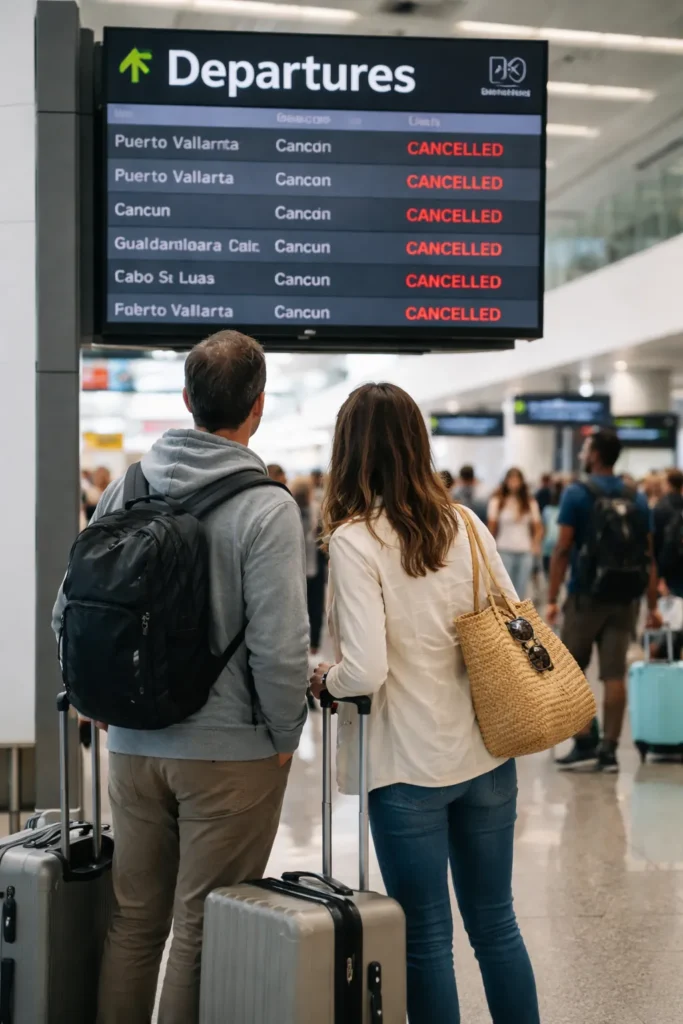

Canadian airlines are restoring flights to Puerto Vallarta after a short disruption caused by security concerns in western Mexico. The pause came close to the March break travel rush, affecting passengers flying from major Canadian cities and adding uncertainty for families planning winter vacations.
The cancellations involved Air Canada (TSX: AC), WestJet, Air Transat and Porter. Flights from Toronto, Montreal and Vancouver were temporarily cancelled, delayed or rerouted after reports of violence near Puerto Vallarta linked to a government security operation targeting cartel leadership.
Flights Begin Returning After Security Reviews
Airlines began restoring service after reviewing conditions with local and federal authorities. Air Canada moved to resume flights connecting Montreal, Toronto and Vancouver with Puerto Vallarta, along with Toronto–Guadalajara service.
WestJet also prepared to restart flights to Puerto Vallarta, Guadalajara and Manzanillo after completing its security review. Air Transat and Porter signalled similar steps as schedules gradually returned to normal.
For travellers, the key issue is less about a long-term shutdown and more about timing. Even short cancellations can disrupt hotels, airport transfers, tour packages and connecting flights during peak vacation weeks.
Why Puerto Vallarta Is Important for Canadian Travellers
Puerto Vallarta is one of the most familiar Pacific coast vacation spots for Canadians, especially during the winter season. It attracts families, retirees and all-inclusive travellers looking for warmer weather during February and March.
Still, the affected region represents only part of Canada’s Mexico travel market. Industry estimates suggest around 10% of Canadian Mexico vacation packages are tied directly to Puerto Vallarta, while Cancun and the Riviera Maya account for a larger share of bookings.
That split matters because travel agencies say demand for Mexico’s Caribbean coast has remained steadier. The recent violence was reported on the Pacific side, far from the main resort corridors in eastern Mexico.
Travellers comparing winter travel options may also want to review this Canada travel warning and winter destination update before finalizing plans.
Safety Concerns Can Slow Bookings Quickly
Travel demand can shift quickly when safety headlines dominate the news. Even if a disruption is short and localized, some customers wait for airline updates before booking or decide to move their trip elsewhere.
Travel advisers say this kind of hesitation is common during peak planning windows. When confidence dips, airlines and tour operators may respond with price adjustments or added flexibility to keep seats filled.
That does not mean demand disappears. It often means travellers become more selective, choosing destinations where flights, advisories and resort access appear more predictable.
More Than 26,000 Canadians Registered in Mexico
Federal officials have indicated that more than 26,000 Canadians in Mexico are registered with Global Affairs Canada through the Registration of Canadians Abroad service.
The program is voluntary and helps the federal government contact Canadians during emergencies, natural disasters or serious security events overseas. A high registration number does not automatically mean an evacuation is underway.
Mexico remains Canada’s largest winter sun destination by passenger volume, making any disruption closely watched by airlines, travel agencies and tour operators.
Cuba Disruption Adds Pressure to Winter Travel
The Puerto Vallarta disruption comes as the travel industry is still dealing with reduced service to Cuba. Aviation fuel shortages and broader supply problems have already interrupted many Canadian vacation packages to the island.
Cuba has long been one of the lower-cost all-inclusive options for Canadian travellers. When that capacity falls out of the market, some customers shift to Mexico, the Dominican Republic or cruises, while others delay travel because replacement trips are more expensive.
That makes the Mexico disruption more sensitive. Travellers who already lost one affordable option may have fewer budget-friendly alternatives left for March break.
Dominican Republic and Cruises Could Benefit
If concern around Mexico’s Pacific coast continues, travel agencies expect some demand to move toward the Dominican Republic, Jamaica and cruise vacations.
Cruise lines have an advantage during uncertain periods because ships can sometimes adjust ports if local conditions change. Resort vacations are less flexible because travellers are tied to a specific airport, hotel and destination.
Some travellers are also looking at Belize and Colombia, though those markets remain smaller compared with Mexico and the Caribbean’s major resort zones.
What Travellers Should Do Before Departure
Anyone booked for Puerto Vallarta or nearby destinations should check airline notifications, tour operator updates and hotel transfer arrangements before heading to the airport.
Travellers should also review the Government of Canada travel advice for Mexico, which provides official destination-specific safety guidance.
For airlines, the financial impact will depend on how quickly schedules stabilize and whether travellers regain confidence before March break. If service remains normal, the disruption may stay limited. If security headlines continue, carriers could face weaker yields on some Pacific coast routes.
For now, Canada’s winter travel demand remains strong. The challenge is confidence. Families still want warm-weather vacations, but they also want clear schedules, predictable safety conditions and fewer last-minute surprises.

Make Swikblog your go-to source on Google for reliable updates, smart insights, and daily trends.