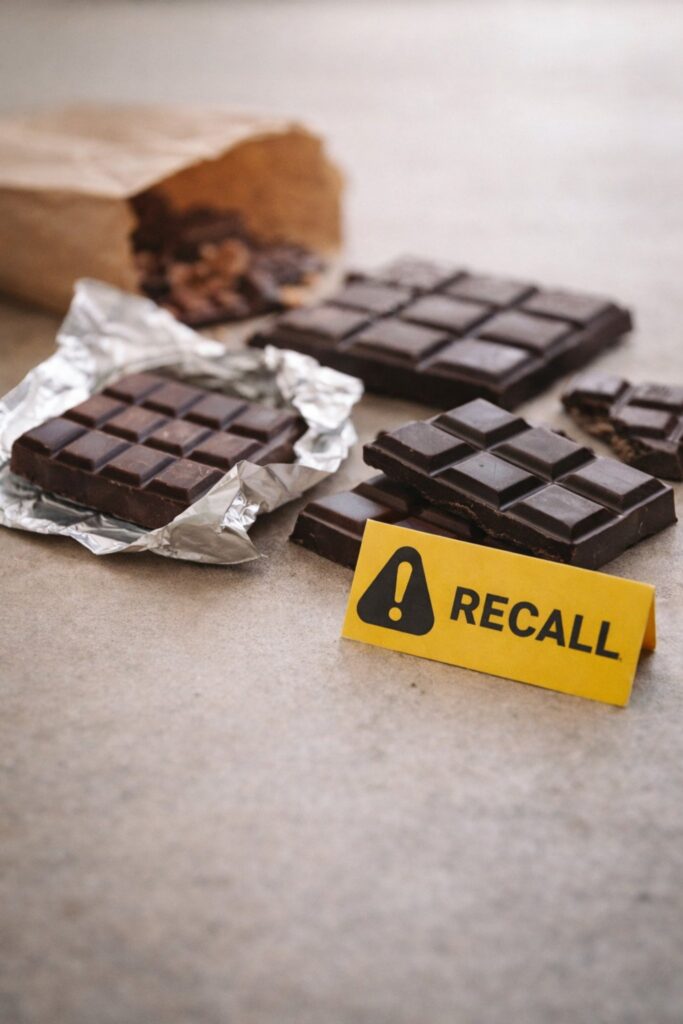

Spring & Mulberry has expanded a voluntary recall of select chocolate bars because of possible Salmonella contamination, according to a notice posted by the U.S. Food and Drug Administration.
The recall is especially important for shoppers checking Valentine’s Day gifts, snack drawers, pantry shelves, office treats, and chocolate bought online or from select retailers nationwide since September 15, 2025.
Which Spring & Mulberry chocolates are affected?
The recall first involved the Mint Leaf date-sweetened chocolate bar. It was later expanded to include additional flavors made during the same production period on shared equipment.
Affected varieties listed in the recall include Mint Leaf, Earl Grey, Lavender Rose, Mango Chili, Mixed Berry, Mulberry Fennel, Pecan Date, and Pure Dark Minis.
The most important detail is the lot code printed on the packaging. Shoppers should compare the code with the official FDA recall notice before eating, gifting, or serving the product.
Why the recall was expanded
Spring & Mulberry said the issue was found after routine third-party testing by a contract manufacturer detected Salmonella in finished product. The company expanded the recall in consultation with the FDA because Salmonella may not appear evenly across every item in a production run.
No illnesses had been reported at the time of the FDA posting, but food-safety advice is clear: do not taste a recalled product to check whether it seems fine. Salmonella cannot be identified by appearance, smell, or texture.
Health risks shoppers should know
Salmonella infection can cause fever, diarrhea, nausea, vomiting, and abdominal pain. Most healthy adults recover, but the infection can be more serious for young children, older adults, pregnant people, and anyone with a weakened immune system.
In rare cases, Salmonella can spread beyond the digestive system and lead to more severe illness. Anyone who ate the recalled chocolate and develops persistent fever, dehydration, bloody diarrhea, or worsening symptoms should contact a healthcare professional.
What to do if you have the chocolate
Do not eat, serve, donate, or place recalled Spring & Mulberry chocolate in a gift basket. Keep the packaging long enough to photograph the lot code, then follow the company’s refund or replacement instructions.
The company has advised customers to contact Spring & Mulberry customer service by email with a photo of the affected lot code. After documenting the product, discard it safely so it cannot be eaten by someone else.
Why this matters before Valentine’s Day
Chocolate often changes hands during February through gift boxes, office treats, dessert boards, and online hampers. That makes recall checks more important because the person receiving the chocolate may not know where or when it was purchased.
Before wrapping premium bars or adding them to a Valentine’s basket, check cupboards, desks, snack drawers, and gift bags for Spring & Mulberry packaging. For more practical shopping and safety updates, visit latest consumer alerts and breaking updates.

Make Swikblog your go-to source on Google for reliable updates, smart insights, and daily trends.