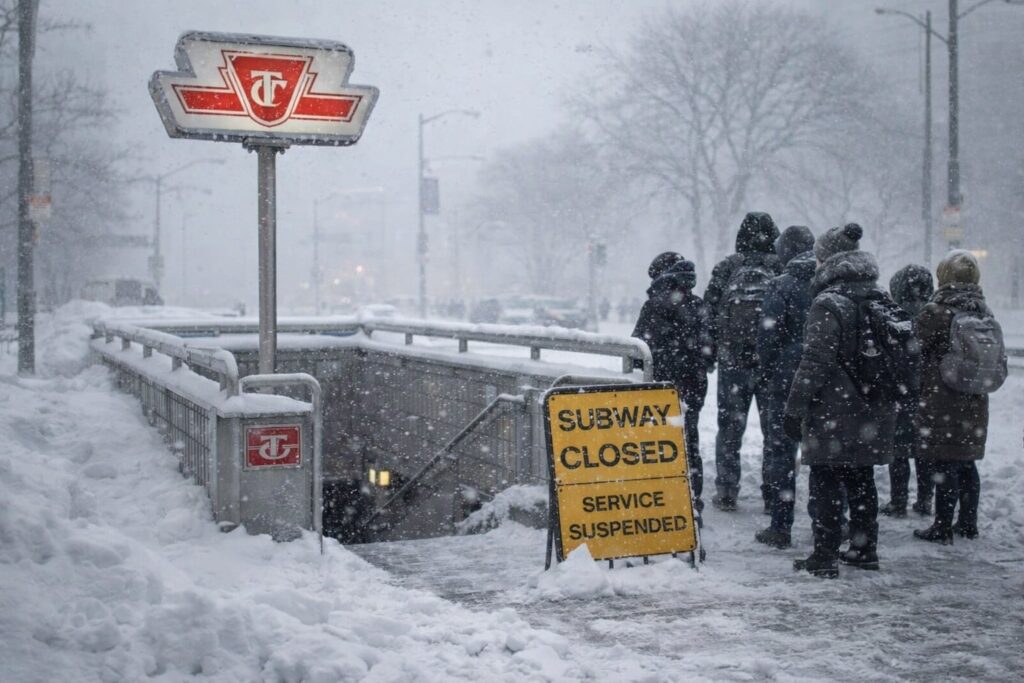

Toronto commuters encountered another difficult morning on Monday as the city recovered from one of its largest snowfalls in recent years. Several Toronto Transit Commission (TTC) subway routes were temporarily suspended, shuttle buses struggled to keep pace with demand, and freezing temperatures made extended waits outdoors especially challenging.
Although snowfall had largely ended, its effects continued across Toronto. Snow-covered roads, reduced traffic lanes, icy sidewalks, and blocked transit stops slowed buses and streetcars while TTC crews worked to restore normal subway operations.
Weather-Related Disruptions Hit Several TTC Subway Lines
The most significant interruptions affected Line 1 Yonge-University and Line 2 Bloor-Danforth, where multiple sections were temporarily closed because of weather-related conditions. Line 6 Finch West also experienced a complete suspension during the most disruptive period of the morning.
Replacement shuttle buses were deployed between affected stations, but heavy demand and difficult road conditions resulted in overcrowding and longer travel times. At the same time, a streetcar derailment on Queen Street created another bottleneck, forcing additional passengers to change their routes.
Why Shuttle Buses Could Not Replace Subway Capacity
While shuttle buses help maintain service during subway closures, they cannot move the same number of passengers as rapid transit trains. A subway train can carry hundreds of people every few minutes, whereas buses are limited by road conditions and traffic congestion.
Following the storm, narrowed traffic lanes, snowbanks, and icy intersections slowed buses across the city. As more commuters relied on replacement services, many stops became crowded, increasing waiting times throughout the morning rush.
The combination of multiple subway closures and slower surface transportation showed how quickly severe winter weather can affect every part of Toronto’s transit network.
Freezing Temperatures Made Delays More Difficult
The bitter windchill turned ordinary transit delays into a greater safety concern. Many passengers spent extended periods outdoors waiting for shuttle buses, increasing exposure to freezing temperatures.
Some commuters chose to walk longer distances after buses reached capacity or failed to arrive quickly. However, deep snow, icy sidewalks, and reduced visibility created additional hazards for pedestrians across the city.
Transit agencies often require several hours—or even days—to fully restore normal operations after major winter storms because tracks, stations, and vehicles must all be inspected before regular service resumes.
Tips for Travelling During Storm Recovery
Anyone planning to travel while cleanup continues should expect changing conditions and allow additional time for their journey.
- Check live TTC service updates before leaving home.
- Monitor service alerts again before making transfers.
- Wear warm clothing suitable for extended outdoor waits.
- Choose footwear with good grip for snowy and icy sidewalks.
- If a shuttle stop is overcrowded, another nearby station may provide a faster connection.
City Cleanup Will Continue After Transit Service Returns
Even after subway operations return to normal, snow removal work will continue across Toronto. Crews still need to clear residential streets, sidewalks, transit platforms, and station entrances before travel conditions fully improve.
Passengers should continue checking official updates throughout the recovery period. The latest service information is available on the official TTC Service Advisories page.
For more on the wider impact of the storm, read our report on Toronto snow chaos, Pearson Airport delays, school bus cancellations and TTC disruptions.
Recovery Remains the City’s Main Priority
Monday’s commute demonstrated how quickly a major snowstorm can disrupt a large urban transit network. While service continues to improve, commuters should expect occasional delays until cleanup operations are completed and all transportation routes are fully restored.

Make Swikblog your go-to source on Google for reliable updates, smart insights, and daily trends.