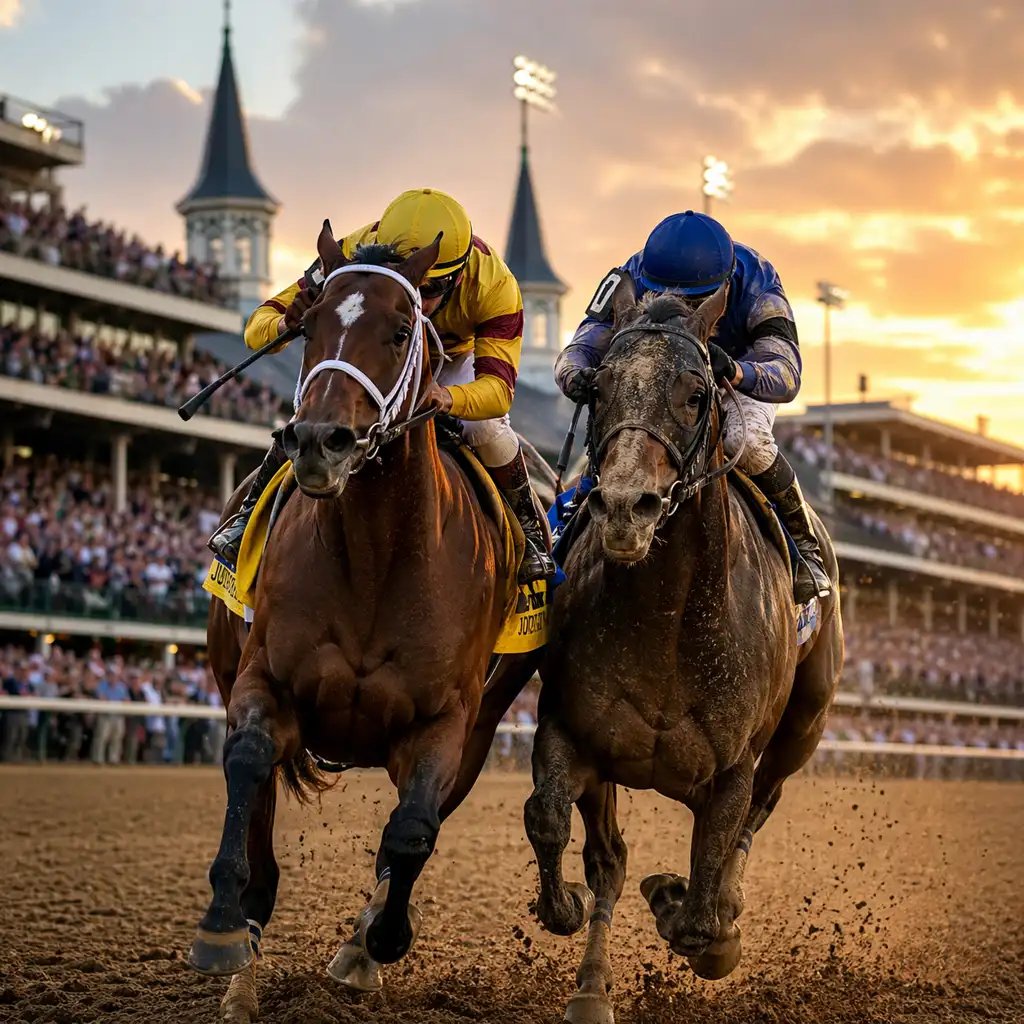

Horse racing rarely changes quickly, which is why Churchill Downs Incorporated’s agreement to buy the Preakness Stakes and Black-Eyed Susan Stakes for $85 million feels so important. This is not just another deal in the sports business world. It reaches into the center of one of America’s oldest sporting traditions and raises bigger questions about who shapes the future of the Triple Crown, how the races are scheduled, where media rights go next, and what a modern horse racing business is supposed to look like.
For decades, the Kentucky Derby, Preakness Stakes and Belmont Stakes have carried a sense of continuity that few sporting events can match. Fans know the rhythm: the Derby opens the Triple Crown on the first Saturday in May, the Preakness follows two weeks later, and the Belmont arrives three weeks after that. But behind that familiar calendar, the economics of racing have been changing. Attendance patterns have shifted, television has changed, horse welfare has become a bigger part of the conversation, and racetracks have had to think more like entertainment properties than purely sporting venues.
That is what makes this acquisition so notable. Churchill Downs already sits at the center of the sport because of the Kentucky Derby, a race that has been run since 1875 and remains one of the most recognizable annual events in American sports. By adding the Preakness brand to its portfolio, the company is no longer simply a steward of one tentpole event. It becomes the owner of the commercial rights connected to two-thirds of the Triple Crown structure, a level of influence that could affect everything from sponsorship sales to broadcast strategy.
Why this deal matters beyond the $85 million headline
The headline figure is eye-catching, but the more meaningful part of the agreement is what exactly is being purchased. Churchill Downs is acquiring the intellectual property tied to the Preakness Stakes and Black-Eyed Susan Stakes, while Maryland will continue to run the events through a licensing arrangement. In practical terms, that means the race remains rooted in Maryland even as ownership of the brand moves to Louisville.
That distinction matters because it gives the deal a more layered meaning. The race is not simply being packaged up and moved. Instead, the traditional identity of the Preakness stays linked to Maryland while the commercial upside shifts under the control of a larger racing company with deeper national reach. For the industry, this creates a new model: preserve the local connection, but centralize the business engine.
It also comes at a moment when Maryland racing is in transition. The 2026 Preakness is scheduled for May 16 at Laurel Park while Pimlico Race Course undergoes a major redevelopment project. Pimlico is expected to return as host in 2027 after the rebuild, and Maryland leaders have also advanced plans tied to Laurel’s future as a training facility. In that sense, the sale lands during a period when the state’s racing infrastructure is already being reworked. The ownership change and venue changes are separate issues, but together they signal that the sport is not standing still.
What this could mean for the Triple Crown and horse racing’s next chapter
The most immediate debate is about the Triple Crown schedule itself. For years, owners, trainers and racing observers have argued that the current spacing between the Derby and Preakness asks too much of modern Thoroughbreds. The traditional two-week turnaround has become harder to defend as training practices, medication rules and expectations around horse recovery have evolved. In recent years, even Derby winners have sometimes skipped the Preakness rather than come back on such a short timeline.
Now, with one company tied to both the Derby and Preakness, the possibility of a calendar change looks more realistic than it has in a long time. A three-week gap between the first two races has been widely discussed because it could improve recovery time and make the second leg more attractive to top connections. If that happens, the Belmont may also need to move, which would create the biggest scheduling shift the Triple Crown has seen in generations.
This is where the Churchill Downs deal becomes more than a property purchase. It becomes a governance story. When separate parties control major events, alignment is difficult. When one organization holds two of the most valuable brands, coordination becomes easier. That does not automatically mean change will happen, but it gives the sport a clearer pathway if leaders decide that reform is necessary.
Media rights are another major storyline. The Preakness has been an NBC property, but that arrangement expires after the 2026 race. A rights negotiation was already important. Under this new structure, it becomes even more interesting. Churchill Downs could choose to pursue a traditional network partner, look for a more aggressive streaming relationship, or try to use its stronger portfolio position to extract better terms. In a sports media market where live events remain especially valuable, a race with the history of the Preakness still carries meaningful leverage.
There is also a broader business angle here. Modern sports organizations increasingly think in terms of year-round audience engagement, premium sponsorship inventory and destination-event experiences. The Derby has long been successful on that front, blending racing, celebrity, hospitality and cultural relevance. Owning the Preakness brand creates an opportunity to build similar momentum around the second leg of the Triple Crown, especially once Pimlico’s redevelopment is complete. A more polished event footprint, stronger commercial packaging and updated media presentation could all follow.
Still, there are legitimate concerns. Whenever control becomes more concentrated, critics worry about whose interests are being prioritized. Horse racing has always had regional identities, different stakeholder groups and deeply rooted traditions. Some will see this as a needed modernization; others will see it as one more step toward over-centralization in a sport that already struggles to balance business priorities with cultural legacy.
That tension is exactly why this story matters. The Preakness is not just a race on the calendar. It is a test case for what horse racing wants to become. Can the sport protect its traditions while adapting to new business realities? Can it create a better schedule for horses without weakening the aura of the Triple Crown? Can it generate broader commercial value without losing the authenticity that made these races matter in the first place?
Those questions will not be settled the moment the deal closes after the 2026 running. But the agreement has already done one thing clearly: it has forced the racing industry to confront its future in public. For a sport that often moves cautiously, that alone makes this one of the most consequential developments of the year.
For readers following the business side of major sporting events, the wider media and governance trends are also worth tracking through the The Athletic.
You may like: Air NZ Airpoints Rebrand: New Koru Loyalty Program Explained

Make Swikblog your go-to source on Google for reliable updates, smart insights, and daily trends.