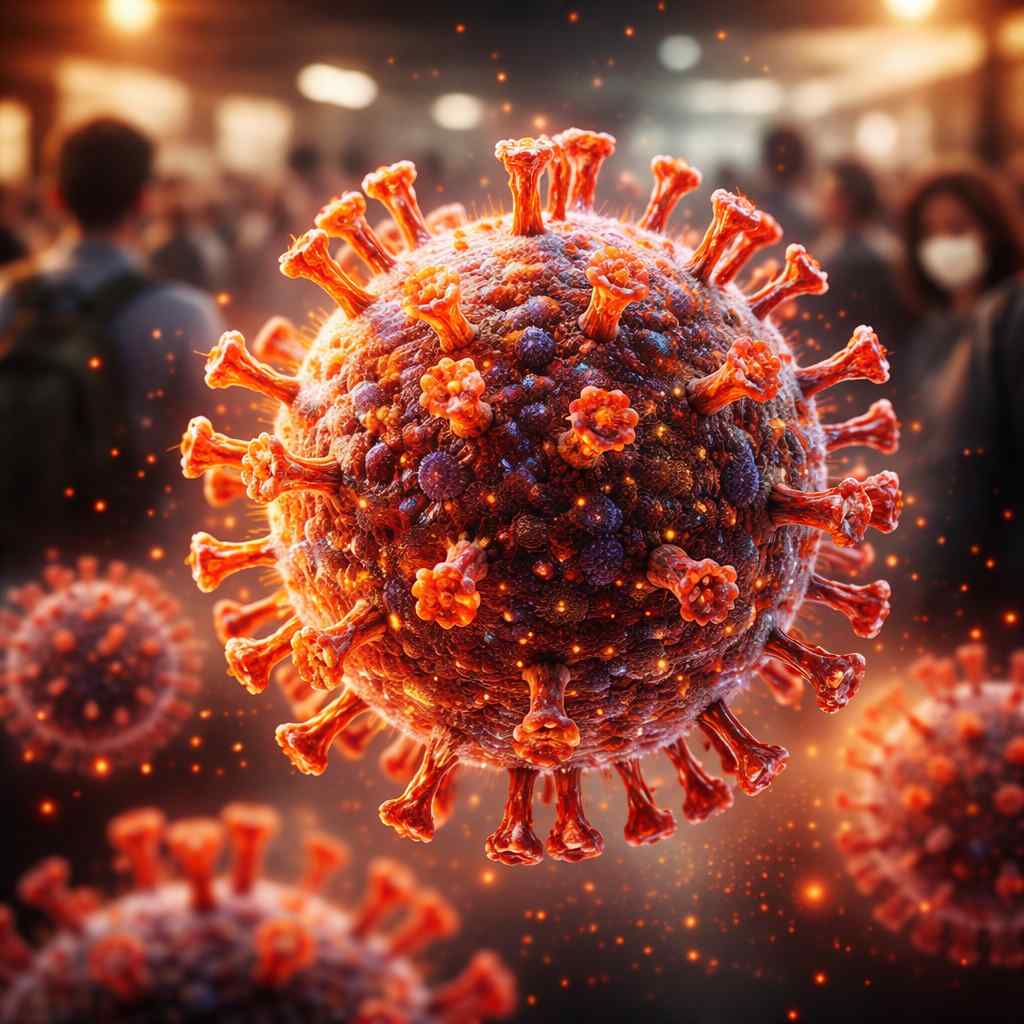

A new COVID-19 variant called BA.3.2, now widely nicknamed the “Cicada” variant, is rapidly gaining attention across the United States after being detected in more than 25 states. What makes this strain stand out is not just its spread, but the sheer scale of its mutations — scientists say it carries over 70–75 changes in its spike protein, raising concerns about immune escape and future transmission trends.
Although overall COVID-19 cases remain relatively low nationwide, health officials are closely monitoring BA.3.2 as it continues to quietly expand through travelers, patients, and wastewater systems. The variant may not be dominant yet, but experts warn it has the characteristics of a strain that could influence the next phase of the pandemic.
What Is the BA.3.2 ‘Cicada’ COVID Variant
BA.3.2 is a descendant of the Omicron BA.3 lineage and was first identified in South Africa in November 2024. After remaining under the radar for months, it began increasing globally in late 2025 and is now present in at least 23 countries.
The variant earned the nickname “Cicada” because, much like the insect, it stayed hidden before resurfacing and spreading more widely. Scientists say this strain is “genetically distinct” from many recent variants and carries an unusually high number of spike protein mutations — the key part of the virus that interacts with human cells and immune defenses.
Why Experts Are Concerned About 70+ Mutations
The biggest concern surrounding BA.3.2 is its mutation profile. With more than 70 changes in its spike protein, researchers say it may look very different to the immune system compared to earlier variants.
This means antibodies from past infections or vaccinations may not recognize it as effectively. According to laboratory studies, BA.3.2 has shown a strong ability to escape neutralizing antibodies, increasing the likelihood of breakthrough infections.
However, there is a key nuance. Some of these mutations may also reduce how efficiently the virus binds to human cells. In simple terms, it may evade immunity better but not necessarily spread faster — at least for now.
How the Variant Entered the United States
The first known U.S. case of BA.3.2 was detected in June 2025 at San Francisco International Airport through the CDC’s Traveler-Based Genomic Surveillance program. The infected individual had traveled from the Netherlands, highlighting how quickly global variants can cross borders.
Since then, the variant has been identified in multiple ways:
- International travelers
- Clinical patient samples
- Airplane wastewater
- Local wastewater systems across states
Wastewater surveillance has been especially important, with over 100 detections across the country. This method often identifies variants weeks before they appear widely in clinical testing, making it a critical early warning system.
BA.3.2 Spread Across 25+ US States
As of early 2026, BA.3.2 has been detected in at least 25 U.S. states, including California, Texas, New York, Florida, and others. It has also appeared in hundreds of wastewater samples, indicating broader circulation than confirmed cases alone suggest.
Globally, the variant has reached over 23 countries and is responsible for up to 30% of cases in parts of Europe, including Denmark, Germany, and the Netherlands.
Despite this spread, BA.3.2 still represents a relatively small percentage of total COVID cases in the United States and has not yet overtaken dominant variants.
Does BA.3.2 Cause More Severe Illness
So far, there is no evidence that BA.3.2 leads to more severe disease or higher hospitalization rates compared to other recent variants.
Experts say it “looks concerning on paper” due to its mutations, but real-world data has not shown a significant increase in severity. Some laboratory findings even suggest it may infect lung cells less efficiently, which could limit its impact.
That said, scientists emphasize that the situation could evolve, and continued monitoring is essential.
Common Symptoms of the Cicada Variant
The symptoms associated with BA.3.2 are similar to other current COVID variants:
- Fever or chills
- Cough
- Sore throat
- Fatigue
- Headache
- Congestion
- Shortness of breath
- Loss of smell or taste
- Gastrointestinal issues
Most cases remain mild and resolve with basic care, although severity can vary depending on individual risk factors.
Do Vaccines Still Work Against BA.3.2
One of the most important questions is vaccine effectiveness. While BA.3.2 may reduce protection against infection due to immune escape, current vaccines are still expected to protect against severe illness, hospitalization, and death.
This is because vaccines stimulate broader immune responses beyond antibodies, including T cells and B cells that help prevent serious outcomes.
Health experts recommend staying up to date with boosters, especially for high-risk individuals such as older adults or those with underlying conditions. You can check official updates on vaccines at the CDC COVID-19 resource page.
Could This Variant Trigger a New Surge
At this stage, BA.3.2 has not shown a strong growth advantage over other circulating variants. However, its steady increase and immune escape features mean it cannot be ignored.
Some experts have suggested the possibility of a “spring surge” in regions like California, especially as the virus continues to evolve and circulate year-round rather than following strict seasonal patterns.
The World Health Organization has already classified BA.3.2 as a “variant under monitoring,” signaling that global health agencies are watching its behavior closely.
What This Means for You Right Now
The emergence of BA.3.2 is a reminder that COVID-19 continues to evolve. However, it is not a signal of immediate danger or a return to early pandemic conditions.
The best approach remains simple:
- Stay updated on vaccinations
- Test if you have symptoms
- Take precautions in high-risk environments
- Follow public health updates
For readers who want deeper scientific insights, the CDC’s full BA.3.2 surveillance report provides detailed global tracking and mutation analysis.
For now, the “Cicada” variant is one to watch — not fear. It highlights how the virus continues to adapt, but also how surveillance, vaccines, and modern medicine are better prepared to respond than ever before.

Make Swikblog your go-to source on Google for reliable updates, smart insights, and daily trends.