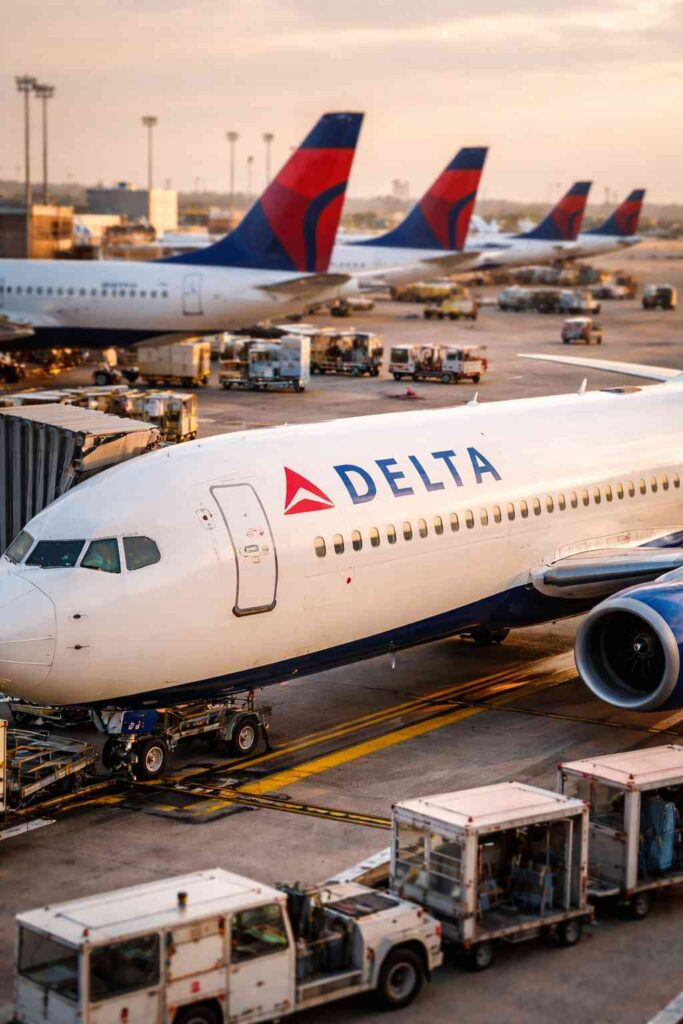

Delta Air Lines is changing what passengers can expect on some of its shortest domestic flights, with free snacks and drinks set to disappear from routes under 350 miles beginning May 19.
The move is part of a wider reshaping of onboard service as airlines deal with higher fuel costs, tighter margins and growing pressure to simplify short-haul operations. While the change will remove complimentary refreshments from hundreds of short flights, Delta is also expanding full snack and beverage service on many longer routes.
For travelers, the message is simple: the length of the flight will now matter more than ever.
Delta’s New Short-Flight Rule Starts May 19
Under the updated policy, Delta will stop offering complimentary snacks and drinks on flights shorter than 350 miles. These are typically brief regional trips where the time between takeoff and landing leaves cabin crews with only a small window for service.
The change is expected to affect nearly 500 daily flights, or about 9% of Delta’s schedule. Passengers seated in the main cabin on these routes should no longer expect the usual beverage cart or snack handout once the rule takes effect.
Delta First passengers will continue receiving full service, meaning the change mainly applies to economy and standard short-haul travelers.
At the same time, Delta is improving service on flights of 350 miles or more. Around 14% of daily flights, equal to more than 700 trips, are expected to move to a fuller snack and beverage service. That means some passengers on longer routes may actually see more consistent onboard treatment than before.
The airline has described the update as an effort to make service more consistent across its network. Rather than offering a limited service on some short routes and fuller service on others, Delta is drawing a sharper line between flights that qualify for onboard refreshments and those that do not.
Fuel Costs and Higher Fees Add Pressure
The timing of the change comes as airlines face renewed pressure from jet fuel prices. Fuel is one of the biggest expenses for carriers, and even small increases can have a major impact across thousands of daily flights.
Recent reports have linked the service changes to a sharp rise in jet fuel prices, with costs climbing from around $2.50 a gallon to more than $4 a gallon. When fuel becomes more expensive, airlines often review everything from ticket pricing and baggage fees to onboard service and route efficiency.
Delta has also recently raised checked baggage fees, adding another cost for many travelers. The first checked bag now costs $45, the second costs $55, and a third checked bag can cost $200 on many routes. Travelers can verify current baggage charges directly through the airline’s official policy page here: Delta Air Lines baggage policy.
Taken together, the higher baggage fees and reduced service on short flights show how airlines are adjusting the passenger experience without always making the headline ticket price the only visible cost.
For passengers, this means the real price of a trip may depend more heavily on extras. Bags, seat selection, food, drinks and cabin class can all change the final cost of flying.
What Passengers Should Expect
Anyone flying Delta on a short route after May 19 should plan ahead. On flights under 350 miles, it may be wise to buy water after airport security or bring a small snack before boarding, especially for early morning flights, tight connections or trips with children.
Read More
- Visit Swikblog Homepage
- Palantir Raises 2026 Revenue Forecast on US Government AI Demand
- KFC $10 Bucket of the Day Deal: Full Weekday Menu
- China Fireworks Factory Explosion in Hunan Leaves 21 Dead, 61 Injured
- A2 Milk Shares Drop 18% After Toxic Baby Formula Recall in US
- Vodafone to Buy CK Hutchison Stake in VodafoneThree for £4.3 Billion
The change does not mean Delta is ending complimentary snacks and drinks across its entire network. Longer flights will continue to receive service, and in some cases the offering may improve. The biggest difference is that short-haul passengers will have fewer included comforts.
This also reflects a broader trend in air travel. Airlines are increasingly separating the travel experience into different layers. Premium cabins continue to offer more benefits, while basic and standard economy passengers often receive fewer included services unless they pay extra or hold loyalty benefits.
The collapse of Spirit Airlines has also highlighted how difficult the operating environment has become for carriers with weaker finances. Rising costs, heavy debt and competitive pricing have put pressure on the industry, forcing airlines to rethink what they include in the base fare.
Delta remains one of the strongest U.S. carriers, but even large airlines are not immune to cost pressures. Removing snack and drink service on very short flights is a relatively small change operationally, but it sends a clear signal about where the industry is heading.
For travelers, the key is to check flight distance and cabin type before assuming refreshments will be available. A short Delta flight that once included a drink and snack may soon feel closer to a no-frills regional hop.
Still, the policy is not only a cutback. Delta is also using the change to strengthen service on longer routes, where passengers spend more time onboard and are more likely to expect a full drink and snack offering.
The final impact will depend on how clearly the airline communicates the rule. If passengers know before boarding, the adjustment may be manageable. If they find out only after takeoff, frustration could grow quickly.
From May 19, Delta’s onboard service will be more distance-based: no complimentary refreshments on the shortest flights, fuller service on longer ones, and continued premium treatment for Delta First passengers.

Make Swikblog your go-to source on Google for reliable updates, smart insights, and daily trends.