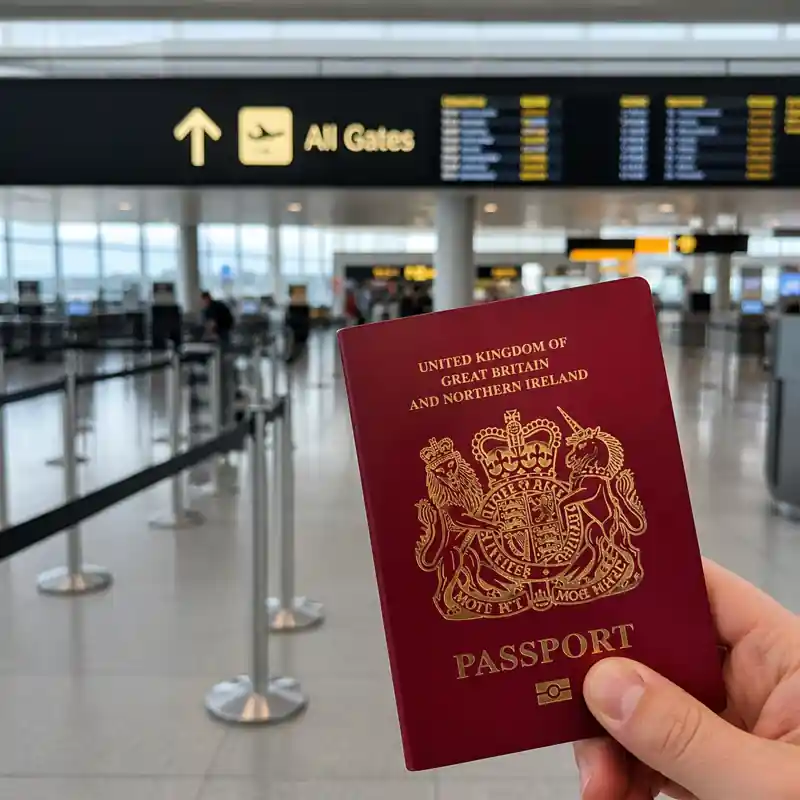

British travellers preparing for overseas trips in 2026 are being urged to check their passports well before departure, as post-Brexit travel rules continue to catch people off guard. The warning is particularly relevant for those still using older burgundy UK passports, where technical validity issues—not appearance—could lead to being turned away at the airport.
With international travel demand rising ahead of the summer season, airlines are strictly enforcing entry requirements set by destination countries. Failing to meet these rules could mean being denied boarding, even before reaching immigration control.
Why some UK passports are now being rejected
The confusion stems largely from how UK passports were issued before October 2018. At that time, if travellers renewed their passport early, any unused validity from their previous passport could be added to the new one. This meant some passports were issued with expiry dates extending beyond the standard 10-year period.
While this once worked in favour of travellers, it now creates complications under current European entry rules. For most countries in the Schengen area, UK passports must be less than 10 years old on the date of arrival and have at least three months of validity remaining from the intended date of departure.
This creates a situation where a passport may appear valid based on its expiry date but still be considered invalid due to its issue date. It’s a detail many travellers overlook—and one that airlines are increasingly checking before allowing passengers to board.
According to official UK government travel advice, travellers should verify both the issue date and expiry date before planning any international journey.
Understanding the 3-month and 6-month rules
For travel across most of Europe, the commonly applied rule is that your passport must have at least three months of validity remaining after your return date. This applies to popular holiday destinations such as Spain, France, Italy and Greece.
At the same time, UK travellers are limited to staying in Schengen countries for up to 90 days within any 180-day period. While this is separate from passport validity, it forms part of the broader set of travel checks now required.
Outside Europe, the rules can be stricter. Many countries—including Thailand, Indonesia, China and the United Arab Emirates—require at least six months of validity remaining on your passport before you travel. This difference can be critical for those planning multi-country trips or long-haul holidays.
Read More
- Visit Swikblog Homepage
- Palantir Raises 2026 Revenue Forecast on US Government AI Demand
- KFC $10 Bucket of the Day Deal: Full Weekday Menu
- China Fireworks Factory Explosion in Hunan Leaves 21 Dead, 61 Injured
- A2 Milk Shares Drop 18% After Toxic Baby Formula Recall in US
- Vodafone to Buy CK Hutchison Stake in VodafoneThree for £4.3 Billion
Other passport issues that can disrupt travel
Validity dates aren’t the only reason travellers can be stopped. Passports must also be in good condition. Damage such as torn pages, water exposure or fading details can result in a document being rejected at check-in or border control.
Travellers should also ensure their passport is signed where required, as unsigned passports can sometimes be treated as invalid. For families, it’s important to remember that children’s passports are valid for only five years, meaning they may expire sooner than expected.
Newer blue UK passports issued from 2020 are less likely to have the extended validity issue seen in older red passports. However, they still need to meet destination-specific rules, meaning no traveller is completely exempt from checks.
The key takeaway for 2026 is that passport rules are no longer straightforward. With different countries applying different requirements—and airlines enforcing them strictly—the margin for error has become much smaller.
For UK travellers, taking a few minutes to check passport details now could prevent serious disruption later. In many cases, it may be the difference between a smooth holiday departure and being turned away at the airport gate.

Make Swikblog your go-to source on Google for reliable updates, smart insights, and daily trends.