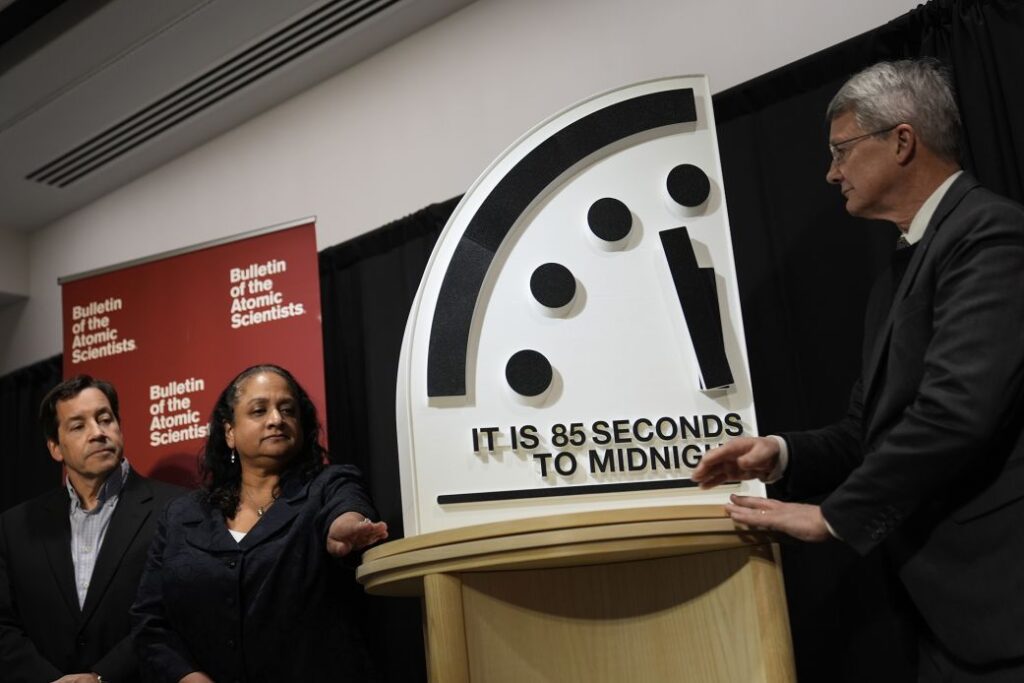

The Doomsday Clock is now set at 85 seconds to midnight, its closest position ever to the symbolic point of global catastrophe. The 2026 update was announced on January 27 by the Bulletin of the Atomic Scientists, an independent nonprofit organization that evaluates worldwide threats each year. The group said the latest decision reflects growing concern over nuclear tensions, climate change, emerging technologies and weakening international cooperation.
Although the clock often makes headlines, it is not a prediction that disaster will happen on a specific date. Instead, it is a scientific symbol designed to communicate how experts assess the level of global risk created by human actions and political decisions.
What Is the Doomsday Clock?
The Doomsday Clock was introduced in 1947 by the Bulletin of the Atomic Scientists, an organization founded after World War II by scientists who participated in the Manhattan Project. Every year, the Bulletin’s Science and Security Board reviews developments in international security, environmental science and emerging technology before recommending whether the clock should move.
Rather than measuring time, the clock represents the world’s proximity to a human-made global catastrophe. Midnight symbolizes the greatest level of danger, while the number of seconds before midnight reflects the board’s overall assessment of international risk.
Why the Clock Moved Closer in 2026
The Bulletin explained that the latest adjustment was driven by several connected challenges rather than one isolated event. The clock moved from 89 seconds to midnight in 2025 to 85 seconds before midnight in 2026, making it the closest setting since the clock was first created.
Nuclear security remains one of the organization’s biggest concerns. Experts pointed to rising geopolitical tensions, weakening arms-control agreements and continued conflict involving nuclear powers as factors that increase the risk of miscalculation or accidental escalation.
Climate change was another major reason behind the decision. Scientists noted that greenhouse gas emissions remain high, while more frequent extreme weather events, rising temperatures and environmental stress continue to create economic and humanitarian challenges across many parts of the world.
Artificial Intelligence and Other Emerging Risks
The Bulletin also highlighted the rapid expansion of artificial intelligence, advanced cyber capabilities and autonomous military technologies. These innovations have significant potential benefits, but experts say stronger international safeguards are needed to reduce the possibility of misuse, cyber conflict or unintended consequences.
According to the organization, technological progress is advancing faster than global governance, making international cooperation increasingly important as new security challenges emerge.
Why Global Cooperation Matters
Many of the risks identified by the Bulletin cross national borders. Nuclear weapons, climate change, infectious diseases and advanced technologies cannot be managed effectively by individual countries acting alone. Scientists argue that stronger diplomacy and coordinated international action remain essential for reducing long-term global threats.
More analysis of major international developments can be found in our latest world news coverage.
Where to Learn More
The Bulletin publishes a detailed explanation of each annual decision, including the evidence considered by its Science and Security Board. The full methodology and historical timeline are available on the Bulletin of the Atomic Scientists’ official Doomsday Clock page.
While the Doomsday Clock is symbolic, the issues it highlights are based on measurable global trends. The 2026 update underscores how nuclear security, climate change and emerging technologies are increasingly connected, reinforcing the need for informed policy decisions and sustained international cooperation.

Make Swikblog your go-to source on Google for reliable updates, smart insights, and daily trends.