U.S. stocks sank at the open and stayed volatile Monday after joint U.S.-Israeli strikes on Iran jolted energy markets and sent investors rushing into safety. The Dow Jones Industrial Average initially slid more than 500 points in early trading, then partially steadied as energy and defense stocks caught bids while most other sectors stayed under pressure.
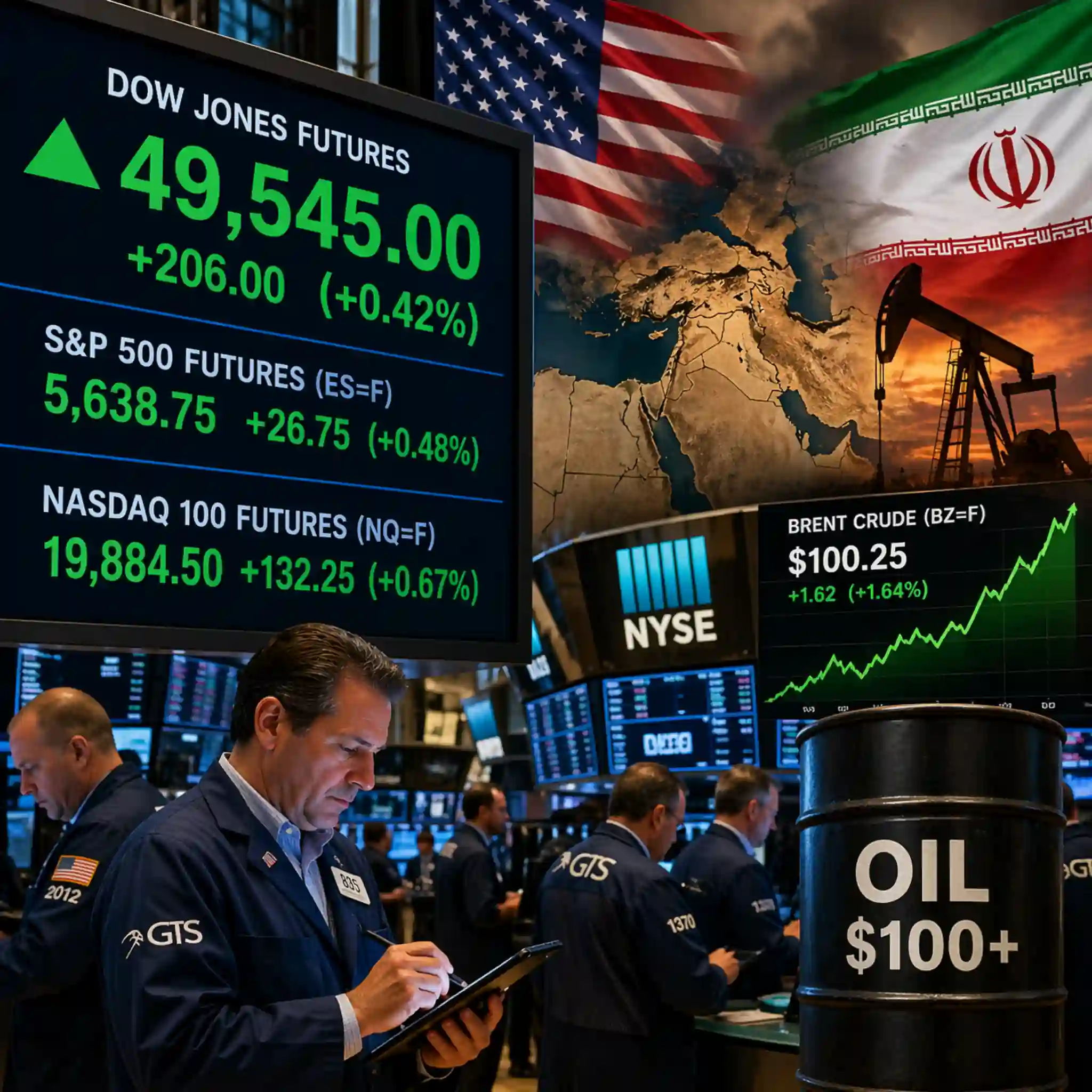
From the Dow quote shown in your screenshot, the index traded around 48,845.93, down 131.99 points, or 0.27%, at 10:06:56 AM EST with the market open. The broader tone remained fragile as traders weighed the risk of supply disruption in oil and the inflation consequences of a sustained energy shock.
Early losses hit hard across the major indexes
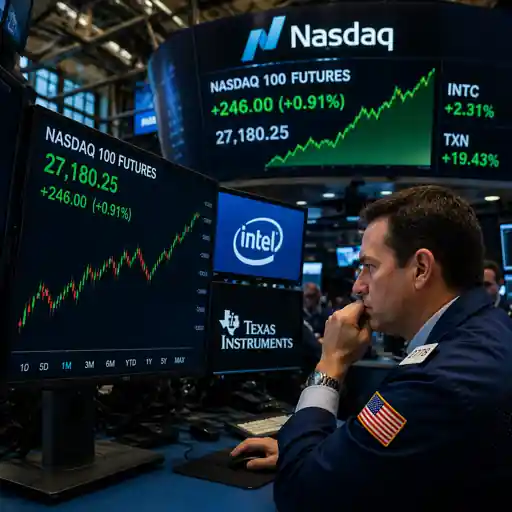
In the main market update you shared, the Dow fell 328 points, or 0.7%. The S&P 500 lost 0.5%, and the Nasdaq Composite declined 0.4%. Earlier “open in the red” updates were sharper, with the Dow down 543 points (about 1.1%), the S&P 500 down 1.1%, and Nasdaq futures down 1.6% as the first wave of selling hit.
Oil spikes as markets price disruption risk
Oil set the tone. U.S. crude gained about 7% as traders focused on the risk that the conflict could disrupt supply and transport routes. Brent crude surged as much as 13% to top $82 a barrel before moderating, while West Texas Intermediate traded just below $73, up around 8% in the updates you provided.
The pressure point for energy is the Strait of Hormuz, the world’s most important chokepoint for crude flows. The trajectory for prices hinges on whether fighting disrupts traffic through the strait, where tanker movement was described as at a standstill in the market commentary you shared. A sustained interruption could reverberate through global energy markets and intensify inflation fears.
In Europe, gas futures tied to disruption risk surged more than 45%, underscoring how quickly the shock spread across global energy pricing.
Gold jumps 2% and volatility hits a 2026 high
Safe-haven demand surged. Gold futures jumped roughly 2% and touched around $5,400 an ounce in the market notes you shared. The CBOE Volatility Index, Wall Street’s “fear gauge,” climbed to the highest level of 2026 so far as investors increased hedging demand.
At the same time, the U.S. dollar strengthened, and Treasury yields moved higher as traders reduced expectations for interest-rate cuts on worries that higher oil could reignite inflation pressure. JPMorgan also flagged a potential “risk premium” boost of up to 10% for gold in the commentary you included.
Conflict details raise escalation fears
The update you shared described a major escalation: the joint U.S.-Israeli strikes killed Supreme Leader Ayatollah Ali Khamenei, a watershed moment for the Islamic Republic. Iranian officials vowed forceful retaliation, and the report cited blasts being heard in places such as Dubai and Abu Dhabi, amplifying fears that the conflict could widen.
President Donald Trump told CNBC’s Joe Kernen that U.S. military operations in Iran are “ahead of schedule,” but market pricing suggested investors still see meaningful risk of a prolonged conflict.
Defense and energy rise while tech and banks slide
Sector performance tracked the headlines. Defense stocks climbed, with Northrop Grumman up about 4% and peers Lockheed Martin and RTX up roughly 3% in the session update you provided. In premarket movers, Lockheed was described as up about 6%, Northrop up about 5%, and drone maker AeroVironment jumping more than 10%.
Energy shares gained as well. Exxon Mobil and Chevron were described as up about 4% in premarket moves, while ConocoPhillips was up more than 5%.
Tanker stocks also surged amid conflict-driven shipping risk. The premarket list cited Frontline up more than 5%, DHT Holdings up 7%, and International Seaways up 6%.
But the broader tape leaned risk-off. Tech and banking shares led losses, with Broadcom highlighted as a chip-stock laggard, mega-cap tech names Amazon and Alphabet lower, and banks including Morgan Stanley and Goldman Sachs also down in the market update you shared.
Strategists warn oil staying high is the real danger
Barclays strategist Ajay Rajadhyaksha said the tail risk of a sustained conflict is higher than in 2024 or 2025, while cautioning that early in the week may be “too early to buy any dip” given a market conditioned to quick de-escalation. Janus Henderson’s Adam Hetts warned that broader uncertainty can suppress sentiment and that prolonged oil gains could generate a global inflation scare.
Citi equity strategists also framed the Middle East shock as a new volatility event added to a growing list of concerns, including the market’s uneasy balance between the AI spending boom and the risk of business-model disruption tied to automation and job losses.
Friday’s jobs report becomes the next pressure test
Rates and growth expectations now face another catalyst: Friday’s monthly U.S. jobs report. The update you shared pointed to expectations for about 60,000 payroll additions in February, down from January’s 130,000 gain. In a market already sensitive to inflation signals, a hot or weak print could amplify volatility depending on what oil is doing at the same time.
For the latest live market coverage on the session described above, follow updates via CNBC market coverage.

Make Swikblog your go-to source on Google for reliable updates, smart insights, and daily trends.