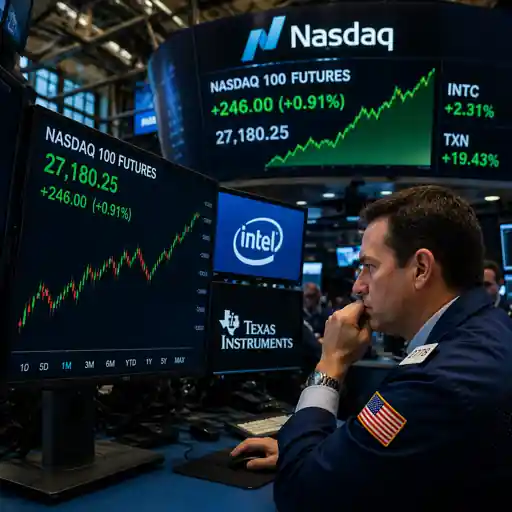
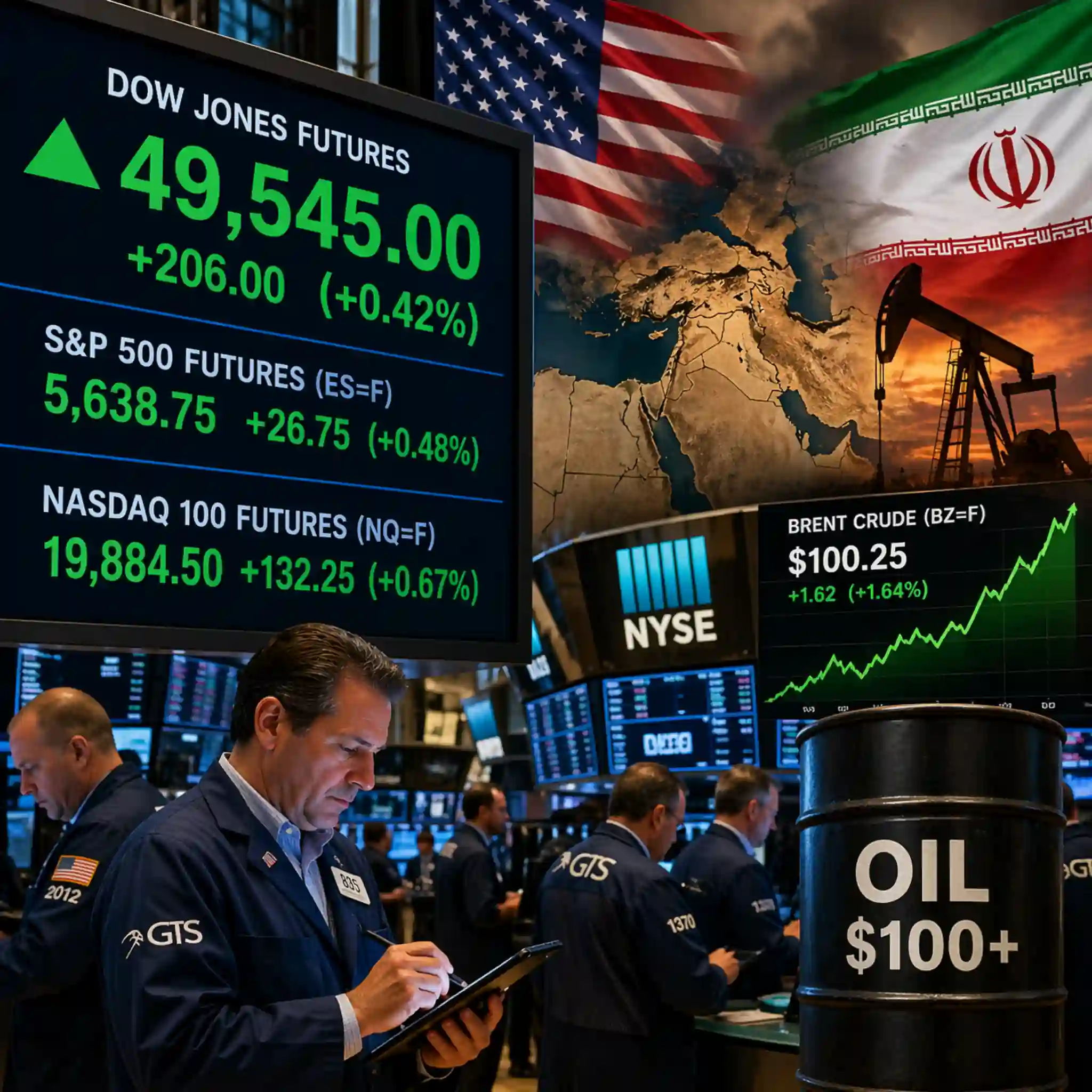
The Dow Jones Industrial Average surged sharply on Monday, climbing more than 500 points as U.S. stocks opened February on a firmer footing despite violent swings across commodities and cryptocurrencies.
By mid-afternoon trading, the Dow was up 537 points, or 1.10%, at 49,429.78, extending gains after an early bout of indecision. The blue-chip index pushed toward its session highs as investors rotated back into large-cap industrials and financials while risk-heavy corners of the market remained under pressure.
The Dow opened at 48,777.77 and traded in a wide intraday range, with a session low near 48,673 before buyers stepped in aggressively. At its peak, the index touched 49,436, coming within striking distance of its 52-week high at 49,633.
Market breadth improved steadily through the session, with gains led by financials, industrials and select technology names tied to infrastructure and artificial intelligence spending. The Dow’s rally outpaced early moves in the broader market as traders leaned into perceived earnings stability and balance-sheet strength.
The rebound came as investors looked past sharp declines in silver, gold and bitcoin, which had rattled sentiment late last week. Silver prices swung wildly, moving more than 20% across sessions before settling lower, while gold futures ended down roughly 2%. Bitcoin, which briefly dropped below $80,000 over the weekend, clawed back some losses but remained volatile.
Oil prices also retreated, adding another layer to the risk-off narrative in commodities. Brent crude fell more than 4%, sliding toward the mid-$60s per barrel after comments suggesting easing geopolitical tensions and potential progress in U.S.-Iran negotiations. Lower energy prices helped ease inflation concerns, offering support to equities.
In fixed income, Treasury yields edged higher after U.S. factory activity unexpectedly expanded in January. The benchmark 10-year yield traded near 4.28%, reflecting a recalibration of growth expectations rather than renewed inflation fears. Equity markets appeared comfortable absorbing the move, particularly in cyclically exposed sectors.
Corporate news added to the Dow’s momentum. Shares of Oracle advanced after the company outlined plans to raise up to $50 billion to fund its expanding AI and data-center buildout, reinforcing confidence in long-term enterprise demand. Elsewhere, memory-related stocks outperformed as investors reassessed supply constraints following last week’s selloff.
Not all earnings reactions were positive. Disney shares sank roughly 7% after executives flagged softer growth expectations tied to a slowdown in international visitors to U.S. theme parks. The move highlighted ongoing divergence beneath the surface, even as headline indexes climbed.
Political developments largely faded into the background. Markets absorbed President Donald Trump’s announcement of a new trade deal with India and news that a partial government shutdown could delay Friday’s jobs report, with little immediate impact on equities.
For now, traders appear focused on earnings resilience and broader seasonal strength rather than short-term turbulence in metals and digital assets. With the Dow holding firmly above 49,000 and volatility cooling in equities, the index’s early-February rally suggests investors are selectively rebuilding risk exposure rather than retreating wholesale.
As one strategist put it, what continues to matter most is earnings delivery and the underlying economic backdrop — and Monday’s price action showed that, at least for now, equity markets are willing to look past the noise.
For broader U.S. market context and live index coverage, investors are closely tracking updates from The Wall Street Journal’s market data.

Make Swikblog your go-to source on Google for reliable updates, smart insights, and daily trends.