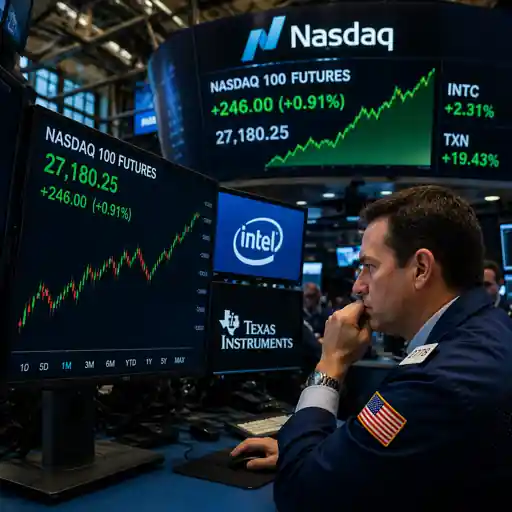
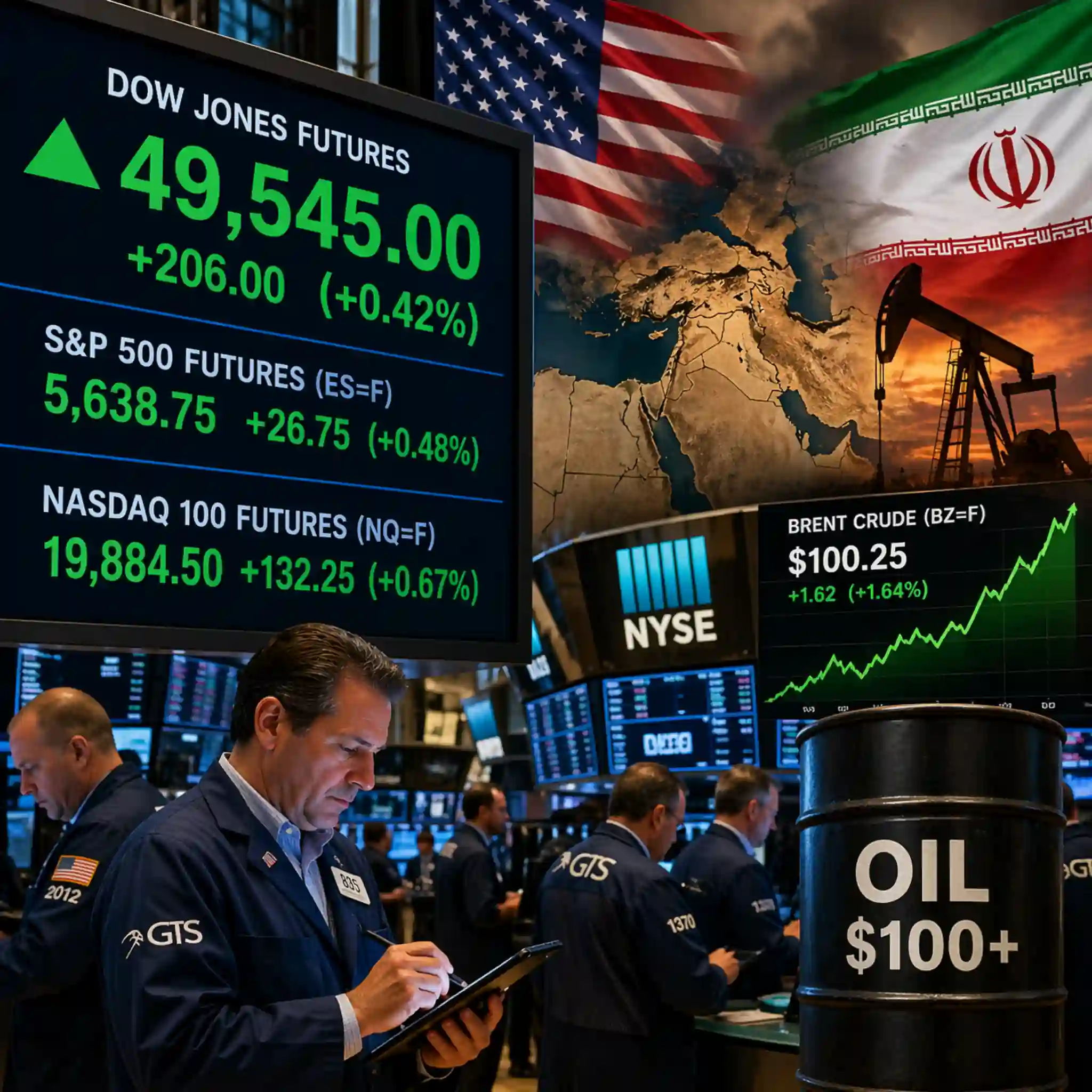
U.S. stocks tumbled sharply at the open as investors reacted to escalating tensions in Iran and fears of disruption to global oil supplies. Selling pressure hit major blue-chip names including Apple, Microsoft, Boeing, Goldman Sachs, and JPMorgan Chase, reflecting broad risk aversion across sectors.
In early trading, the Dow Jones Industrial Average plunged 1,110 points, down 2.2%. The decline was driven by weakness in industrial and financial heavyweights such as Caterpillar, American Express, and UnitedHealth Group. The S&P 500 dropped 1.9%, while the tech-heavy Nasdaq Composite fell 1.9%, with major tech stocks including Nvidia, Amazon, Meta Platforms, and Tesla trading lower.
Market snapshot: Dow down 1,110 points (-2.2%), S&P 500 down -1.9%, Nasdaq down -1.9%. Tech giants and financial leaders led the early decline amid rising geopolitical tension.
Energy stocks surge as oil jumps
While most sectors declined, energy shares moved higher as crude prices spiked. Companies such as ExxonMobil, Chevron, ConocoPhillips, and Occidental Petroleum gained in early trading, tracking sharp gains in oil futures.
Brent crude, the international benchmark, climbed $4.72, or 6.2%, to $80.83 per barrel. Meanwhile, U.S. benchmark crude surged $6.22, or 8.8%, to $77.45 per barrel. Oil-sensitive refiners and energy infrastructure stocks also saw increased volatility.
Strait of Hormuz fuels market anxiety
Investor focus remains fixed on the Strait of Hormuz, through which approximately 20% of the world’s oil supply flows. Any disruption in tanker movement through the region raises fears of supply tightening, pushing oil higher and pressuring transportation stocks like Delta Air Lines, American Airlines, and logistics giants such as FedEx.
Higher oil prices can ripple across the economy, impacting consumer staples companies like Procter & Gamble and retailers such as Walmart and Target, which depend on stable shipping and distribution costs.
Financials and tech under pressure
Banking stocks including Bank of America, Citigroup, and Wells Fargo declined amid broader risk-off sentiment. Rising geopolitical uncertainty often reduces investor appetite for cyclical exposure and increases volatility across capital markets.
Meanwhile, semiconductor leaders such as Advanced Micro Devices (AMD) and Intel traded lower alongside Nvidia, as growth stocks faced renewed pressure from risk-sensitive trading flows.
Fresh 2026 lows raise concern
The drop pushed the S&P 500 toward a fresh low for 2026, increasing concern that markets may struggle to regain momentum without clarity on how long the Iran conflict will last.
Strategists note that when geopolitical uncertainty rises sharply, investors tend to rotate out of high-growth names and into defensive assets, including energy stocks and commodities.
What investors are watching now
Going forward, traders will closely monitor oil futures, Middle East developments, and any official statements from policymakers. Continued strength in crude could further support energy names like ExxonMobil and Chevron while weighing on transportation, technology, and consumer-facing companies.
For full original reporting on the market reaction, visit CBS News.
For now, Wall Street remains on edge. When energy security is in question and oil prices spike nearly 9% in a single session, volatility tends to follow — and investors across sectors are adjusting quickly.

Make Swikblog your go-to source on Google for reliable updates, smart insights, and daily trends.