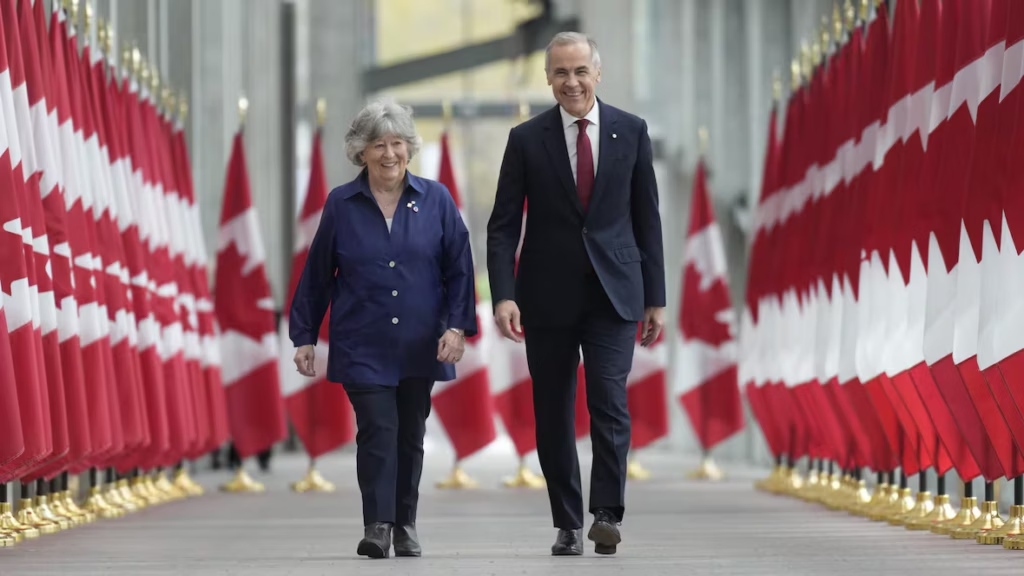

Commuters heading into downtown Ottawa on Monday are being advised to prepare for traffic delays and transit changes as Louise Arbour is formally installed as Canada’s next Governor General.
The ceremony, scheduled to begin at 10 a.m. at the Senate of Canada Building, marks one of the most significant constitutional events in the country this year. While the proceedings are largely ceremonial, they will temporarily reshape traffic patterns in the heart of the nation’s capital as security measures and event logistics take effect.
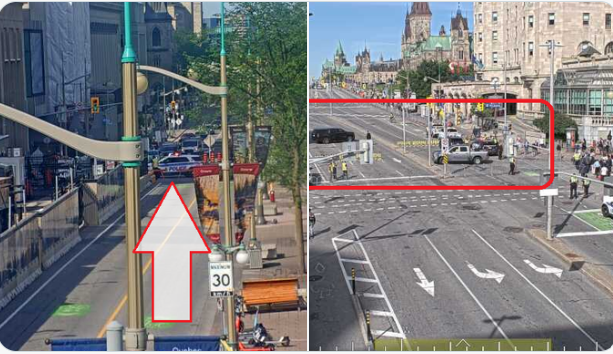
Several key downtown streets are expected to be closed between 8:30 a.m. and 1:30 p.m. The affected routes include Wellington Street between O’Connor Street and Mackenzie Avenue, Metcalfe Street between Queen Street and Wellington Street, Queen Street between O’Connor Street and Elgin Street, and Elgin Street between Albert Street and Wellington Street.
Because these roads sit within Ottawa’s government and parliamentary district, the closures are likely to affect office workers, tourists, local residents and visitors traveling through the downtown core. Drivers are encouraged to allow additional travel time and consider alternate routes throughout the morning and early afternoon.
Transit Service Changes Around Rideau and Parliament
Public transit users will also encounter disruptions. There will be no service at Rideau Station stops A and B, while Parliament Station will be temporarily unavailable during the ceremony period.
In addition, bus routes that normally operate through Rideau Street will be diverted to Mackenzie King Bridge from 8 a.m. until 1 p.m. The rerouting is expected to affect thousands of daily passengers who rely on downtown connections.
The latest traffic restrictions come as Ottawa commuters continue navigating broader transportation changes across the city, including planned O-Train maintenance closures affecting Lines 2 and 4, making it especially important for transit riders to check schedules before traveling.
Who Is Louise Arbour?
Louise Arbour brings decades of legal and public service experience to the role. A former justice of the Supreme Court of Canada, she is widely recognized internationally for her work in international law and human rights, including serving as the United Nations High Commissioner for Human Rights.
As Governor General, Arbour will serve as the King’s representative in Canada and carry out a range of constitutional, ceremonial and community responsibilities. The position also includes serving as commander-in-chief of the Canadian Armed Forces.
Her installation follows the tenure of Mary Simon, who made history in 2021 when she became Canada’s first Indigenous Governor General. Simon’s term placed a strong focus on reconciliation and Indigenous representation at the highest levels of Canada’s institutions.
Monday’s installation ceremony is expected to draw senior government officials, military representatives, members of the diplomatic community and invited guests. Security measures surrounding the event are the primary reason for the temporary road closures and transit adjustments.
For residents and visitors, the ceremony represents an important moment in Canada’s democratic and constitutional system. For commuters, however, the practical takeaway is simple: expect delays, monitor transit updates and avoid the parliamentary district if possible during the closure period.
Additional information regarding traffic impacts and road restrictions is available through the City of Ottawa.

Make Swikblog your go-to source on Google for reliable updates, smart insights, and daily trends.