
Australia is heading toward a major workforce crunch in the energy sector, with projections showing a shortfall of 42,000 skilled trades roles by 2030. As the country accelerates its energy transition, utilities are now racing to secure future talent—and Essential Energy is emerging as one of the first movers tackling the issue head-on.
The regional electricity distributor has launched an aggressive strategy focused on students, training infrastructure, and regional engagement, aiming to build a sustainable pipeline of workers before the shortage begins to impact critical energy projects.
Energy workforce shortage hits 42,000 as transition accelerates
The scale of the challenge is significant. According to industry estimates and supported by workforce trends from Jobs and Skills Australia, Australia’s push toward renewables, grid upgrades, and electrification is driving unprecedented demand for skilled workers.
Lineworkers, electricians, and technical field specialists are now among the most in-demand roles, with shortages expected to intensify as infrastructure investments ramp up across regional and urban areas.
This is not just a hiring issue—it’s a structural bottleneck. Without enough skilled workers, project timelines could slow, maintenance challenges could rise, and the broader energy transition could face delays.
Essential Energy targets students to build future workforce
To address this growing gap, Essential Energy is taking a grassroots approach by targeting students in regional communities. The company has renewed its partnership with the NSW Government’s Regional Industry Education Partnerships (RIEP) program in 2026, focusing on hands-on work experience rather than traditional awareness campaigns.
In 2025 alone, Essential Energy hosted 24 RIEP events, giving students direct exposure to energy trade roles. The company now plans to expand these initiatives further in 2026 as part of its long-term workforce strategy.
CEO John Cleland emphasized the importance of early engagement, stating that building a pipeline of future tradespeople requires more than just promotion—it requires real experience.
“To create that pipeline of prospective tradespeople, we need good programs such as RIEP to give young people, and women in particular, a feel for the careers they can pursue so they understand that the energy transition is delivering economic benefits to regional Australians,” Cleland said.
Inside the NextGen Women in Trades initiative
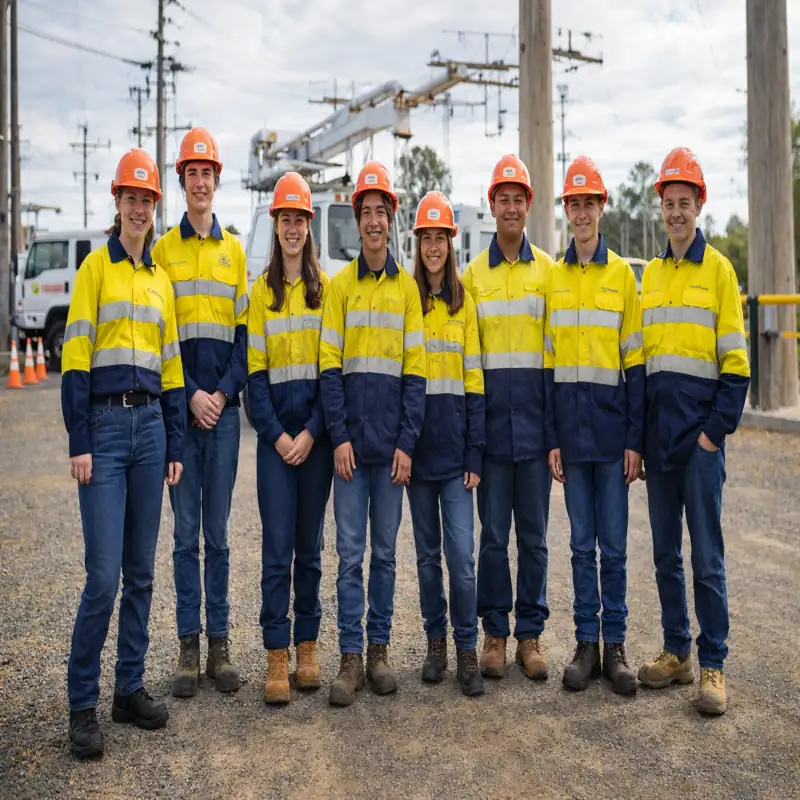
One of the standout initiatives was the RIEP NextGen Women in Trades event held at Essential Energy’s Dubbo depot on February 25. The program brought together 10 secondary school students from Coolah Central School, offering them a firsthand look at careers in the energy sector.
Students in years nine and 10 spent an afternoon engaging with experienced tradespeople, learning about career pathways, and even trying out practical tasks.
The experience left a strong impression on participants.
“It has really given me a look into the energy industry. I’ve learnt so much and I’m very keen on it,” student Lily Richard said.
“This has really opened my mind. I got to experience what it was like to climb a power pole. I’ve really enjoyed it.”
Programs like this are critical in expanding participation, particularly among women, who remain underrepresented in trade-based energy roles.
Training academy set to boost industry-wide skills
Beyond student engagement, Essential Energy is also investing in long-term training infrastructure. The company is preparing to launch the Essential Energy Training Academy later this year, designed to deliver specialized training aligned with the evolving demands of the energy sector.
Unlike traditional in-house programs, the academy will extend beyond Essential Energy’s internal workforce. It aims to train individuals from across the broader industry, helping to address the national skills shortage at scale.
Cleland highlighted that while the company already operates a successful apprenticeship program, the magnitude of the shortage requires a broader approach.
“The skills shortage is so large that we started the Essential Energy Training Academy to help grow the broader industry—training people from outside our organisation,” he said.
The academy will also collaborate with industry stakeholders to ensure training aligns with real-world workforce demands, particularly as the energy system becomes more complex and technology-driven.
Regional Australia at the center of the solution
Essential Energy’s strategy places regional communities at the heart of its workforce solution. Operating across regional, rural, and remote New South Wales, the company is uniquely positioned to tap into local talent pools that are often overlooked in national recruitment strategies.
This approach not only addresses workforce shortages but also delivers economic benefits to regional areas, creating jobs and career pathways closer to home.
It also aligns with broader energy infrastructure trends, as many renewable and grid projects are located outside major metropolitan areas. Training local workers reduces reliance on external labor and supports long-term community development.
Market impact and future outlook
The push by Essential Energy reflects a broader shift across the energy sector, where workforce development is becoming a strategic priority alongside investment and policy.
For investors and industry stakeholders, the 42,000-worker gap highlights both a risk and an opportunity. Companies that can secure skilled labor early may gain a competitive advantage in project delivery and operational efficiency.
For job seekers, especially students and those in regional communities, the message is clear: the energy sector is not only growing—it is actively looking for the next generation of workers.
As Australia moves deeper into its energy transition, the success of initiatives like Essential Energy’s student programs and training academy could play a critical role in determining how smoothly that transition unfolds.
While the workforce challenge remains significant, early action from companies like Essential Energy suggests the industry is beginning to respond before the shortage reaches critical levels.

Make Swikblog your go-to source on Google for reliable updates, smart insights, and daily trends.