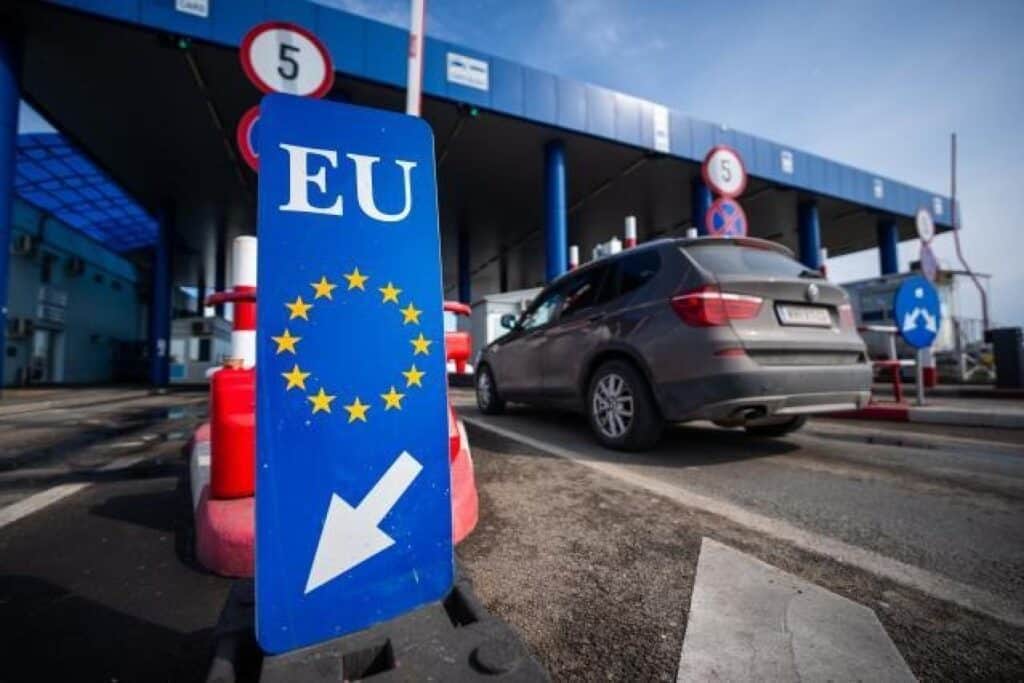

Europe’s borders are entering a more digital phase, and that means the journey into popular destinations such as Spain, France, Greece, and Italy is changing for non-EU travelers. The European Union’s Entry/Exit System is now fully operational across the Schengen zone, replacing the traditional passport stamp with a digital border record.
For UK holidaymakers and other non-EU visitors, this is one of the biggest practical changes to European travel in years. Instead of simply handing over a passport for stamping, travelers may now need to go through biometric checks when arriving at participating borders.
A digital border record now replaces the old passport stamp
Under the new system, non-EU nationals entering countries that use the EES will be asked to create a digital travel record. That record can include a facial photograph and fingerprint scans, with the information collected at airports, ports, and other border crossing points where the system is in place.
The shift is meant to modernize external border checks across the Schengen area. For travelers, though, the immediate difference is simple: entry into much of Europe is becoming more data-driven and more closely monitored than before.
What travelers may be asked for at the border: a facial image, fingerprint scan, details about where they are staying, proof they have enough money for the trip, and evidence of a return or onward ticket.
More News
What this means for UK holidaymakers heading to Europe
The rules apply to non-EU nationals, including UK citizens, entering countries in the Schengen area. That area includes most EU member states as well as Iceland, Liechtenstein, Norway, and Switzerland. Ireland is not part of the Schengen area, so these EES checks do not apply there in the same way.
Travelers may also face additional questions during checks, especially about the purpose and length of their stay. Border officials can ask whether a visitor has accommodation arranged, whether they can support themselves financially during the trip, and whether they have a return journey booked.
The EES became fully operational on April 10, 2026, which means many travelers heading off during the Easter period and into the summer holiday season are now much more likely to see these checks in practice.
The wider reason behind the new system
The EES has been introduced to strengthen border management, improve security, and help authorities monitor who enters and leaves the Schengen area. It is also designed to detect visitors who stay longer than permitted.
That matters because UK citizens and other eligible non-EU travelers can generally remain in the Schengen area for up to 90 days within any 180-day period. Under the new setup, those entries and exits are logged digitally rather than being tracked only through physical passport stamps.
For regular travelers, the change may eventually make repeat crossings smoother once biometric details are already recorded. In the early phase, though, the more likely experience is extra processing time and the possibility of longer queues at some busy airports and border points.
Countries where the EES is now in operation
Austria, Belgium, Bulgaria, Croatia, Czechia, Denmark, Estonia, Finland, France, Germany, Greece, Hungary, Iceland, Italy, Latvia, Liechtenstein, Lithuania, Luxembourg, Malta, Netherlands, Norway, Poland, Portugal, Romania, Slovakia, Slovenia, Spain, Sweden, and Switzerland.
For millions planning a European break this year, the biggest takeaway is that crossing the border is no longer just about showing a passport. It now involves digital registration, biometric checks, and tighter tracking of time spent inside the Schengen zone. That may not change where people travel, but it will almost certainly change how the journey starts.

Make Swikblog your go-to source on Google for reliable updates, smart insights, and daily trends.