
The Green Party’s latest attempt to overhaul New Zealand’s tax system has encountered an early setback after the party revised the financial projections behind its flagship tax package, reducing expected net revenue by approximately NZ$826 million over four years.
The correction emerged less than 24 hours after the policy was unveiled and quickly became a political issue, shifting attention away from the proposed tax reforms and toward questions about the accuracy of the party’s economic modelling.
The mistake was identified after RNZ sought clarification about figures published in the Green Party’s tax policy document. Following those inquiries, the party uploaded a revised version of the document and later acknowledged that an error had been made in the way Inland Revenue funding was recorded.
How a Costing Mistake Changed the Numbers
The Green Party’s proposal includes additional funding for tax enforcement and administration, arguing that stronger compliance measures are needed to ensure large corporations and wealthy taxpayers pay the taxes they owe.
The party allocated NZ$100 million in 2027/28, NZ$102 million in 2028/29, NZ$104 million in 2029/30 and NZ$106 million in 2030/31 to support Inland Revenue’s role in administering and enforcing the proposed reforms.
However, those amounts were mistakenly listed as revenue in the original policy document instead of being treated as costs. Once corrected, the figures had to be removed from projected revenue and added to expenditure, creating an overall four-year adjustment of roughly NZ$826 million.
The proposal would rely heavily on the Inland Revenue Department to implement and enforce several of the new measures, making the agency a key part of the party’s broader tax strategy.
What the Revised Revenue Figures Show
Before the correction, the Green Party projected its tax package would generate NZ$5.347 billion in net revenue during the 2027/28 financial year, rising to NZ$5.937 billion by 2030/31.
After the adjustment, projected net revenue was revised down to NZ$5.147 billion in 2027/28 and NZ$5.725 billion in 2030/31.
While the revised figures still point to billions of dollars in additional revenue, the correction has provided critics with ammunition to question the reliability of the party’s costings.
Fiscal policy proposals are often judged not only on their objectives but also on the precision of the assumptions supporting them. Even relatively small errors can attract significant scrutiny when they involve headline economic policies.
Swarbrick Defends the Tax Package
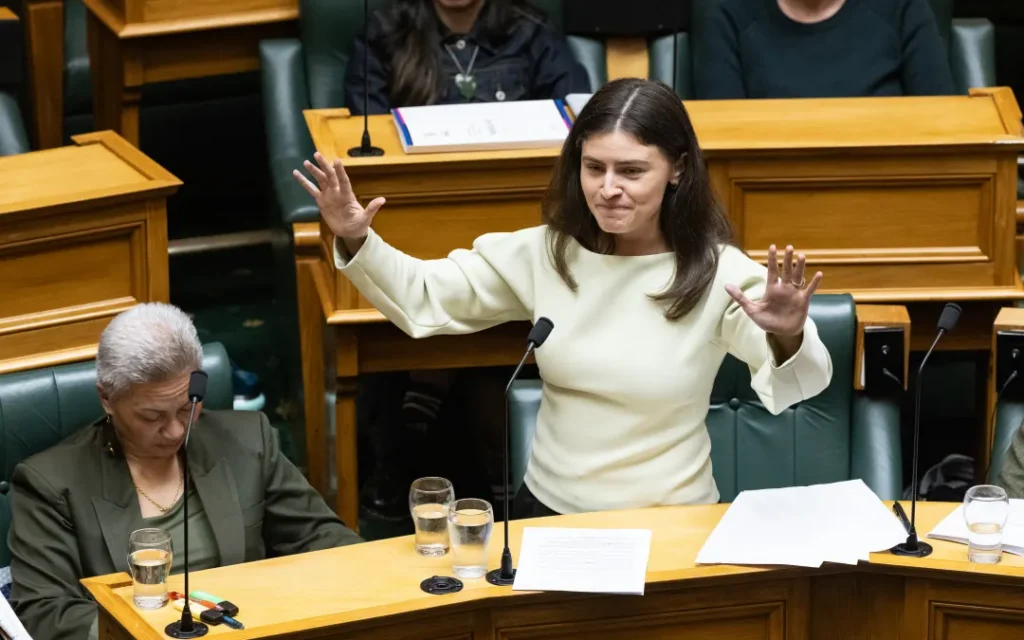
Green Party co-leader Chlöe Swarbrick acknowledged the mistake during an interview on Midday Report, describing it as a typo affecting net revenue calculations.
She argued the error was identified and corrected quickly and maintained that the broader policy remains financially credible.
Swarbrick said the revised figures continue to support the party’s goal of raising additional government revenue while delivering tax relief to lower and middle-income earners.
A Green Party spokesperson also stated that the correction had “no material impact” on the overall proposal and that all other calculations remained unchanged.
The Major Tax Changes Proposed by the Greens
The package is designed around the principle that wealthier New Zealanders, major corporations and multinational businesses should contribute a greater share of tax revenue.
Among the most significant measures is a 2.5% annual tax on net assets above NZ$10 million. The party is also proposing a 33% tax on inheritances and gifts received above NZ$1 million.
The plan would introduce a levy on major banks and increase the corporate tax rate for businesses generating more than NZ$30 million in annual turnover.
Additional proposals include reversing interest deductibility settings for investment properties and applying a 5% withholding tax to profits large technology companies transfer offshore.
Supporters argue the measures would create a fairer tax system and generate funding for public services, while opponents contend the changes could discourage investment and increase compliance costs.
Income Tax Cuts Remain a Key Selling Point
Although debate has largely focused on wealth taxes and business taxation, the Greens have emphasized that the package also includes tax reductions for many workers.
The proposal would create a tax-free income bracket covering the first NZ$10,000 earned annually. It would also introduce a new 45% top tax rate for income above NZ$160,000.
According to the party, everyone earning less than NZ$160,000 a year would receive a tax cut under the proposed changes.
The income tax component of the package is projected to cost NZ$2.3 billion in 2027/28, rising to NZ$2.7 billion by 2030/31.
Read More
Why the Political Fallout Could Last Longer Than the Error
The corrected figures do not fundamentally change the scale of the Green Party’s tax ambitions. However, the incident highlights the political risks that accompany complex tax reforms.
When parties propose significant changes to wealth taxes, corporate taxation and government revenue collection, voters often focus as much on competence and credibility as on policy details.
The debate comes at a time when tax administration is already attracting attention, with many New Zealanders closely following developments in the New Zealand tax refund process and broader discussions about government finances.
For the Greens, the challenge now is to redirect attention back to the substance of their tax package. While the NZ$826 million correction has not erased the projected revenue gains, it has ensured that the first major debate surrounding the proposal is focused on trust in the numbers rather than the policy goals themselves.

Make Swikblog your go-to source on Google for reliable updates, smart insights, and daily trends.