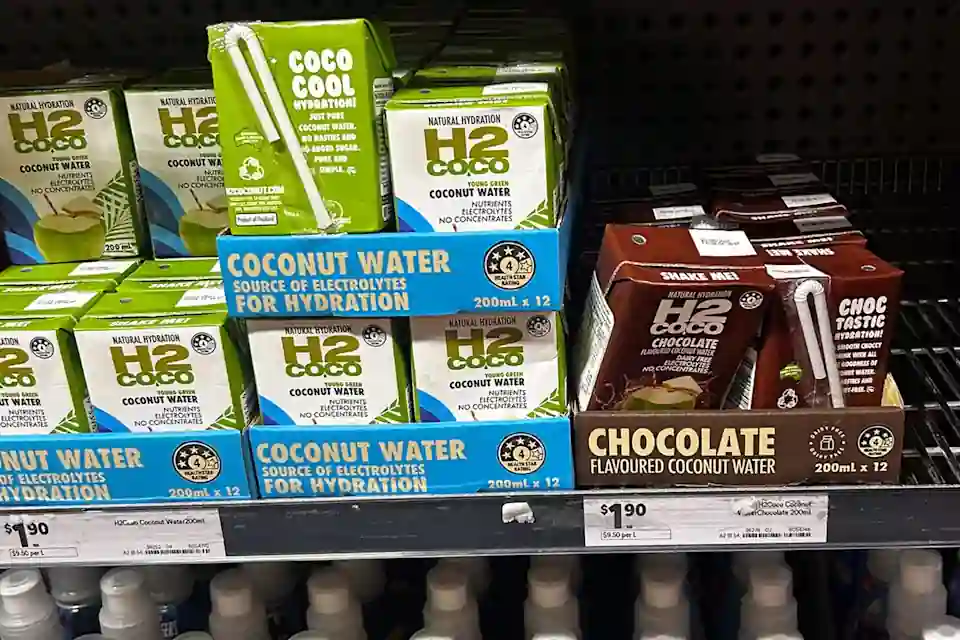

Woolworths has removed selected H2coco coconut water products from shelves across New South Wales after state regulators moved to enforce single-use plastic laws targeting beverage cartons with attached plastic straws.
The supermarket was required to clear the affected products from sale by June 21 following action from the NSW Environment Protection Authority (EPA). The move highlights how environmental regulations are increasingly shaping product packaging decisions across Australia’s retail sector, with substantial penalties available for businesses that fail to comply.
While shoppers may notice little more than a change in the type of straw attached to their drink, the case demonstrates how packaging compliance has become a growing challenge for manufacturers, suppliers and major supermarket chains.
Which H2coco Products Were Removed?
The compliance action involved two products sold through Woolworths stores in NSW:
• H2coco Young Green Coconut Water 200ml
• H2coco Chocolate Flavoured Coconut Water 200ml
According to the EPA, the issue was the plastic drinking straws attached to the side of the cartons. NSW regulations prohibit plastic straws attached to beverage containers such as poppers, juice boxes and similar packaged drinks.
The drinks themselves were not recalled because of contamination, product defects or food safety concerns. Instead, the action focused entirely on packaging that no longer met state environmental requirements.
Why NSW Regulators Stepped In
NSW introduced a ban on plastic straws attached to beverage cartons on January 1, 2025, as part of broader efforts to reduce plastic waste and prevent problematic materials from entering waterways and landfill.
The EPA has repeatedly stated that businesses were given significant notice before enforcement began. Officials say manufacturers and retailers had ample time to transition to compliant alternatives before penalties became a possibility.
A key detail often overlooked is that the rules apply even when attached plastic straws are marketed as biodegradable or compostable. Under NSW law, attached plastic straws remain prohibited regardless of those claims.
H2coco was directed to stop supplying the affected products by June 7 and replace the plastic straws with a compliant alternative. Woolworths was then instructed to remove remaining stock from shelves by June 21.
The Financial Risk Behind Non-Compliance
The case serves as a reminder that packaging rules now carry significant commercial consequences.
Businesses that continue supplying prohibited products can face maximum penalties of up to $550,000. In addition, further fines of up to $55,000 per day may apply if an offence continues.
For major retailers handling thousands of products across extensive supply chains, even seemingly minor packaging details can create major compliance challenges.
The latest enforcement action arrives at a time when Australia’s supermarket sector is facing increased regulatory attention across multiple fronts. Ongoing discussions around the proposed Australia supermarket price gouging ban have already placed additional focus on how large retailers operate and comply with evolving regulations.
How H2coco Responded
Rather than withdrawing the coconut water products permanently, H2coco has updated the packaging by replacing plastic straws with paper alternatives.
The change means shoppers are likely to continue seeing the products available in Woolworths stores once compliant stock reaches shelves.
Woolworths said it commenced an immediate review after becoming aware that the products did not meet NSW single-use plastic requirements. The retailer also confirmed it worked closely with both the supplier and the EPA to ensure compliance.
The response reflects a broader trend across Australia’s grocery sector, where packaging decisions are increasingly influenced by sustainability requirements and state-based environmental legislation.
What Happened to Remaining Stock?
The EPA sought to prevent unnecessary waste while ensuring banned packaging was removed from circulation.
Any stock remaining after the June 21 deadline was required to be donated to food rescue organisations where possible. Alternatively, products could be returned to H2coco, with evidence provided to the regulator.
This approach allowed usable products to remain available for community benefit while still enforcing compliance with NSW’s plastic reduction strategy.
Read More
What the Case Means for Consumers
For consumers, the immediate impact is minimal. The coconut water products are expected to remain available with updated packaging, and there are no safety concerns associated with the drinks.
The bigger takeaway is how environmental regulations are increasingly influencing what appears on supermarket shelves. Retailers and suppliers must now consider packaging compliance alongside product quality, pricing and consumer demand.
As Australian states continue tightening restrictions on single-use plastics, similar packaging changes are likely to become more common across a wide range of food and beverage products.
Further information about NSW’s single-use plastic regulations can be found through the NSW Environment Protection Authority.

Make Swikblog your go-to source on Google for reliable updates, smart insights, and daily trends.