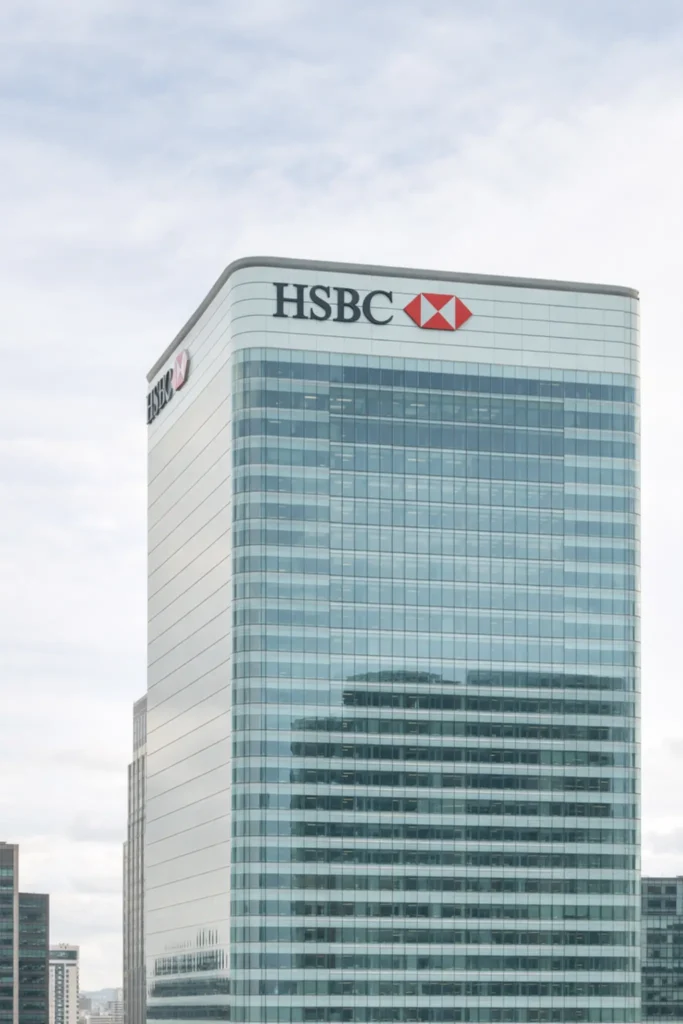

HSBC Holdings plc (LSE: HSBA.L) shares rose 0.22% to 1,275.60p, extending a powerful rally driven by strong earnings, high interest rates, and rising investor demand for global banking exposure.
The move isn’t about one headline catalyst. It reflects confidence in HSBC’s ability to keep generating large profits while expanding across Asia and the Middle East.
The broader trend is even more striking. HSBC shares are up roughly 45% in the past year and nearly 200% over five years, making it one of the strongest performers in the FTSE 100 banking sector.
A major driver has been higher interest rates. These boosted HSBC’s net interest margin, widening the gap between lending income and deposit costs, and significantly lifting earnings.
The numbers confirm that strength. HSBC reported $32.3 billion in pre-tax profit for 2024, up from $30.3 billion the year before.
Profit slipped to $29.9 billion in 2025, but this was largely due to one-off impairments, legal provisions, and restructuring costs rather than core weakness.
Shareholder returns remain a key attraction. The bank raised its dividend by 13.6%, with the yield around 4.4% and expected to cross 5% by 2027.
Over the past five years, HSBC has grown payouts at a compound rate of about 38%, placing it among the most generous income stocks in the FTSE 100.
Buybacks have also supported the stock, totaling around $6 billion last year. However, these are now paused for about nine months.
The pause comes as HSBC spends roughly £13.6 billion to increase its stake in Hang Seng Bank, a move aimed at strengthening its Asian core.
Geography remains a major advantage. HSBC has deep exposure to China, Hong Kong, and Singapore, along with a growing presence in the UAE.
This diversification gives it a stronger earnings base compared to UK-focused banks, which are more tied to domestic economic cycles.
The bank has also been reshaping itself after the financial crisis. It has exited weaker markets and focused on higher-return areas like wealth management.
Wealth is becoming a key growth engine. Rising affluent populations in Asia and the Middle East are driving demand for investment and financial services.
Management is targeting a 17% return on tangible equity, signaling confidence in long-term profitability.
Valuation remains supportive. HSBC trades at a forward price-to-earnings ratio of around 10.9, which many investors still consider reasonable.
The bullish case is clear. Strong profits, rising dividends, and global expansion continue to support the rally. But risks are building. China’s slower growth and ongoing concerns around property and shadow banking could impact earnings.
There are also wider concerns about potential bubbles in artificial intelligence and private credit, which could lead to higher loan impairments if they unwind.
Geopolitical tensions add further uncertainty. HSBC’s global footprint exposes it to disruptions across multiple regions, including the Middle East. Still, the stock’s resilience suggests investors are focusing on long-term fundamentals rather than short-term volatility. For ongoing updates and strategy insights, investors can track developments via HSBC’s investor relations page.
You may also like: Australia EV sales jump 50% as fuel price shock refuses to fade

Make Swikblog your go-to source on Google for reliable updates, smart insights, and daily trends.