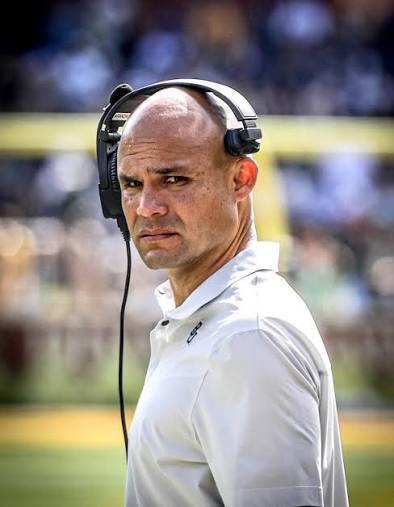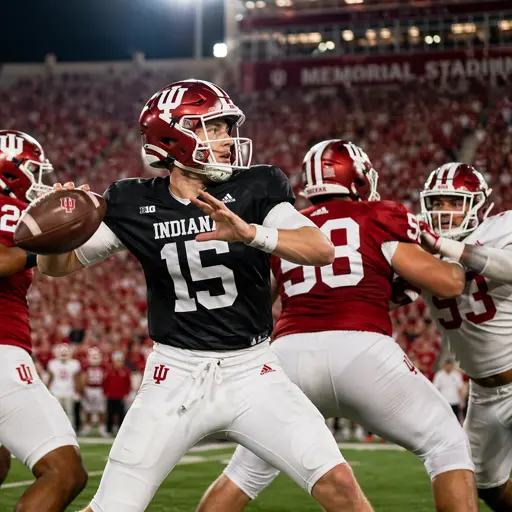

BLOOMINGTON — Indiana football’s spring game gave fans more than a routine April look at the roster. It offered a sharper picture of where Curt Cignetti’s team stands before summer workouts: the defense already looks close to regular-season form, while the offense has enough new talent to believe its best football is still ahead.
The Hoosiers were not flawless. Spring games almost never are. Injuries, especially on offense, limited some of the rhythm, and several drives ended before they could fully develop. But the night still produced meaningful clues about Indiana’s 2026 outlook, from Josh Hoover’s first live look in front of fans to the defensive front’s ability to pressure quarterbacks and force stalled possessions.
For a program trying to turn spring momentum into fall results, that matters. Indiana did not need a perfect offensive showcase. It needed signs of structure, depth and competitive balance. On that front, Cignetti had reasons to leave Memorial Stadium encouraged.
Indiana’s defense looked like the most complete unit on the field
The biggest takeaway was obvious early: Indiana’s defense played faster, cleaner and more confidently than the offense. On the opening drive, Hoover hit Nick Marsh on a quick screen for 13 yards, but the defense immediately answered. Isaiah Jones broke up a pass intended for Andrew Barker, and Mario Landino finished the series with a sack to force a punt.
That set the tone for much of the night. Jacob Savage, Tyrone Burrus, Tobi Osunsanmi and Quan Sands were all involved in pressure moments, while the secondary created tight-window throws and broke up multiple passes. The defense also forced several turnovers on downs, including a fourth-and-short stop against Kyler Kropp and a stalled series after back-to-back sacks on Grant Wilson.
Spring football can exaggerate defensive success because offenses are still installing timing and chemistry. Even so, Indiana’s front seven looked disruptive enough to be taken seriously. The group did not rely only on one pass rusher or one coverage player. Pressure came from different spots, and that is the kind of defensive depth Cignetti can build around once Big Ten play arrives.
Indiana’s official roster remains the best reference point for updated player listings and position groups as fall camp approaches, and fans can track those changes through the Indiana Hoosiers football roster.
Josh Hoover showed useful traits, even with uneven results
Hoover’s performance should not be judged only by completion numbers or stalled drives. The more important question was whether he looked comfortable operating the offense under pressure. At times, he did.
He opened with the quick completion to Marsh, later connected with Davion Chandler for 29 yards up the seam, hit LeBron Bond for 21 yards and found Barker on an 11-yard screen. Those plays showed he can distribute the ball and use different parts of the field.
There were also clear spring-game issues. Hoover missed on some throws, including red-zone attempts, and the offense settled for field goals after promising possessions. A late first-half series moved well after completions to Marsh, Bond and Barker, but pressure and a false start pushed the offense into a difficult third-and-long before Paddy McAteer drilled a 56-yard field goal.
That sequence summed up the offense: talented, capable of chunk plays, but still needing cleaner execution. For Indiana, the encouraging part is that the problems looked fixable. Timing with receivers, pass protection communication and red-zone precision usually improve with repetitions. The harder thing to find is playmaking ability, and the Hoosiers showed they have some of that.
Tyler Morris and Nick Marsh gave the passing game real upside
The wide receiver group produced two of the night’s most important offensive signals. Tyler Morris delivered the biggest play of the scrimmage when Grant Wilson found him for a 70-yard touchdown. It was exactly the kind of explosive moment Indiana needs if it wants to stretch defenses in 2026.
Marsh also made an early impression. His 13-yard catch and run on the opening drive was simple, but it showed why Indiana wants the ball in his hands. Later, Hoover went back to him on the left side for a 10-yard gain. Marsh was also targeted deep, drawing a pass interference penalty on Jaylen Bell during a drive that eventually produced points.
Those details matter because Indiana’s offense cannot rely only on long, methodical drives. In the Big Ten, explosive plays often decide tight games. Morris provided the headline moment. Marsh showed signs of becoming a volume target. Together, they give the Hoosiers a more interesting receiver room than the raw spring rhythm suggested.
The run game offered balance, but short-yardage work remains a focus
Turbo Richard was one of the more active offensive players, and his early 17-yard run gave Indiana a needed spark. He added several steady gains, including runs of seven and six yards near the goal line, while Kaelon Black, Elijah Green and other backs helped the offense stay balanced across drives.
The best rushing moment came when the offense finished a goal-line sequence with a touchdown run, showing it can still lean on physical football when needed. But there were also short-yardage stops, including a failed fourth-and-one carry by Kropp that gave the defense more scoring momentum under the spring-game format.
That split is important. Indiana’s run game does not look broken. It looks like a unit with enough depth to be useful, but one that still needs sharper blocking and more consistency in tight spaces. If the Hoosiers can turn more of those medium gains into reliable third-and-short conversions, the passing game will have a much easier path in the fall.
Special teams quietly strengthened Indiana’s night
Spring-game analysis often skips special teams, but Indiana’s kickers were hard to ignore. Nico Radicic made multiple kicks, including field goals from 24, 50 and 33 yards, while McAteer connected from 56 yards.
That matters because a developing offense needs reliable points when drives stall. Indiana left a few touchdowns on the field, but the ability to finish possessions with long field goals changes game management. In close Big Ten games, those margins can become the difference between a frustrating loss and a controlled win.
For Cignetti, the spring game likely confirmed two things at once. His defense is ahead right now, which is not a bad place to be in April. His offense is not fully formed, but the talent at quarterback, receiver and running back gives the staff something real to work with.
The Hoosiers still need better health, cleaner protection and more consistent red-zone execution before the season begins. But the larger picture is positive. Indiana showed defensive edge, transfer impact, special teams range and enough offensive flashes to justify cautious optimism.
For more college football breakdowns and roster analysis, read our latest coverage on college football trends and team outlooks.
You may like: Diljit Dosanjh Canada tour $1800 ticket and Punjabi music global growth explained

Make Swikblog your go-to source on Google for reliable updates, smart insights, and daily trends.