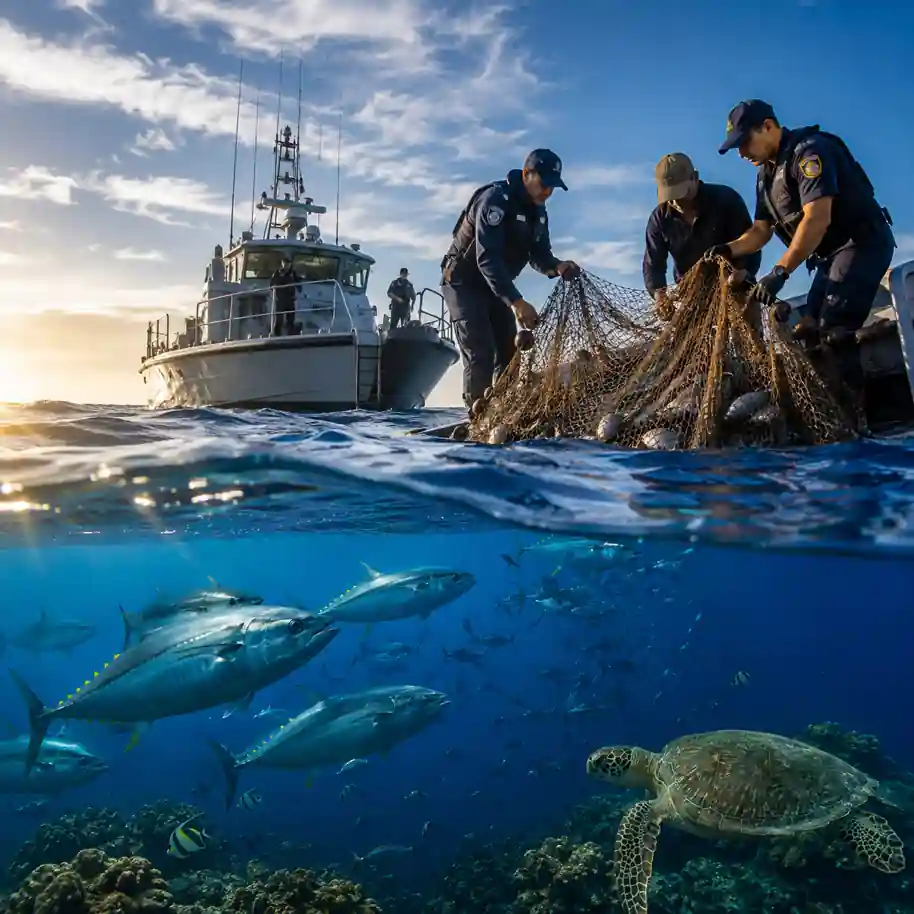

Every year on June 5, the international community observes the International Day Against Illegal Fishing, officially known as the International Day for the Fight against Illegal, Unreported and Unregulated (IUU) Fishing. The annual observance highlights the growing threat that illegal fishing poses to marine ecosystems, sustainable fisheries, food security and the livelihoods of millions of people who depend on healthy oceans.
The 2026 theme, “The Global Mission to Protect Oceans and Fish Stocks,” reflects a shared commitment among governments, international organizations and coastal communities to safeguard marine resources for future generations. The observance comes at a time when global demand for seafood continues to rise while many fish populations face increasing pressure from overfishing and illegal harvesting.
The day was officially proclaimed by the United Nations General Assembly in December 2017 following a proposal from the General Fisheries Commission for the Mediterranean (GFCM) and endorsement by the FAO Committee on Fisheries. June 5 was selected because it marks the entry into force of the Agreement on Port State Measures (PSMA) on June 5, 2016. The PSMA remains the first legally binding international treaty specifically dedicated to preventing, deterring and eliminating illegal, unreported and unregulated fishing.
Why Illegal Fishing Is a Global Threat
IUU fishing includes activities such as fishing without authorization, failing to report catches, misreporting harvests, operating in prohibited areas and targeting protected species. These practices occur both within national waters and on the high seas, making enforcement particularly challenging.
According to international estimates, approximately one out of every five fish caught globally comes from IUU fishing. Experts estimate that between 11 million and 26 million tonnes of fish are taken illegally each year, resulting in economic losses of roughly USD 10 billion to USD 23 billion annually. These losses affect governments, legitimate fishing operators and coastal communities that rely on fisheries for employment and income.
The environmental consequences are equally serious. Illegal fishing contributes to overfishing, threatens marine biodiversity and weakens efforts to rebuild vulnerable fish populations. Concerns about declining fish stocks have also been highlighted during discussions surrounding World Fisheries Day 2025, where experts warned that sustainable management is becoming increasingly important for the future of global seafood supplies.
Beyond environmental damage, IUU fishing has also been linked to labour abuse, poor working conditions and organized criminal activity in some parts of the seafood supply chain. These concerns have expanded the fight against illegal fishing beyond conservation and into areas of human rights and economic security.
Read More
International Cooperation and Sustainable Fisheries
The fight against IUU fishing is closely linked to United Nations Sustainable Development Goal 14, which calls for the conservation and sustainable use of oceans, seas and marine resources. Countries around the world have strengthened vessel monitoring systems, catch documentation schemes, fisheries inspections and information-sharing platforms to prevent illegally caught fish from entering global markets.
Several international tools have supported these efforts, including the FAO Code of Conduct for Responsible Fisheries, the Global Record of Fishing Vessels, Voluntary Guidelines on Flag State Performance, Catch Documentation Schemes and Transshipment Guidelines. Together, these measures help improve transparency and accountability throughout the fisheries sector.
The issue is particularly important for small-scale fishers, who account for nearly 90 percent of the world’s fisheries workforce. Healthy fish stocks are essential for maintaining food security, supporting local economies and protecting the livelihoods of millions of families living in coastal communities.
Consumers also have an important role to play. Choosing responsibly sourced seafood and supporting sustainable fishing practices can help reduce demand for illegally harvested fish while encouraging greater transparency across the industry.
Additional information about global efforts to combat illegal fishing is available through the official FAO IUU Fishing Programme. As the world marks International Day Against Illegal Fishing 2026, the message remains clear: protecting oceans and fish stocks requires stronger international cooperation, effective enforcement and responsible choices from governments, businesses and consumers alike.

Make Swikblog your go-to source on Google for reliable updates, smart insights, and daily trends.