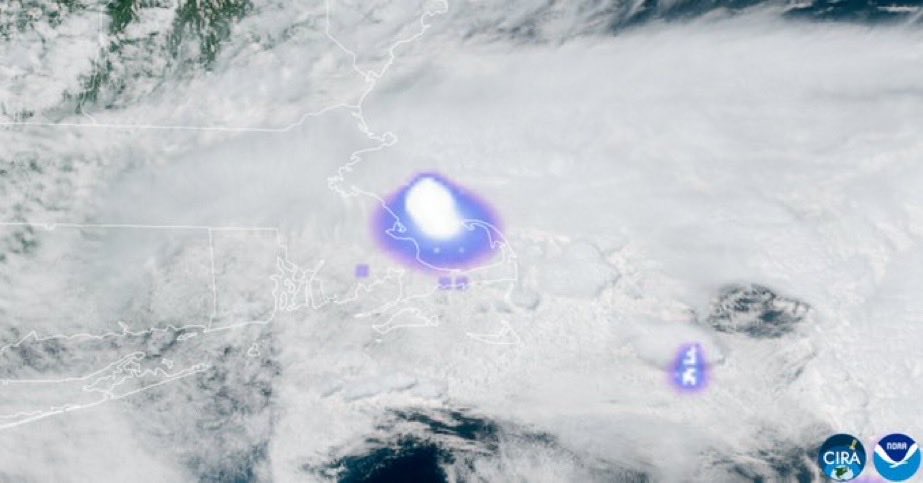

A loud boom reported around the Boston area triggered a wave of online reaction on Saturday, after residents across parts of eastern Massachusetts and nearby Rhode Island described a sudden explosion-like sound that appeared to shake homes and startle drivers.
🚨 WATCH: Mysterious DOUBLE-BOOM near the Boston area
— Nick Sortor (@nicksortor) May 30, 2026
Many people reporting an “explosion” all throughout Eastern Massachusetts and Rhode Island
911 calls flooding it, as entire neighborhoods shook. Police haven’t confirmed the source.
Sonic boom from a fighter jet maybe?…
The reports spread quickly after dashcam-style videos and weather posts began circulating online, with several accounts describing a sharp boom heard in and around Boston, Cambridge, Woonsocket and North Providence. While the word “explosion” appeared frequently in early social media posts, the developing explanation pointed away from a ground incident and toward the sky.
Early satellite discussion from weather observers suggested the sound may have been linked to a bolide, or bright meteor, entering the atmosphere. A bolide can produce a visible flash and a powerful shock wave as it breaks apart high above the ground, sometimes creating a boom that is heard across a wide area.
Heard an explosion near 495. Sounded massive. Caught it on my camera. #boston #meteor #explosion @wbz pic.twitter.com/WcPilib5iN
— Wendy Kroy (@WendyKroySmiles) May 30, 2026
Important update: The exact source has not been formally confirmed by local or federal officials at the time of writing. Early evidence being discussed by weather observers points to a possible meteor or atmospheric event, but investigators and agencies may provide more precise details later.
Satellite flash raises meteor theory after Boston boom
Weather accounts following the incident pointed to an unusual flash detected east of Boston on satellite imagery. The flash appeared notable because it did not clearly match ordinary thunderstorm activity in the area. NOAA’s GOES-19 satellite products include flash-density data used to detect lightning-like bursts from space, and these tools can sometimes capture bright atmospheric events.
That kind of satellite signature does not automatically prove a meteor, but it can strengthen the case when paired with widespread reports of a loud boom, house-shaking vibrations and a sudden flash. Similar events in other U.S. regions have later been linked to fireballs or meteors breaking apart in the atmosphere.
A meteor does not need to strike the ground to be heard. If it travels through the atmosphere at very high speed and fragments, the shock wave can reach the surface as a loud boom. In some cases, people describe it as thunder, a transformer explosion, a crash or a distant blast.
Reports came from Massachusetts and Rhode Island
Posts circulating online described the boom being heard across a broad part of New England, including the Boston area, eastern Massachusetts and communities in Rhode Island. Some people said the sound was brief but unusually strong, while others reported that it rattled homes or was picked up by vehicle cameras.
The wide reporting area is one reason the meteor explanation gained attention. A localized industrial blast, car crash or small ground-level event would normally be heard across a much narrower zone. A high-altitude atmospheric breakup, by contrast, can carry sound over a larger region depending on altitude, weather conditions and the path of the object.
NASA describes fireballs as unusually bright meteors and maintains a public fireball and bolide database, though official sensor entries are not always immediate and not every event is listed in real time. That means confirmation, if it comes, may lag behind the first wave of public reports.
For now, the Boston-area boom remains a developing incident with a likely atmospheric explanation under discussion. The strongest early clues are the sudden widespread sound, reports of shaking, and satellite-observed flash activity east of Boston. Until officials release a final assessment, the safest wording is that the event was possibly caused by a meteor or bolide entering the atmosphere, rather than a confirmed explosion on the ground.

Make Swikblog your go-to source on Google for reliable updates, smart insights, and daily trends.