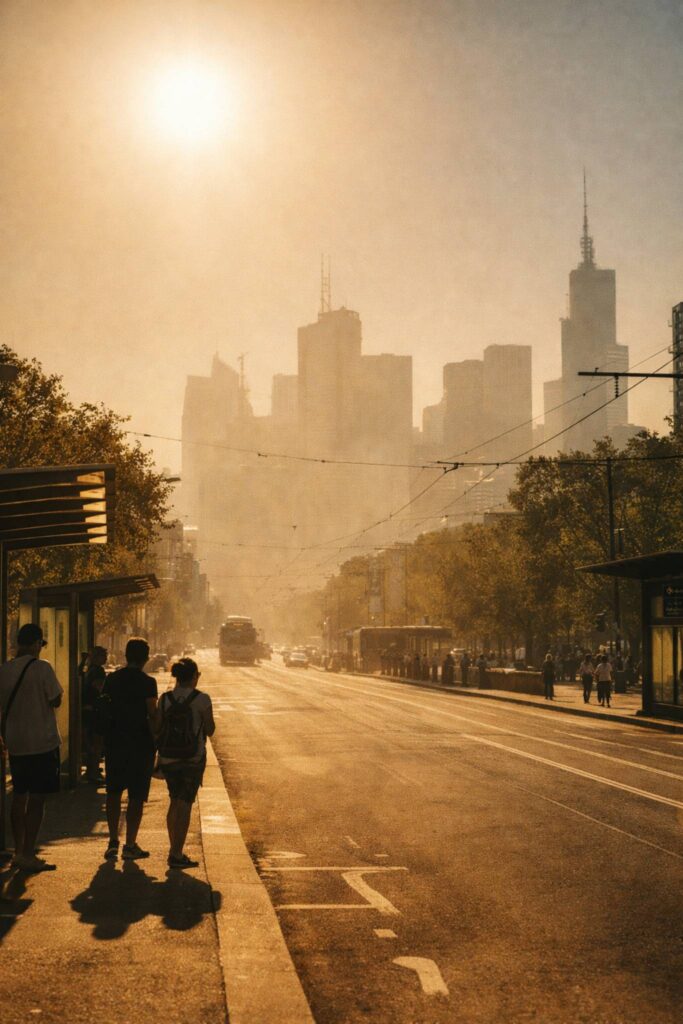

Melbourne is sweating through one of those days where the heat feels like it has its own weight. The temperature may read as a number on a screen, but on the street it becomes something else entirely: air that doesn’t move, footpaths that radiate warmth back into your shoes, and a sun that turns short errands into long, draining trips. As Victoria’s heatwave peaks, the risk isn’t only discomfort. It’s the quiet, compounding strain on bodies, homes and emergency services.
Heatwaves in Melbourne can be deceptively punishing because they build. A warm morning can lull you into thinking the day is manageable, only for the late-afternoon heat to arrive with a sharp edge. If you’re commuting, caring for kids, working outdoors, or relying on public transport, that “peak” can coincide with the hours when you’re least able to change plans. And when the forecast signals dangerous conditions, the safest choice is often the simplest one: slow down and treat the day like a genuine hazard.
Why this heat feels worse than a typical hot day. Heat stress isn’t just about the headline temperature. Humidity, warm overnight lows, direct sun exposure, and wind conditions all change how your body copes. When nights stay warm, you lose the natural reset that helps people recover. Add a few consecutive days like this, and you get the classic heatwave pattern: fatigue, headaches, dehydration, and an increased risk of heat exhaustion — especially for older adults, babies, pregnant people, and anyone with heart or respiratory conditions.
Melbourne’s urban layout can also intensify the heat. Concrete, asphalt and dense building corridors absorb warmth through the day and release it back in the evening, trapping higher temperatures in some neighbourhoods even after sunset. If you’re in an apartment that catches the afternoon sun, or a home without effective insulation, you can feel like you’re living inside the afterglow of the day’s heat.
The bigger concern: fire danger and fast-changing conditions. Heatwaves in Victoria often travel with a second shadow: heightened bushfire risk. Dry vegetation, gusty winds and high temperatures can combine quickly, and small incidents can escalate faster than people expect. Even if you’re in Melbourne’s inner suburbs, smoke impacts and rapid warning updates can affect daily life. If you’re in outer metro areas or regional towns, the advice is more direct: stay alert, check local warnings frequently, and don’t assume yesterday’s “fine” conditions will hold today.
For the most reliable, up-to-date forecast and official heat and warning information, use the Australian Bureau of Meteorology, which publishes official weather observations, forecasts and alerts. When heat and fire risk overlap, official updates matter more than social chatter — because the details (wind shifts, timing, localised spikes) can change the practical advice.
What to do today if you’re in Melbourne. Treat heat preparation like you would a storm warning: a few small steps can prevent a bad outcome. Hydrate earlier than you think you need to — thirst is a late signal. If you’re heading out, aim for light, loose clothing, carry water, and plan shaded routes where possible. For families, pets and older relatives, check in more than once. The “fine” voice on the phone can hide real heat fatigue.
If your home is heating up, close blinds and curtains on the sunny side before the hottest part of the day. Use fans strategically (they help most when the air can move through the space) and cool the body directly with a damp cloth, cool shower, or wet towel on the back of the neck. If you have air conditioning, consider using it in shorter, steady bursts rather than waiting until your home becomes unbearable — it’s often harder and more expensive to cool a space once it’s already superheated.
Work, sport and travel may need a reset. Heatwaves are not “push through it” weather. If you’re exercising outdoors, shift it to early morning or cancel. If you work outside, take more breaks than usual, find shade, and watch for warning signs like dizziness, confusion, nausea or rapid heartbeat. On days like this, the most dangerous moment can be the one where you decide you’re “almost done” and push anyway.
Public transport can also feel harsher in extreme heat — platforms, tram stops and exposed interchanges turn into heat traps. If you can, travel earlier, carry water, and plan extra time so you’re not sprinting between connections. If you’re driving, don’t leave kids or pets in a parked car for any length of time. In this kind of heat, minutes matter.
The takeaway. Melbourne’s heat today isn’t just a talking point — it’s a safety issue. A peak heatwave day is when small oversights stack up: one skipped bottle of water, one “quick” errand at the wrong hour, one elderly neighbour who doesn’t want to “make a fuss.” The best approach is calm and practical: minimise exposure, stay hydrated, monitor official updates, and check in on people who may be coping quietly.
For more ongoing coverage and quick explainers you can share with family, keep your heatwave reading in one place with more Australia weather updates on Swikblog.
Note: This article is general information, not medical advice. If you think someone is experiencing heatstroke or severe heat illness, seek urgent help immediately.

Make Swikblog your go-to source on Google for reliable updates, smart insights, and daily trends.