
Western Australia entered the WA Day long weekend under severe weather pressure as a powerful storm system tore through the state’s south, cutting electricity to nearly 69,000 customers and leaving emergency crews facing a large-scale recovery operation.
The storm was not a brief burst of bad weather. It arrived in damaging waves, first bringing flooding and strong winds on Saturday night before a second severe system swept through on Sunday evening. By Monday, authorities were still dealing with fallen trees, damaged power infrastructure, flooded roads, roof damage and dangerous coastal conditions.
Power Outages and Emergency Calls Surge Across WA
Western Power reported around 1,300 incidents across its network after strong winds brought down poles, wires and trees. More than 250 storm-related outages were recorded in the South West alone, adding pressure to crews trying to restore electricity across affected communities.
Nearly 69,000 homes and businesses were left without power as restoration teams worked across multiple regions. Western Power described the recovery effort as a significant operation due to the scale of network damage caused by the storm.
The State Emergency Service received nearly 700 calls for help, with crews responding to damaged buildings, fallen trees, debris on roads and downed power lines. Authorities warned residents not to approach damaged electrical equipment or unstable structures as gusty conditions continued in several areas.
One of the most serious damage reports came from Cottesloe, where part of an apartment building roof was ripped away. Nearby residents were advised to remain indoors because loose roofing material and debris could still become airborne in strong winds.
The Bureau of Meteorology recorded a 135km/h wind gust at Cape Naturaliste, a May record for the area. Forecasters said the strength of the gust pushed close to Category 2 cyclone intensity, showing how powerful the system became even though it was not classified as a tropical cyclone.
While rainfall eased across Perth overnight, flooding continued to affect parts of the city. The western end of Riverside Drive in the CBD was closed due to rising water levels, while motorists across Perth and regional areas were urged to remain cautious because of debris, fallen trees and damaged infrastructure.
Flights Diverted, Festival Cancelled and Coastlines Battered
Air travel was heavily disrupted as dangerous winds swept across the metropolitan area. Four flights were diverted to Kalgoorlie-Boulder Airport after conditions prevented safe landings at Perth Airport. Among them was a Virgin Australia service from Karratha that reportedly attempted to land twice before diverting.
A TransNusa flight arriving from Denpasar was also forced to divert. Passengers remained onboard during the delay because Kalgoorlie-Boulder Airport does not have customs facilities required for international arrivals. Qantas flights from Sydney and Brisbane were also affected before eventually reaching Perth.
The weather also forced organisers to cancel Fremantle’s WA Day Festival, one of the state’s major public holiday celebrations. Officials cited continuing forecasts for damaging winds across the Perth metropolitan area.
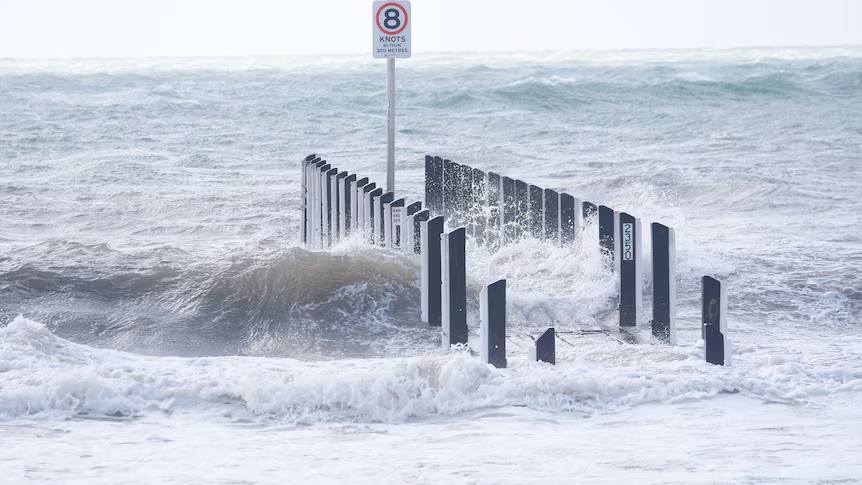
Coastal communities faced a separate threat from elevated sea levels, powerful waves and gale-force winds. Port Beach, which has experienced years of erosion, suffered further damage as protective fencing and sandbank defences were torn apart by storm-driven surf. Coastal hazard warnings stretched from Northampton to Esperance, with low-lying areas between Jurien Bay and Israelite Bay warned about possible flooding.
According to the Australian Bureau of Meteorology, an intense low-pressure system continued moving east across Western Australia, bringing damaging winds to areas including the Great Southern, Central Wheatbelt and southern Goldfields. Authorities warned that some regions could still experience destructive wind gusts averaging up to 70km/h.
Read More
The storm’s impact highlights how vulnerable electricity networks, transport systems and coastal infrastructure can become during extreme weather events. Similar weather-related disruptions have affected other parts of Australia in recent months. Earlier this year, major flight cancellations and severe travel disruption were reported during powerful storms in New South Wales, as detailed in Swikblog’s coverage of Sydney Airport flight cancellations caused by 110km/h storm winds.
Although conditions have eased in some areas, emergency officials continue to urge caution. Fallen power lines, unstable trees, damaged roofs, flooded roads and weakened coastal areas remain significant hazards as recovery crews work to restore services and assess the full extent of the damage across Western Australia.

Make Swikblog your go-to source on Google for reliable updates, smart insights, and daily trends.