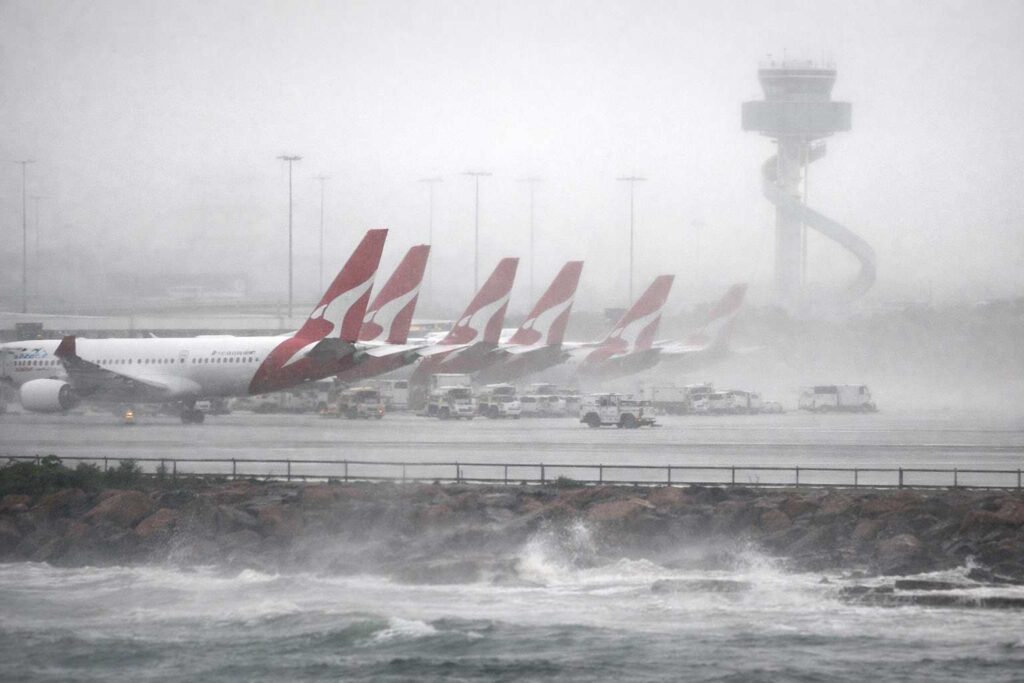

Sydney woke up to widespread disruption after a powerful storm system battered the city with 110 km/h winds, massive ocean swells, and dangerous coastal conditions. The extreme weather triggered flight cancellations at Sydney Airport, shut down beaches, disrupted ferry services, and left thousands without power across New South Wales.
The rapidly intensifying system, driven by a deep offshore low-pressure system, created a chain reaction of disruptions across transport networks, with Sydney Airport emerging as the epicentre of the chaos.
Dozens of Flights Cancelled at Sydney Airport
Air travel was severely impacted as strong crosswinds forced Sydney Airport to operate with limited runway capacity. At one point, only a single runway was operational, significantly reducing the number of flights that could take off and land.
This led to dozens of flight cancellations and delays, with more than 90 flights affected during peak disruption. Passengers faced long queues, last-minute cancellations, and uncertainty as airlines struggled to manage the backlog.
According to updates from Sydney Airport, operations gradually returned to normal later, with all runways reopening. However, delays continued throughout the day as airlines worked to reposition aircraft and accommodate stranded passengers.
Qantas responded by increasing capacity on key routes such as Melbourne and Brisbane to help clear the backlog of travellers.
Storm Winds and Weather System Trigger Citywide Disruption
The flight chaos was part of a broader severe weather event that hit large parts of NSW. Strong winds exceeding 100 km/h swept across Sydney, while storm cells brought heavy rain and unstable atmospheric conditions.
The Bureau of Meteorology issued strong wind warnings and gale alerts for multiple coastal regions, including Sydney, Hunter, Illawarra, and Coffs Harbour waters.
The offshore low-pressure system generated powerful swell conditions, with wave heights reaching 5.7 metres at Sydney’s wave buoy. Forecasts also warned of even larger waves across parts of the NSW coastline.
Beaches Shut as Massive 4m–5m Waves Hit Coast
Authorities closed several of Sydney’s most popular beaches, including Bondi, Coogee, Tamarama, and Bronte, as dangerous surf conditions intensified. Waves were expected to reach up to four metres, with some reports warning of even larger swells comparable to two-storey buildings.
Surf Life Saving NSW issued a hazardous surf warning, urging swimmers, surfers, and rock fishers to stay out of the water. Despite the warnings, crowds gathered along the coastline, particularly at locations like Dee Why rock pool, to witness the powerful waves.
The dangerous surf also raised concerns about coastal erosion, infrastructure damage, and minor seawater flooding in low-lying coastal areas during high tide.
Ferry Services Suspended and Coastal Areas Impacted
The storm severely impacted marine transport, with Manly ferry services suspended until early Sunday due to unsafe sea conditions. Authorities warned boaters to avoid crossing coastal bars and urged marine users to delay or cancel trips.
Marine Rescue reported that most recreational boaters were heeding warnings and staying off the water, while police advised people to avoid rock platforms and exposed coastal areas.
In Newcastle, powerful waves inundated ocean pools and nearby infrastructure, with water reaching roads and coastal walkways in some areas.
Thousands Without Power Across Sydney
The storm also knocked out electricity across multiple regions. At the peak of the disruption, around 11,700 homes and businesses lost power across Sydney, the Central Coast, and the Hunter.
Utility providers Ausgrid and Endeavour Energy worked to restore services, though some customers remained without power into the following day due to complex repairs and ongoing weather risks.
Fallen trees, damaged lines, and strong winds made restoration efforts challenging for emergency crews.
Travel Chaos Extends Beyond Airport
While Sydney Airport was the most visible disruption point, the storm affected broader transport networks. Public transport services faced delays, while road conditions in coastal and exposed areas became hazardous.
Passengers were advised to check with airlines before heading to the airport, as conditions remained unpredictable for much of the day.
Authorities Issue Strong Safety Warnings
Emergency services and NSW Police issued clear warnings for residents and visitors to stay away from the water and avoid unnecessary travel.
Officials highlighted that strong winds and massive surf not only posed risks to the public but also limited the ability of emergency services to carry out rescue operations.
Rock fishers were specifically warned to avoid exposed platforms, while beachgoers were urged to stay clear of coastal edges where waves could surge unexpectedly.
Weather System Expected to Ease but Risks Remain
The Bureau of Meteorology indicated that the low-pressure system would gradually move east into the Tasman Sea and weaken later in the day. However, hazardous conditions were expected to persist in the short term, particularly along the coastline.
The broader weather pattern affecting southeastern Australia was expected to bring continued cold, wet, and windy conditions before gradually easing.
For Sydney, the storm delivered a clear reminder of how quickly extreme weather can disrupt aviation, infrastructure, and daily life. With flights cancelled, beaches closed, ferry services halted, and power outages reported, the event stands out as one of the most disruptive weather incidents of the season.
Travellers and residents are now closely monitoring conditions as the city works to return to normal operations following a day of intense weather-driven chaos.
You may also like: South Africa PowerBall Results Draw 1706 for March 27

Make Swikblog your go-to source on Google for reliable updates, smart insights, and daily trends.