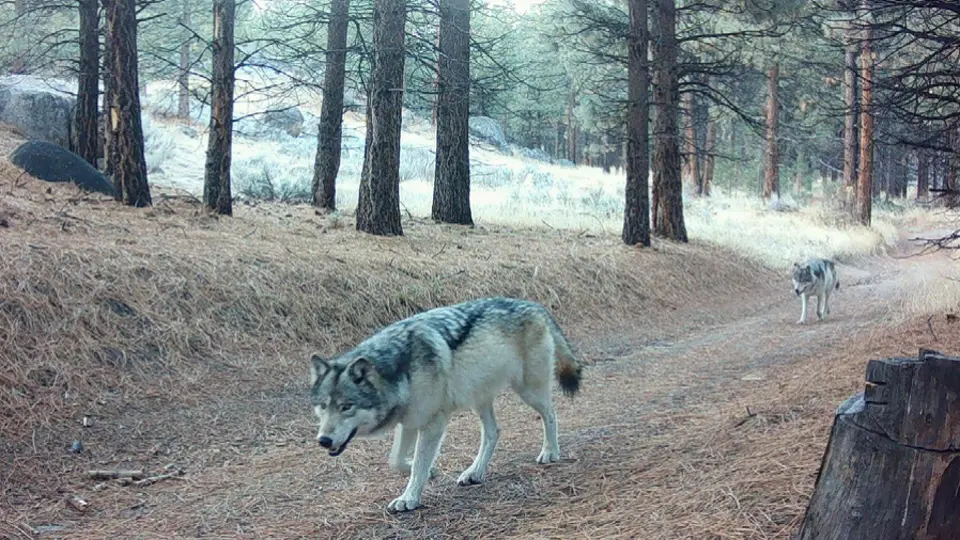

California’s gray wolf recovery has reached a landmark moment after a lone female wolf was detected inside Sequoia National Park, the first confirmed presence of the species in the region in more than a century.
The wolf, known by wildlife officials as BEY03F, has become one of the most closely watched animals in the state after making an extraordinary journey from Northern California into the southern Sierra Nevada. Her arrival in Sequoia is significant because gray wolves had disappeared from California by 1924 after decades of hunting, trapping and habitat pressure.
BEY03F is a 3-year-old female from the Beyem Seyo pack in Plumas County. She has already traveled across large parts of California and earlier this year became the first gray wolf documented in Los Angeles County since wolves naturally returned to the state in 2011.
Her movement into Sequoia National Park shows how far a dispersing wolf can travel while searching for new territory, food sources or a possible mate. Wildlife experts say such long-distance movement is common among young wolves leaving their birth pack, but BEY03F’s route has become especially important because of the areas she has reached.
The California Department of Fish and Wildlife has been monitoring wolf activity through a tracking system, but the agency does not share exact real-time locations with the public. Instead, wolf movements are shown in broad zones to protect the animals from poaching, harassment or disturbance.
That cautious approach is also meant to help ranchers. When livestock owners know wolves may be nearby, they can use non-lethal prevention methods such as range riders, fencing, lighting and other deterrents before conflicts occur.
The return of wolves has created a difficult debate in California. Conservationists view BEY03F’s journey as proof that wild corridors still exist across the state, while ranchers worry about livestock losses as wolf numbers expand. Those tensions increased after state wildlife officials killed four wolves from the Beyem Seyo pack in October following repeated cattle conflicts.
Even with those disputes, BEY03F’s arrival in Sequoia is being described as a rare ecological milestone. Wolves are apex predators, meaning their presence can influence prey behavior, movement patterns and the wider balance of an ecosystem. In places where wolves have returned, researchers have studied how predator recovery can affect deer, elk, vegetation and habitat health over time.
Sequoia National Park is best known for its ancient giant sequoia trees, rugged Sierra Nevada terrain and protected wilderness. The presence of a gray wolf adds another layer to the park’s conservation story, especially because the species had been absent from the area for generations.
Still, one wolf entering the park does not mean a resident pack has formed. BEY03F may continue moving, leave the park or eventually settle somewhere else. Dispersing wolves can cover hundreds of miles before finding suitable territory.
Read More
- Visit Swikblog Homepage
- Noosa Marathon road closures as 9,000 runners take part
- Ontario couple loses $90,000 in Scotiabank fraud case
- Olive Garden sister chain closes Capital Grille location
- Rob Base dies at 59: ‘It Takes Two’ legacy remembered
- Charlotte Truck Race postponed during Kyle Busch tribute weekend
Gray wolves remain protected under California and federal endangered species laws. Killing, injuring or harassing a wolf is illegal in the state. While BEY03F remains within national park boundaries, she is also protected by rules that restrict hunting and direct human interference inside the park.
Wildlife groups have called the wolf’s journey one of California’s most important modern recovery stories. For many conservation supporters, her movement from Plumas County to Southern California and now into Sequoia represents more than a single animal’s path. It shows that protected species can still reclaim historic ground when habitat, legal safeguards and connected landscapes remain in place.
The moment also arrives as national parks and public lands face growing debate over protection, development and wildlife management. For more environmental coverage, read Swikblog’s report on the Florida–Georgia wildfire that burned thousands of acres and forced road closures.
BEY03F’s journey is far from over, but her entry into Sequoia National Park has already made history. More than 100 years after gray wolves vanished from the area, one lone wolf has returned to a landscape where her species once belonged.

Make Swikblog your go-to source on Google for reliable updates, smart insights, and daily trends.