An 88-year-old woman was found dead in the freezing cold outside a private seniors’ residence in Laval, north of Montreal. Her family says she “froze to death” and is demanding answers about how a vulnerable, non-autonomous resident could leave the building alone in dangerous winter conditions.
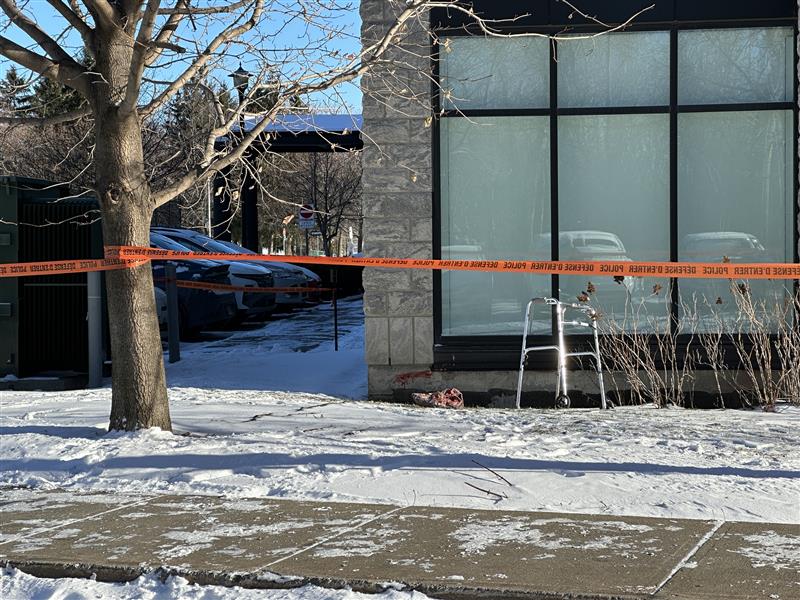
Shock and anger are growing in Laval after an 88-year-old woman, identified by family as Jeanne Demers-Goyer, was discovered dead outside the Villagia de l’Île Paton seniors’ residence on Promenade des Îles early Monday morning. Emergency services were called at around 6:50 a.m., but she was pronounced dead at the scene as temperatures hovered around minus-20 degrees with windchill even lower.
According to a detailed report by CityNews Montreal , the woman’s walker and personal belongings were found near police tape, suggesting she collapsed only a short distance from the residence entrance in bitterly cold conditions. Her grandson, Marc-Olivier Naud, says the family believes she “died frozen” and is questioning how she was able to leave the building in the first place.
“She was considered non-autonomous,” he stressed in comments reported by CityNews and Yahoo Canada , adding that his grandmother should never have been alone outside at that hour given her condition and the extreme cold. The family says they are devastated and feel the private residence failed in its basic duty to protect a vulnerable elder.
Questions over security and supervision
Family members say Jeanne’s health had deteriorated in recent years, leaving her reliant on staff support and making it difficult for her to move around safely. They are struggling to understand how, despite that, she could reportedly walk out of the residence without anyone intervening.
Naud has also alleged that this was not the first time she was found outside the building, claiming there had been a previous incident in warmer weather when she was discovered alone outdoors. For him, the fact that it appears to have happened again, this time during a severe cold spell, is unforgivable.
Residents have told local media that while there is usually someone at the front desk during the day, the reception area is often unstaffed overnight. That raises serious questions about door security, overnight checks and protocols for residents with cognitive or mobility issues. In a province that has already been shaken by past long-term care scandals, this case is renewing scrutiny over how private seniors’ homes are regulated and monitored in Quebec.
Management at Villagia de l’Île Paton has so far declined to comment publicly, directing questions to authorities while the investigation continues.
Coroner’s investigation launched
The case has been turned over to Quebec’s coroner’s office. A coroner has been appointed to determine the exact cause and circumstances of Jeanne’s death and to establish whether systemic or procedural failures contributed to the tragedy. The coroner may issue recommendations aimed at preventing similar deaths in the future, including changes to security, staffing or standards in private residences for seniors.
Extreme cold is known to be rapidly life-threatening for older adults. Geriatric and emergency physicians quoted in local media note that frostbite and hypothermia can set in within minutes when temperatures plunge well below freezing, especially if a person is not properly dressed, has limited mobility, or is taking medications that impair judgment or circulation.
For Jeanne’s family, however, the medical details are only part of the story. Their central question is whether she ever should have been outside alone at all — and whether stronger rules and enforcement for private residences could have saved her life.

Broader debate on seniors’ care in Quebec
The case is already prompting comparisons with other high-profile tragedies involving older residents in Quebec, including previous deaths linked to insufficient supervision and extreme weather. Advocacy groups say the latest incident underscores long-standing concerns about staffing levels, training and accountability in the province’s network of private residences for seniors.
Experts have repeatedly warned that an ageing population, combined with chronic staffing pressures in health and social care, is putting additional strain on seniors’ homes. Families often pay thousands of dollars a month expecting not only lodging and meals but also consistent, 24/7 protection for residents with dementia, mobility problems or other complex needs.
Calls are growing for Quebec to revisit standards for private residences, including clearer rules on overnight staffing, door alarms, exit controls and risk assessments for residents who may be disoriented or prone to wandering. For many, Jeanne’s death has become a deeply personal symbol of what can go wrong when those systems fail.
Internal link: pressure on Canada’s health and care system
The Laval case also comes at a time when Canada is wrestling with broader questions about how to staff and fund its health and elder-care systems. In nearby Ottawa, new rules for recognising foreign-trained doctors are being debated as one way to ease workforce shortages. You can read more in Swikblog’s coverage: Ottawa’s new immigration and licensing rules for foreign-trained doctors .
For families like Jeanne’s, those policy debates are no longer abstract. They want concrete changes — and clear answers — so that no other loved one is left outside in the cold.

Make Swikblog your go-to source on Google for reliable updates, smart insights, and daily trends.