In a new interview, Donald Trump described Europe as “weak” and “decaying” and suggested that “size will win” in the Ukraine war. The remarks have unsettled European leaders and reopened old arguments about migration, NATO and the future of the transatlantic alliance.
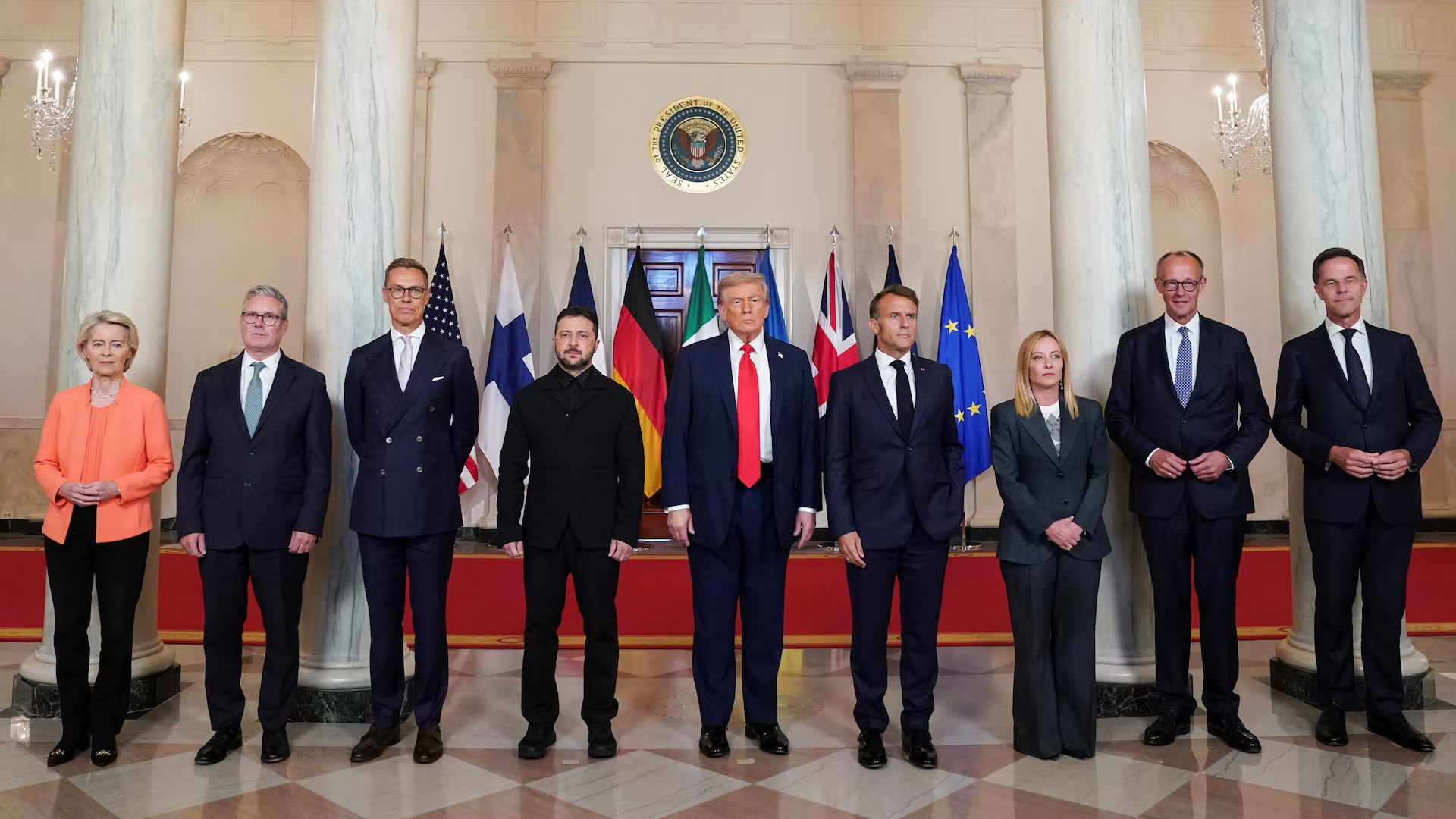
A sharp attack on Europe in a high-stakes moment
In a wide-ranging interview, Donald Trump characterised Europe as a “decaying” collection of nations led by “weak” people, arguing that years of what he views as politically correct decision-making and “unchecked” migration have eroded the continent’s strength. He also suggested that in the war in Ukraine, “size will win” – a phrase that many observers interpreted as a nod to Russia’s larger military and resources.
According to live coverage by The Guardian , Trump singled out countries such as Sweden and Germany over their migration policies and questioned whether European governments were truly prepared for long-term security challenges. In comments reported by The Independent , he also argued that European leaders had failed to take decisive action on Ukraine.
For European capitals already grappling with war on the continent’s eastern flank, energy transitions and economic headwinds, the remarks land at a sensitive moment – and revive questions about how predictable future U.S. policy toward Europe will be.
What Trump appears to mean by “weak and decaying”
Trump’s language is unusually blunt, but the themes themselves are familiar. Throughout his political career, he has argued that:
- European countries rely too heavily on the United States for defence and deterrence.
- Migration into Europe has been poorly controlled and politically “naïve”.
- EU leaders are too slow and divided when it comes to major crises like the war in Ukraine.
When he calls Europe “decaying”, he appears to be talking less about the continent’s economic data and more about what he presents as a loss of confidence, cohesion and readiness to use power. Supporters see this as a hard-headed assessment that Western allies must “get serious” about defence and borders. Critics say it caricatures a diverse region and overlooks the fact that Europe has shouldered major costs in supporting Ukraine.
His remark that “size will win” in Ukraine can also be read through that same lens. Rather than focusing on principles such as sovereignty and international law, Trump frames the conflict in terms of hard power – who has more resources, people and leverage at the negotiating table.
European leaders push back – and defend their record
In Brussels, European officials quickly rejected the idea that the continent is “weak” or “decaying”. Leaders have pointed to years of coordinated sanctions on Russia, multi-billion-euro military and financial support packages for Ukraine, and new defence initiatives designed to reduce reliance on the United States.
Senior figures within the EU institutions have also warned against accepting the premise that Europe is in freefall. They argue that while there are deep disagreements over migration, budgets and enlargement, the bloc has repeatedly shown it can act together when under pressure – from the pandemic to the energy crisis unleashed by the war.
National governments are equally wary of the narrative that Europe is collapsing. Some leaders emphasise that, unlike Russia, the EU remains a union of democracies with regular elections, open media and peaceful transfers of power – not a sign of decay, they argue, but of resilience.
What the comments reveal about Trump’s approach to Ukraine
Trump’s language on Europe cannot be separated from his evolving position on the war in Ukraine. He has repeatedly hinted that he wants a swift peace deal and has suggested that Kyiv may need to accept compromises that many Ukrainians would find difficult, including on territory and security guarantees.
By portraying Europe as indecisive and “talking too much”, he implies that the continent is an obstacle rather than a driver of a settlement. That view contrasts with the stance of many European governments, which say any eventual agreement must be acceptable to Ukraine itself, not imposed from outside.
The broader concern among European diplomats is that if Washington shifts toward a more transactional, power-based approach, it could weaken long-standing norms about borders, sovereignty and the use of force in Europe. That, they fear, would reverberate far beyond Ukraine.
Why this matters for NATO and the transatlantic relationship
Behind the headlines, the controversy over Trump’s phrases taps into a deeper debate: what should the balance of responsibility be between the United States and Europe for the continent’s security?
On one side are those who argue that Trump’s blunt language is a wake-up call. They say Europe must invest more in defence, modernise its armed forces and reduce dependence on U.S. political cycles. On the other side are those who warn that repeatedly questioning Europe’s strength risks weakening NATO deterrence by signalling division to rivals.
For now, NATO remains militarily integrated and operational on Europe’s eastern flank, and day-to-day cooperation between American and European militaries continues. But rhetorically, the gap is widening – and both sides know that public trust is as important as tanks and aircraft in sustaining an alliance.
A continent under pressure – but not without agency
Europe is undoubtedly under strain. Demographic shifts, industrial competition from the United States and China, climate commitments, migration pressures and the war in Ukraine all present genuine tests for policymakers.
Whether those pressures amount to “decay” is ultimately a political judgement. Trump’s critics say his language glosses over the fact that European democracies continue to adapt and, in many cases, are investing more in defence and energy resilience than at any point since the end of the Cold War. His supporters counter that only sustained pressure – including sharp words – will force governments to move faster.
What is clear is that the debate over Europe’s strength, and over the future shape of the U.S.–European partnership, will continue long after this interview fades from the headlines.
You may also like

Make Swikblog your go-to source on Google for reliable updates, smart insights, and daily trends.