Live Score – Morocco vs Saudi Arabia
Written by: Swikblog Sports Desk
Arab Cup Qatar 2025 – Group B | Lusail Stadium
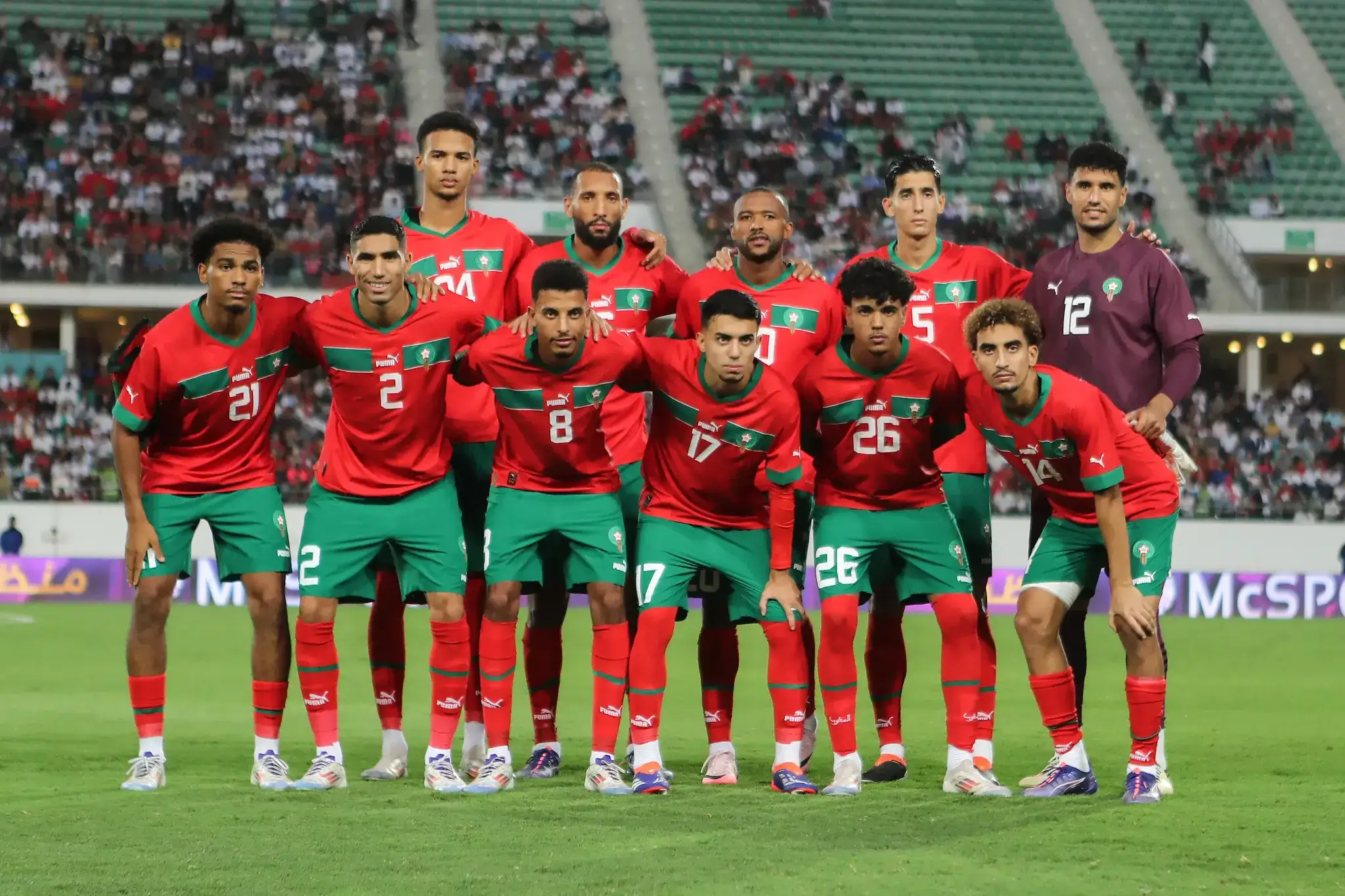
The Arab Cup Qatar 2025 throws up one of its standout fixtures as Morocco meet Saudi Arabia in Lusail, a clash that feels far bigger than a routine group game. With both sides eyeing deep runs in the tournament – and using this competition to sharpen themselves for upcoming global commitments – the meeting of Hakim Ziyech and Salem Al-Dawsari headlines a contest rich in tactical detail as well as emotion.
Kick-off time in Morocco and Saudi Arabia
The match takes place on Monday 8 December 2025 at the Lusail Stadium in Qatar, with an official kick-off at 17:00 GMT. That translates to approximately:
- 18:00 in Morocco (Rabat and Casablanca)
- 20:00 in Saudi Arabia (Riyadh and Jeddah)
For viewers in MENA and beyond, regional broadcasters and the beIN SPORTS network are carrying the game, while international audiences can find listings via platforms such as OneFootball’s broadcast guide.
Group B context: more than just a dead rubber
On paper, both teams have already taken control of Group B, but the table still matters. Saudi Arabia come into the game with two wins from two, including a hard-fought victory over Oman and a confident performance against Comoros. Morocco, meanwhile, opened with a 3–1 win against Comoros before being held to a cagey draw by Oman.
Regional outlets have framed this as a pseudo-knockout match rather than a gentle group-stage closer. Moroccan and Saudi media alike emphasise that topping the group could mean a more favourable quarter-final route, as well as a valuable psychological marker in a tournament where both nations see themselves as potential champions.
Al Jazeera has described the fixture as one of the standout Group B showdowns in Lusail, while American site Bolavip stresses that Saudi Arabia need only a draw to stay top, whereas Morocco are chasing a statement win to underline their title credentials.
Morocco: controlled possession, vertical switches and Ziyech’s creativity
Morocco arrive with a clear identity built on aggressive pressing and carefully managed possession phases. In recent matches they have frequently alternated between a 4-3-3 and a 4-2-3-1, using a single pivot to screen transitions and allowing their full-backs to push high when they have territorial control.
The wide threat is central to their plan. When Morocco break lines through the middle third, they look to isolate their wingers 1v1 or exploit half-spaces with diagonal runs from the number nine. Set pieces, too, remain a significant weapon: with strong aerial presence at centre-back and a reliable left-footed delivery, they are dangerous from corners and attacking free-kicks.
Key Moroccan players to watch
- Hakim Ziyech – The technical leader of the side, operating either from the right flank or as a free playmaker. His ability to drop between the lines, switch play with long diagonals and threaten from distance gives Morocco a creative edge. If he receives time on the ball between Saudi lines, the entire dynamic of the match tilts towards the Atlas Lions.
- Sofiane Boufal – A dribbler who thrives in tight spaces, Boufal can draw fouls, change tempo and force Saudi defenders into uncomfortable 1v1s. His ball-carrying is vital when Morocco look to relieve pressure and launch counters.
- Tarik Tissoudali – Often used as a flexible forward who can play wide or centrally, Tissoudali links midfield and attack, attacking the space that Ziyech’s movement opens up. His timing of runs into the box will be crucial against Saudi Arabia’s high defensive line.
- Back four – Morocco’s centre-backs are comfortable defending large spaces but their decision-making in the first phase – when to play out, when to go long – will be just as important as their one-on-one defending against Saudi transitions.
Analysts at outlets such as Foot-Africa have repeatedly tagged Morocco as one of the region’s most complete teams: technically secure, physically robust and backed by a deep talent pool emerging from both domestic and European clubs.
Saudi Arabia: direct vertical threat and Al-Dawsari’s big-game aura
Saudi Arabia’s two group wins have underlined a slightly different profile: a team that is comfortable without the ball, capable of surviving pressure spells and then striking quickly through vertical attacks. Their preference is typically a 4-2-3-1, with a double pivot screening the back four and releasing wide forwards at pace when possession is turned over.
In their win over Oman, Saudi Arabia mixed out-to-in runs from the flanks with late arrivals from midfield, showing how well-rehearsed their transition patterns have become. The second line pushes up quickly once possession is secured, meaning Morocco’s counter-press will have to be sharp to stop the first pass out.
Key Saudi players to watch
- Salem Al-Dawsari – The star name and the headline in this contest. An AFC Player of the Year and a serial big-game performer, Al-Dawsari cuts inside from the left, looking for combinations around the box and shooting lanes at the edge of the area. His duel with Morocco’s right-back and right-sided centre-back will be one of the game’s defining matchups.
- Firas Al-Buraikan – A forward who combines penalty-box instincts with strong work rate off the ball. If Saudi Arabia sit slightly deeper, Al-Buraikan’s hold-up play and ability to attack crosses will be crucial in turning half-chances into clear opportunities.
- Mohamed Kanno – Operating either as a deeper midfielder or a more advanced eight, Kanno’s distribution and ability to switch play quickly can drag Morocco’s block around and open space for overlapping full-backs.
- Saudi back line – They have shown resilience under pressure in earlier group games but will face a different type of test here: Ziyech’s disguised passes, Moroccan overloads on the flanks and late runs from midfield.
Asian confederation coverage, including the AFC’s match reports, has highlighted Saudi Arabia’s ability to “hold off spirited opponents” while still finding goals at key moments – a trait that tends to translate well in tournament football.
Tactical battles: width vs compactness
This game may ultimately be decided in the spaces between the lines and out wide:
- Morocco’s wide overloads vs Saudi compact block – Morocco will try to free Ziyech on the right and a dribbler on the left, creating 2v1s against Saudi full-backs. If Saudi Arabia’s wingers track back diligently, those overloads may be neutralised; if they don’t, Morocco could continually attack the byline.
- Transitions both ways – Both teams are comfortable in transition, but in different ways. Morocco rely on structured counter-pressing to win the ball high and attack quickly, while Saudi Arabia are more direct, looking to hit the space behind an advanced Moroccan back line.
- Set pieces – With two physically strong squads, corners and free-kicks could be decisive. Expect Morocco to crowd the six-yard box and Saudi Arabia to prepare rehearsed routines aimed at the penalty spot.
Preview and prediction sites such as TheTopBookies and Tips.gg have framed the encounter as a finely balanced contest, frequently asking whether Saudi Arabia can extend their unbeaten run or whether Morocco’s higher ceiling in open play will take over in a higher-pressure environment.
What global media are saying
Across the football media landscape, this match is being treated as one of the premium group fixtures of the Arab Cup:
- Al Jazeera position Morocco vs Saudi Arabia as a group finale with knockout intensity, underlining how the result will shape the bracket and possibly the narrative of the entire tournament.
- Bolavip highlight that Saudi Arabia arrive with a perfect record while Morocco remain a legitimate title threat, making this a battle between form and perceived overall quality.
- Regional Moroccan outlets emphasise the opportunity for the Atlas Lions to confirm their status as one of the continent’s most complete teams, particularly after strong performances in other recent competitions.
- Asian-focused coverage underscores Al-Dawsari’s role as a standard-bearer for Saudi football and sees this match as an important test of how Saudi Arabia handle pressure against a technically elite side.
The consensus: this is no gentle warm-up. It is a match that both fanbases expect their team to use as a declaration of intent.
Key questions before kick-off
As supporters in both Rabat and Riyadh count down to kick-off, several tactical and psychological questions remain:
- Can Morocco convert dominance into goals? They create territory and half-chances, but their efficiency in the box must be high against a Saudi side that punishes mistakes.
- Will Saudi Arabia rotate or go full strength? Already in a commanding position, their coach must decide whether to protect key players or send out maximum firepower to secure top spot.
- Who wins the Ziyech vs Al-Dawsari duel? In modern tournament football, one world-class moment can decide a tight game. Both stars are capable of changing the script in a single action.
- Does the game open up late? If the scores are level heading into the final quarter-hour, both coaches must decide whether to protect what they have or chase the win – decisions that could define the narrative of the tournament for their countries.
Whatever the final score, Morocco vs Saudi Arabia feels like more than a group fixture. For two ambitious footballing nations, it is an early test of how ready they are to live with the pressure of expectation on the regional and global stage.
You may also like

Make Swikblog your go-to source on Google for reliable updates, smart insights, and daily trends.