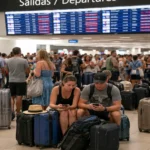
Flights between the UK and Central Europe remain affected after severe snowfall disrupted operations at Munich Airport (MUC), causing cancellations, lengthy delays and missed connections across several European routes. The disruption gained international attention after hundreds of passengers were left onboard grounded aircraft overnight when flights were unable to depart before the airport’s night curfew.
The impact quickly spread beyond Germany. Travellers heading from the UK to destinations including Prague, Vienna, Zurich and northern Italy have been checking live flight status updates and rebooking options as airlines work to restore normal schedules. Search interest for both “Munich flights” and “Prague flights” also climbed sharply as passengers sought the latest travel information.
Snowstorm created major disruption at Munich Airport
Munich Airport is one of Europe’s busiest aviation hubs and a key base for Lufthansa. Heavy snowfall during the February 19–20 winter storm required continuous runway clearing and aircraft de-icing, slowing departures throughout the evening.
Airport officials later confirmed that approximately 600 passengers on six aircraft were unable to depart before the airport’s overnight operating restrictions came into effect. Five of the affected aircraft belonged to the Lufthansa Group, while another was operated by Air Arabia. Munich Airport later apologised and announced a review of the incident.
Why flights across Europe were affected
Munich serves as a major connecting airport for passengers travelling between the UK and destinations across Germany, Austria, Switzerland, the Czech Republic, northern Italy and Eastern Europe. When departures are delayed, the effects spread throughout the network.
Late-arriving aircraft delay return services, flight crews can reach their legal duty limits, connecting passengers miss onward flights and replacement aircraft become harder to position. Even airports with clear weather can experience delays because their scheduled aircraft are arriving late from Munich.
Passengers remained onboard aircraft overnight
The incident attracted widespread attention after passengers reported spending the night onboard stationary aircraft. According to Munich Airport, severe weather delayed departures long enough for the airport’s overnight curfew to begin, while limited terminal capacity and transport arrangements prevented passengers from immediately leaving some aircraft parked on remote stands.
Munich Airport said passenger safety was maintained throughout the disruption, while Lufthansa stated that cabin crews continued assisting passengers during the delay. Both organisations later apologised for the experience and said lessons would be incorporated into future winter operations.
Lufthansa passengers may continue seeing schedule changes
Because Lufthansa operates a significant share of flights through Munich, recovery can take time after severe weather. Aircraft, crew schedules and passengers all need to return to normal operating patterns, meaning some cancellations and delays may continue even after snowfall has ended.
Passengers with connecting itineraries should monitor airline notifications carefully, particularly if they have short connection windows through Munich. Airlines often provide alternative routings through other European hubs when disruption is expected to continue.
Travel advice for affected passengers
Anyone travelling to or through Munich over the coming days should check flight status before leaving for the airport and remain flexible if weather conditions continue to affect operations.
- Use your airline’s app for real-time flight notifications.
- Accept self-service rebooking options early if suitable alternatives become available.
- Keep medication, travel documents, chargers and essential items in your cabin baggage.
- Save receipts for meals, accommodation or transport if your journey is disrupted.
- Review your airline’s assistance policy and any travel insurance coverage for weather-related delays.
Winter weather continues to test European air travel
Snow and freezing temperatures remain among the biggest operational challenges for European airports during winter. Aircraft must undergo de-icing before departure, while runways require continuous snow removal to meet safety standards. These procedures are essential but can significantly reduce airport capacity during periods of heavy snowfall.
Recent weather events have shown how disruption at a single major hub can affect flights across several countries. Travellers planning journeys through Central Europe are encouraged to allow extra connection time where possible and follow official airline updates before travelling.
Similar winter weather has disrupted air travel elsewhere this season. For another example, see our coverage of Reagan Airport flight cancellations during Winter Storm Fern.
For the latest operational updates, passengers should check the Munich Airport website and their airline’s official flight status pages before travelling.

Make Swikblog your go-to source on Google for reliable updates, smart insights, and daily trends.