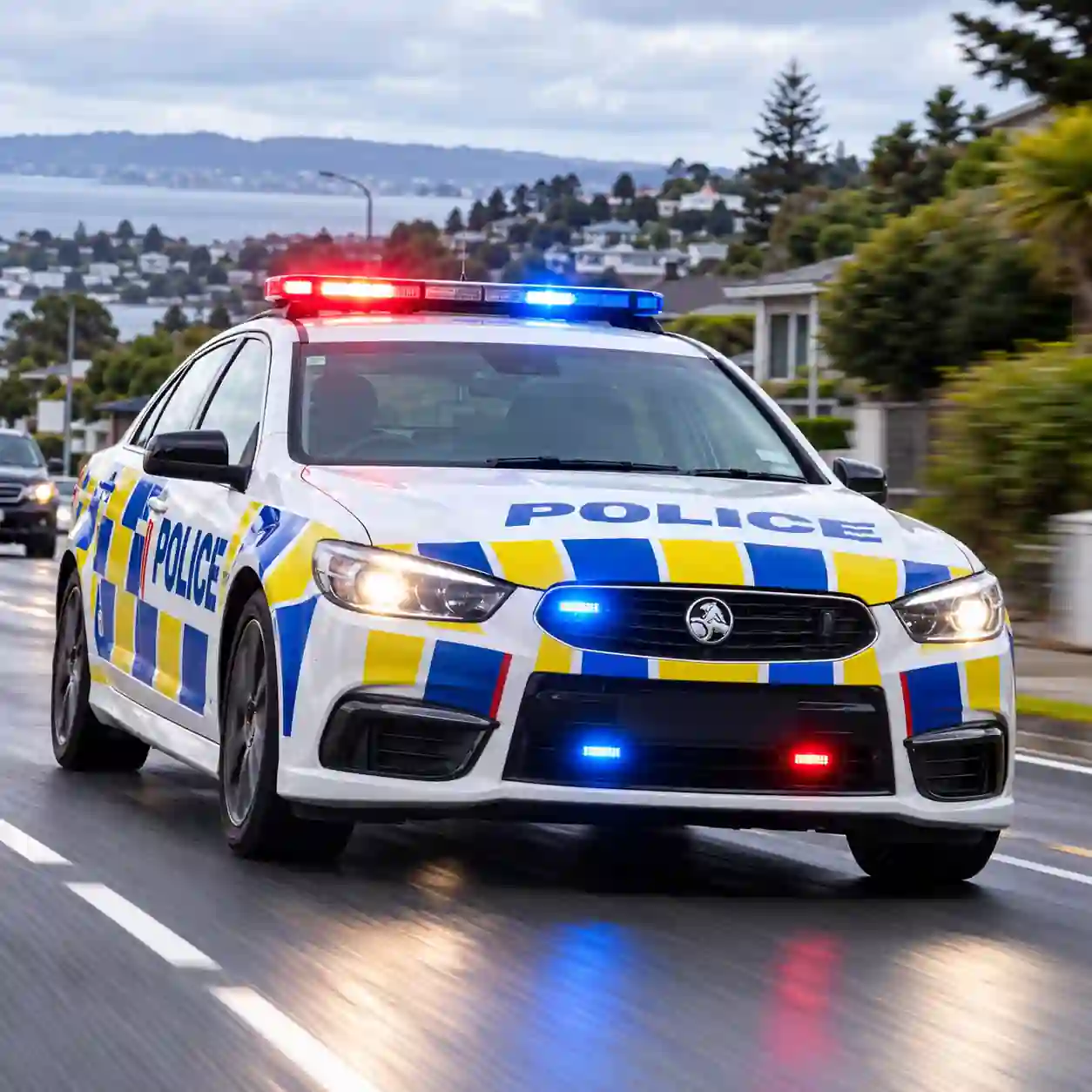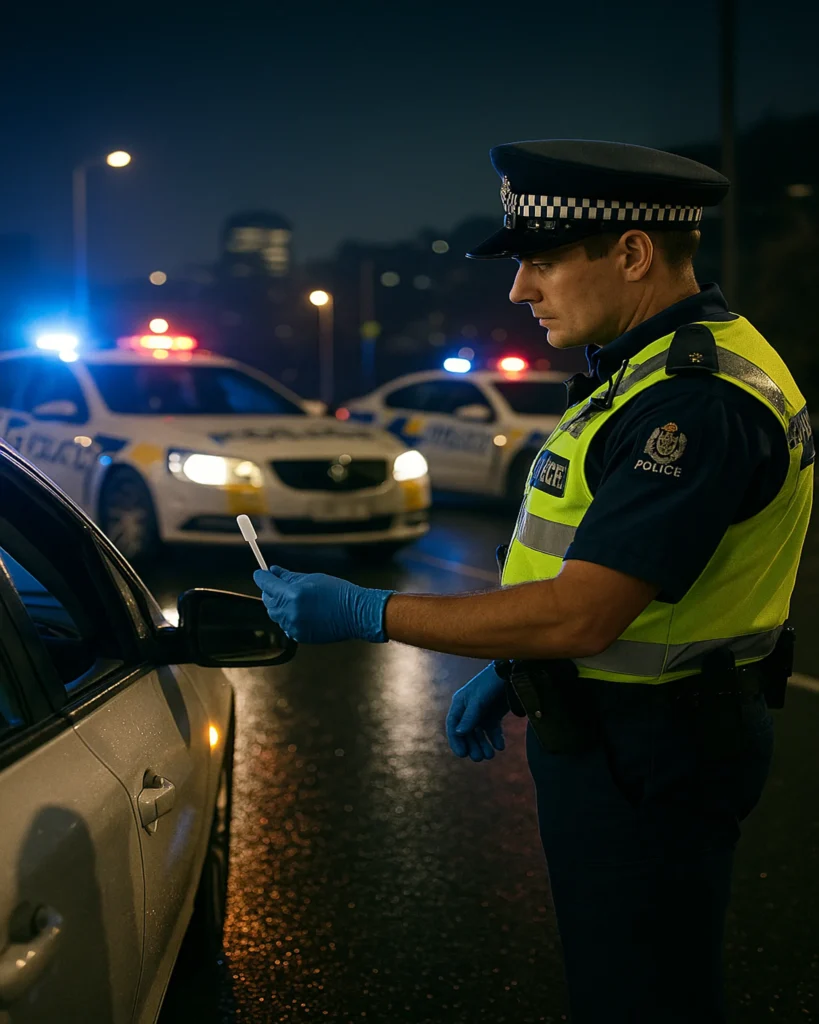

From Monday, 15 December 2025, Police will begin random roadside drug screening in the Wellington District — the first time this type of saliva-based testing has been conducted on New Zealand roads. The Wellington rollout is a staged start, with a wider scale-up planned for 2026. Here’s what happens at the roadside, which drugs are screened, and what a positive result means for drivers.
Where it starts: Wellington first
The first phase is limited to the Wellington District beginning 15 December 2025. Police have described this as the initial rollout before the programme expands nationally. For the official overview of what to expect, see the New Zealand Police explainer here.
Who Can Be Stopped for Roadside Drug Testing?
Police have the power to stop any driver and require a roadside drug test as part of routine traffic enforcement. A crash or visible offence is not required for testing to take place. These checks are designed to deter drug-impaired driving and identify drivers under the influence during everyday road policing operations.
How the roadside test works (step-by-step)
- Initial saliva screen: an officer uses a roadside oral-fluid device (a tongue/mouth swab) to screen for drugs.
- Second roadside screen if positive: if the first test detects a drug, a second screening test is taken to confirm.
- 12-hour driving prohibition: if the second roadside test is also positive, the driver is prohibited from driving for 12 hours.
- Lab confirmation: police take a saliva sample for laboratory analysis, which can test for a broader range of substances than the roadside device.
Which drugs are screened at the roadside?
In the Wellington rollout, the roadside device screens for four key drugs:
- THC (cannabis)
- Methamphetamine
- MDMA (ecstasy)
- Cocaine
What happens if you test positive?
A positive roadside result triggers two immediate steps: a second roadside screening, and (if that’s also positive) a 12-hour stand-down from driving to reduce immediate road risk. Police then send a sample for laboratory confirmation. Recent coverage has noted the lab can test for a larger panel of drugs beyond the four screened at the roadside.
Can you refuse the test?
Refusing roadside drug screening can lead to penalties. Police have warned that refusal may result in significant fines and enforcement action, similar in principle to alcohol-testing refusal rules. For background on how the policy is being explained publicly ahead of the Wellington start date, RNZ’s explainer is here.
What about prescription medication?
A prescription does not automatically stop roadside screening from taking place. If a lab result later confirms the presence of a drug, the circumstances — including lawful prescription use — may be relevant to what happens next. If you take medication that may affect driving, it’s still safest to plan ahead and avoid driving if you feel impaired.
Why Wellington first?
Wellington is the initial district for the rollout, with Police and the Government framing it as a staged introduction before broader national implementation in 2026. The approach allows procedures and equipment to be used in the field before expansion across other regions.
Read Also
James Cameron on Avatar’s Future — and Why New Zealand’s Film Industry Is at a Crossroads
Quick takeaway for Wellington drivers (15 December 2025)
- Starts: Wellington District, Monday 15 December 2025
- Method: roadside saliva screening
- Roadside panel: THC, methamphetamine, MDMA, cocaine
- If positive twice: 12-hour driving prohibition + lab sample
- Refusal: can carry penalties

Make Swikblog your go-to source on Google for reliable updates, smart insights, and daily trends.