
A new report commissioned by New Zealand’s Energy Efficiency and Conservation Authority (EECA) suggests the country could avoid up to NZ$3 billion in future electricity network spending by encouraging households and businesses to use power at different times of the day. Instead of reducing electricity consumption, the proposal focuses on shifting demand away from the busiest evening hours, helping ease pressure on the national grid while limiting future infrastructure costs.
The findings come as New Zealand prepares for rising electricity demand driven by electric vehicles, cleaner home heating and the wider transition away from fossil fuels. EECA argues that smarter electricity use could become one of the country’s most affordable tools for managing that growth without relying solely on costly upgrades to the power network.
The discussion around electricity affordability follows other consumer cost issues, including NZ Super electricity rebate tax refund guidance, which explains how electricity-related payments can affect some households.
Why electricity demand peaks every evening
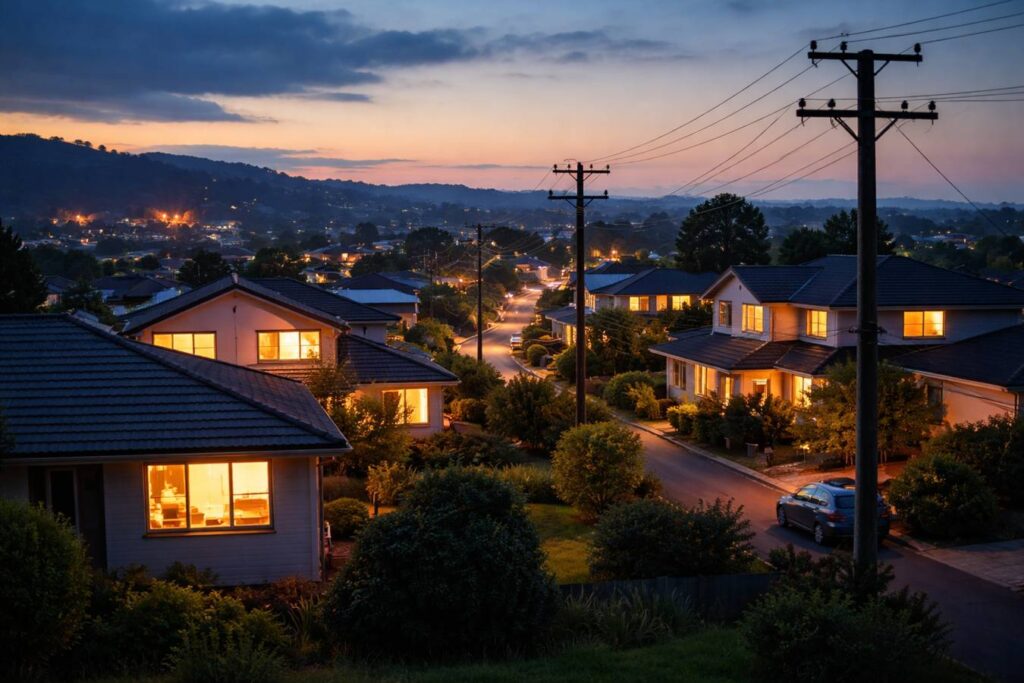
Most homes use the largest amount of electricity during the early evening. Heating systems, hot water cylinders, kitchen appliances and lighting are often switched on within a short period as people return home from work or school.
Although these demand peaks usually last only a few hours, electricity companies must maintain enough network capacity to cope with them. Building and maintaining that extra capacity adds to long-term costs that are eventually reflected in electricity bills.
According to the EECA report, around one-quarter of current peak demand could potentially be moved to quieter periods, reducing pressure on existing infrastructure while delaying expensive network expansion.
The report focuses on shifting flexible electricity use to off-peak periods rather than asking households to cut back on essential energy consumption.
Electricity demand could rise sharply by 2050
Government electricity demand modelling indicates national power consumption could increase by between 35% and 82% by 2050, depending on how quickly transport, heating and industrial processes become electrified. That expected growth is one reason policymakers are looking for lower-cost ways to make better use of existing infrastructure.
If more electricity demand can be spread across the day instead of concentrated during evening peaks, the existing network can operate more efficiently while reducing the need for major construction projects.
Smart devices offer a practical solution
The report identifies households as the biggest opportunity because of the number of homes connected to New Zealand’s electricity network. Many of the recommended technologies are relatively inexpensive and can be added to existing appliances without major renovations.
Examples include internet-connected controllers for hot water cylinders and heat pumps. These devices can automatically operate during lower-demand periods while ensuring homes remain warm and hot water is available when needed.
Early trials highlighted by EECA suggest participating households have already reduced electricity costs while helping smooth demand across the network.
Businesses could provide additional flexibility
The report also identifies opportunities across manufacturing, farming, food production and commercial buildings. Some electricity-intensive activities could be rescheduled outside peak periods where operationally practical, particularly when combined with battery storage and automated energy management systems.
Not every business will have the same flexibility, but even modest changes across multiple industries could make a meaningful difference to overall electricity demand patterns.
Rewards will influence participation
Technology alone is unlikely to deliver widespread change. The report says households and businesses will need clear financial incentives before investing in smart energy equipment or adjusting their electricity use.
Lower electricity bills, direct payments for flexible demand and pricing structures that reward off-peak electricity use are identified as key measures that could encourage broader participation.
Why the report matters
As New Zealand continues expanding its use of renewable electricity, improving the timing of energy consumption may prove just as valuable as generating more power. By spreading demand more evenly throughout the day, the country could reduce pressure on the electricity network, delay costly infrastructure projects and improve long-term affordability for consumers.
Further details are available from the Energy Efficiency and Conservation Authority. Long-term electricity demand forecasts are published in the government’s Electricity Demand and Generation Scenarios report.
7

Make Swikblog your go-to source on Google for reliable updates, smart insights, and daily trends.