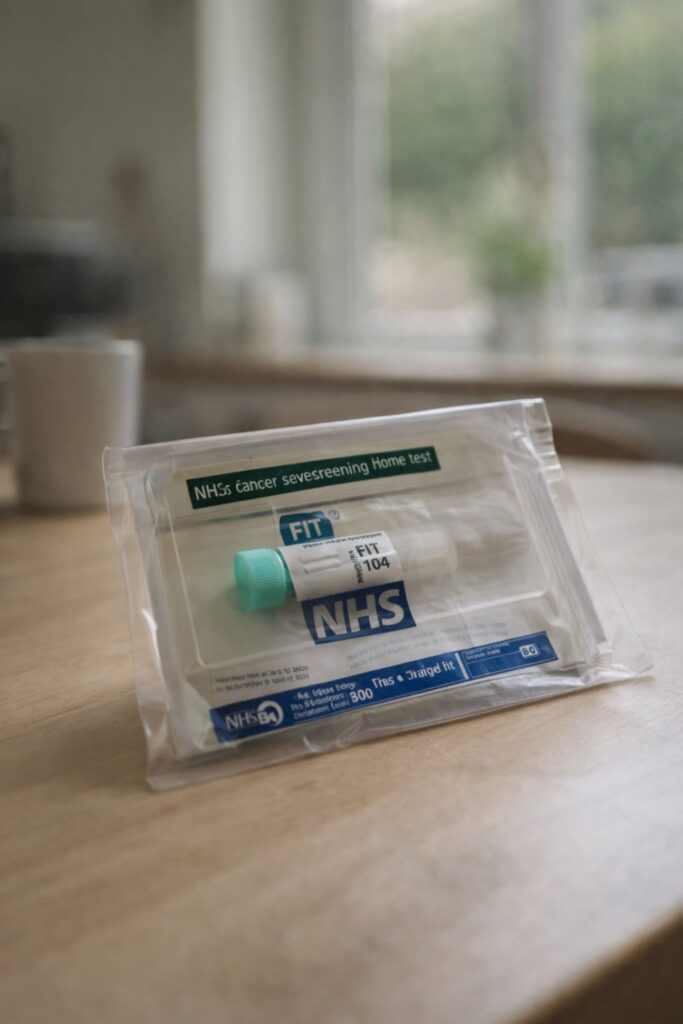

The NHS is introducing a more sensitive home bowel cancer screening test across England in an effort to detect more cases before symptoms appear. The update affects the faecal immunochemical test (FIT), a home kit that checks stool samples for hidden traces of blood. By lowering the threshold for further investigation, the NHS expects to identify more cancers and high-risk polyps at an earlier stage, when treatment is often more successful.
Bowel cancer is one of the UK’s most common cancers, and screening remains one of the most effective ways to reduce deaths through early diagnosis. The latest change brings England’s programme closer to the approach already used in Scotland and Wales.
How the updated FIT screening test works
The FIT kit is sent to eligible people by post and can be completed at home using a small stool sample. The sample is returned to an NHS laboratory, where it is tested for tiny amounts of blood that cannot usually be seen. While hidden blood does not automatically mean someone has bowel cancer, it can be an early warning sign that requires further investigation.
Under the updated programme, the NHS will recommend follow-up testing when lower levels of blood are detected. This means more people will be referred for colonoscopies, helping doctors identify cancers sooner and remove high-risk polyps before they develop into cancer.
Who is eligible for bowel cancer screening?
In England, bowel cancer screening is offered every two years to people aged 50 to 74 who are registered with a GP. FIT kits are normally sent automatically through the post. People aged 75 and over can usually request a screening kit, although they are not included in the routine mail-out programme.
The screening process itself remains unchanged. The key difference is that the more sensitive testing threshold is expected to identify more people who would benefit from additional examinations.
Why earlier detection makes a difference
Detecting bowel cancer at an earlier stage often improves treatment options and survival rates. Colonoscopies performed after a positive FIT result can also find and remove precancerous polyps, helping prevent cancer from developing altogether.
The updated screening programme is expected to increase demand for colonoscopy services, which require specialist staff and equipment. The NHS has planned the rollout alongside measures to expand diagnostic capacity while maintaining safe access to follow-up care.
Returning the FIT kit remains the most important step
A positive screening result is not a cancer diagnosis. It simply means further testing is recommended to determine the cause of the bleeding. Many people referred for colonoscopy will not have bowel cancer, while others may have polyps that can be safely removed before they become more serious.
Completing and returning the FIT kit when it arrives is the most important action eligible people can take. Early participation gives doctors the best opportunity to identify problems before symptoms appear and can significantly improve health outcomes.
For more health and public safety updates, see our report on household toy safety risks and injury prevention.
The NHS has published further information about the updated screening programme, including eligibility, how the FIT test works and why the referral threshold is changing. You can read the official announcement on the NHS England website.
The latest update aims to help detect more bowel cancers before symptoms develop while preventing future cases through earlier removal of high-risk polyps. For eligible adults, completing the screening kit promptly and attending any recommended follow-up appointments remains the best way to benefit from the programme.

Make Swikblog your go-to source on Google for reliable updates, smart insights, and daily trends.