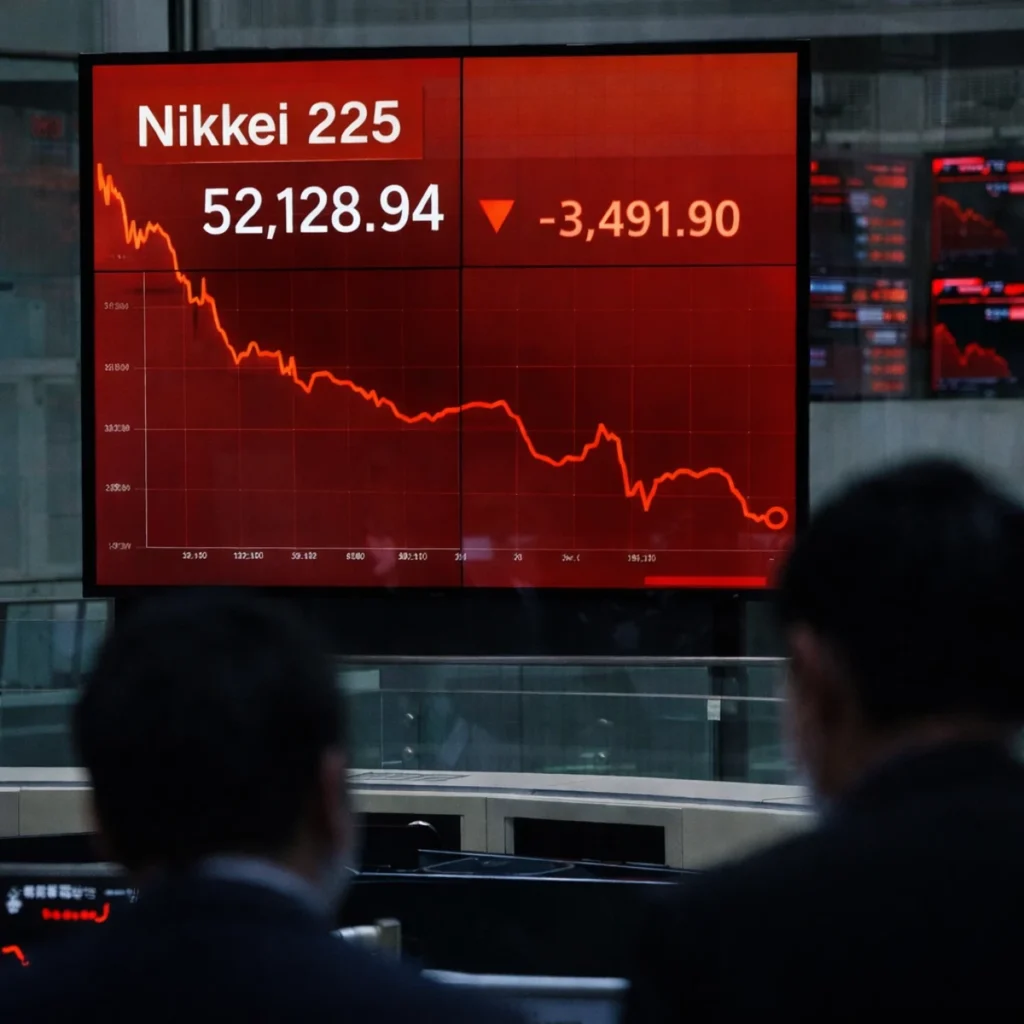

Japan’s stock market opened the new week with a jolt that immediately sent shockwaves across global trading desks. The Nikkei 225 crashed 7% today to 52,128, reflecting one of the sharpest sell-offs in Asia as oil prices surged to around $114 per barrel and investors rushed to cut risk. The drop was not just about one market having a bad morning. It was a broad warning from traders that rising energy costs, war-linked supply fears and a weaker global growth outlook are now colliding at the same time.
The selling pressure was visible almost from the opening bell. Tokyo stocks sank hard as traders reacted to the latest oil shock, with the Nikkei at one stage falling by more than 7% before hovering around 52,128.94, down 3,491.90 points or 6.28% on the day based on the market snapshot provided. The previous close stood at 55,620.84, showing how quickly sentiment turned from caution to outright panic. For a market that has already been facing pressure from global volatility, this fresh oil-driven blow added a new layer of fear.
Market snapshot: Nikkei 225 at 52,128.94 JPY, down 3,491.90 points or 6.28% intraday, with the session low near 51,407.66 and trading volume above 1.12 billion.
Oil became the market’s biggest problem
The immediate trigger for the sell-off was the dramatic move in crude. Brent crude climbed to about $114.11 per barrel, while US benchmark crude also traded near $114. That is a huge move in a very short period, and it matters even more for Japan because the country depends heavily on imported energy. When oil jumps this fast, the impact spreads quickly across transport, manufacturing, utilities, shipping and household spending. It raises inflation risk, squeezes margins and creates fresh uncertainty for companies already navigating a fragile global demand picture.
That is why this was not a routine dip in equities. The market interpreted the oil spike as a direct threat to earnings, consumption and policy stability. Even sectors that would normally find support from a weaker yen or overseas demand struggled to hold up as investors focused instead on the broader macro hit from more expensive energy. The concern now is not only whether oil stays above $100, but whether the latest Middle East disruption pushes prices even higher and keeps them elevated for longer than markets can tolerate.
Asian markets followed Tokyo lower
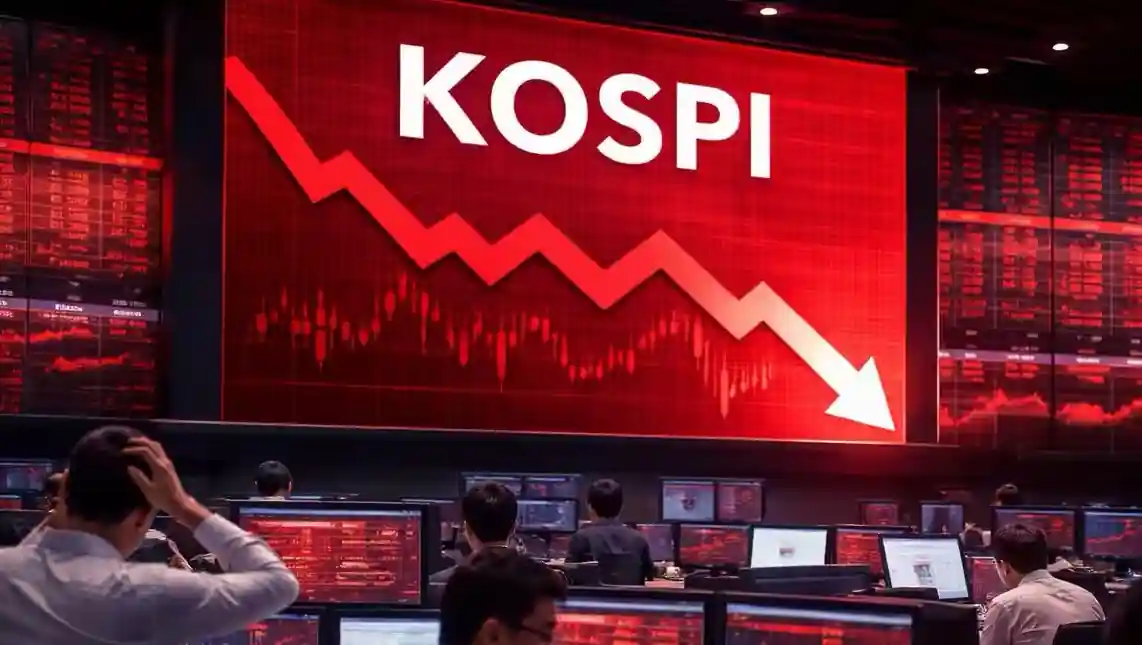
Japan was not alone. The broader regional tone was deeply negative, underlining that this was an Asia-wide risk-off session rather than a local Japanese event. South Korea’s Kospi reportedly dropped 7.4%, while Australia and New Zealand also fell more than 3%. Hong Kong’s Hang Seng lost around 3.1%, and the Shanghai Composite fell about 1.7%. That pattern matters because it shows investors were repricing growth expectations across the region, not simply reacting to Tokyo-specific corporate news.
Wall Street futures also pointed lower, suggesting the fear would not stay confined to Asia. Futures for the S&P 500 and the Dow Jones Industrial Average were down more than 2%, indicating that global investors were preparing for a wider sell-off once US markets opened. After a week already marked by weak economic data and war-driven commodity moves, this latest leg lower added to worries that volatility could deepen across asset classes.
Why Japan looks especially exposed
Japan’s vulnerability in this kind of environment is easy to understand. Higher oil prices push import bills higher, pressure corporate costs and complicate the inflation outlook. At the same time, the US dollar strengthened to about 158.67 Japanese yen, a move that can make imported fuel and raw materials even more expensive for Japan. A weaker yen sometimes helps exporters, but when the move is paired with an oil shock and global demand fears, that support can fade quickly.
The Nikkei’s decline also reflects how tightly markets are linking geopolitics and macroeconomics right now. Investors are no longer looking only at central banks, earnings or domestic policy. They are watching shipping routes, oil terminals, military escalation and currency swings all at once. That creates a far more unstable backdrop for equities, especially in economies that are highly dependent on energy imports.
What investors are watching next
The next phase for the Nikkei and other global indexes will likely depend on whether oil stabilizes or keeps climbing. If crude remains near $114 or moves higher, markets may begin pricing in slower growth, stronger inflation pressure and reduced room for central banks to support their economies. That combination is one of the most uncomfortable setups for equities because it leaves investors facing both earnings risk and policy uncertainty at the same time.
For now, the message from Tokyo is blunt. This was not just a bad session. It was a warning that the oil shock has become a direct market event with global consequences. Japan’s benchmark index did not fall in isolation. It dropped as part of a much bigger repricing of risk, one that is now spreading across Asia, currencies, commodities and Wall Street futures. A useful read from Associated Press coverage of global markets helps explain why traders are treating the latest oil move as more than a temporary spike.

Make Swikblog your go-to source on Google for reliable updates, smart insights, and daily trends.