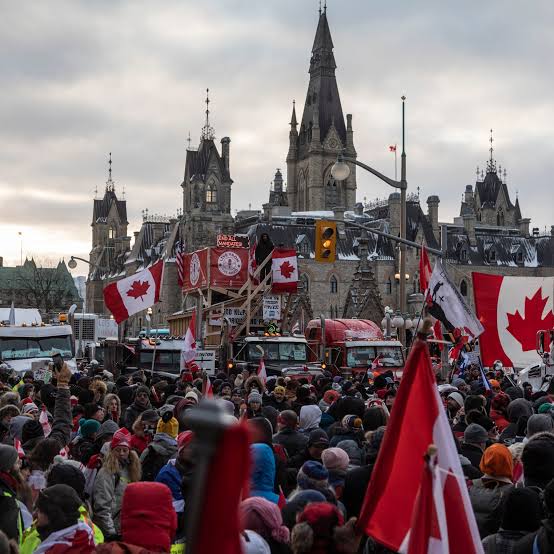

Ottawa is moving closer to enforcing a controversial “bubble bylaw” that could reshape how protests take place near schools, hospitals, and care facilities — and the debate is quickly becoming a test of how far governments can go in balancing public safety with freedom of expression.
The proposed law would create designated “safe access zones” extending 50 metres around entrances, walkways, and driveways of sensitive public institutions. Within these zones, certain protest activities — including loudspeakers and other disruptive tools — could be restricted to ensure uninterrupted access for patients, students, and vulnerable residents.
What the bylaw would change in real life
This is not a blanket ban on protests. Demonstrations would still be allowed, but not directly outside entry points. Protesters would need to stay outside the defined boundary, reducing congestion and noise at critical access areas.
Facilities such as hospitals and schools would need to apply for protected status, which would last for one year and can be renewed. Long-term care homes would have protection around the clock, while other facilities would see restrictions tied to operating hours.
Enforcement is expected to involve both bylaw officers and police. Penalties could include fines or orders to disperse if protesters violate the zone. In cities like Toronto, similar rules already exist, but enforcement has varied — sometimes limited to monitoring, other times involving active intervention.
More News
Why officials say it’s needed
City authorities argue the bylaw responds to growing concerns about safety and access. In recent years, protests near hospitals and schools have led to complaints about blocked entrances, tense confrontations, and disruption to essential services.
There has also been a noticeable rise in hate-related incidents across Canada, particularly targeting religious and minority communities. This has increased pressure on governments to ensure that places linked to care, education, and community services remain accessible and secure.
Healthcare workers have repeatedly raised concerns about patients experiencing delays or distress when entering facilities during active demonstrations. For them, the issue is not about restricting speech, but about maintaining reliable access in sensitive environments.
Criticism and concerns over rights
Opponents argue that the bylaw risks weakening the very purpose of protest. Demonstrations are often designed to be visible and disruptive, and pushing them further away may reduce their impact.
There are also concerns about expanded enforcement powers. Critics warn that giving authorities more control over protest locations could lead to inconsistent or excessive policing, depending on how rules are applied.
Legal risks are another major factor. Similar laws in Canada have already faced court challenges over whether they violate constitutional protections for freedom of expression and peaceful assembly. If Ottawa moves forward, it may face the same scrutiny.
How this fits into a wider trend
Ottawa is not alone. Cities like Toronto and Oakville have already introduced similar buffer zones. In the United Kingdom, protest laws have recently expanded police powers to limit disruptive demonstrations. In the United States, buffer zones have long existed around certain sensitive locations.
This suggests a broader shift toward more controlled protest spaces, particularly near essential services. At the same time, these laws continue to spark debate about where the line should be drawn between public order and civil liberties.
Global coverage from Reuters shows that governments are increasingly navigating this same tension, reflecting a wider change in how protests are managed in modern democracies.
Impact on communities and protesters
For everyday users of these spaces, the bylaw could mean fewer disruptions. Patients, students, and residents may find it easier to access facilities without interference.
For protest groups, however, even a small distance can significantly reduce visibility and influence. This could shift some activism toward digital platforms or larger, more centralized demonstrations instead of location-based protests.
There is also an administrative impact. Facilities must apply annually for protection, adding an ongoing layer of coordination between institutions and city authorities.
What comes next
The bylaw is set for committee review before moving to a full council vote. If approved, it could come into effect as early as August 1.
The outcome will likely influence how other cities approach similar issues. At its core, this is no longer just a local policy discussion — it reflects a wider question facing governments today: how to protect access to essential spaces while preserving the right to protest.

Make Swikblog your go-to source on Google for reliable updates, smart insights, and daily trends.