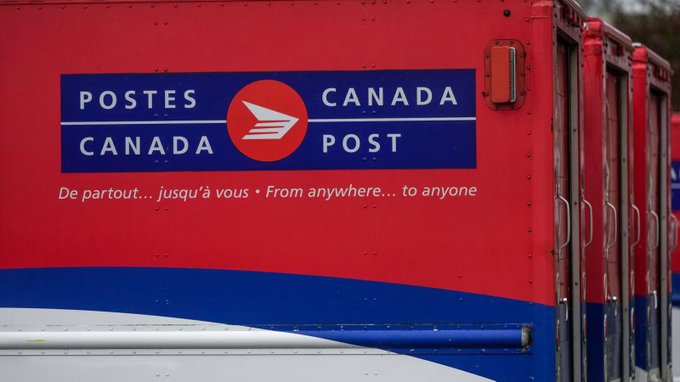

Canada Post workers have approved a new five-year contract, ending one of the most closely watched labour fights in the Crown corporation’s recent history and giving the postal service a temporary period of stability as it faces deep financial pressure.
The Canadian Union of Postal Workers said members in both major bargaining units voted strongly in favour of the new agreements. Preliminary results showed 89.0% of urban postal workers and 85.9% of rural and suburban mail carriers backed the deal, clearing the way for contracts that run until January 31, 2029.
The result marks a major turn after more than two years of strained negotiations, labour action, government intervention and internal disagreement inside the union. The agreement includes wage increases, enhanced benefits and a weekend parcel delivery model, a key change as Canada Post tries to compete more aggressively in a parcel market dominated by private couriers.
For workers, the deal offers immediate wage movement after a long period of uncertainty. The agreement includes a 6.5% wage increase in the first year and a further 3% increase in the second year. In years three through five, increases are tied to the annual inflation rate, giving employees some protection if living costs rise again.
The ratification vote also brings an end, at least for now, to the immediate risk of renewed strike or lockout action. That matters for households and small businesses that still rely on Canada Post for bills, government notices, rural delivery, returns, online orders and holiday-season parcels.
Reader reactions to the Canada Post contract vote
The Canada Post contract approval drew a sharp response online, with readers focusing on jobs, union influence, financial losses and the future of the postal service.
“I wish someone would make Canada Post a ‘Made in Canada’ one-stop shop.”
“Take that and run. Lucky to have a job at this point.”
“Against their union’s advice. Unions are a thing of the past.”
“Guess another billion-dollar loss again this year.”
“Canada Post is still a thing?”
A decisive vote after a divided campaign
The vote was not a simple show of unity. CUPW’s national leadership had been divided over the tentative agreement, with a majority of the board recommending acceptance while union president Jan Simpson urged members to reject it. That split made the final result more significant, because members ultimately approved the deal by a wide margin in both bargaining units.
The outcome follows earlier tensions covered in Swikblog’s report on the Canada Post workers’ contract vote and union split, when the proposed agreement had become a flashpoint between job security, bargaining rights and the corporation’s demand for operational reform.
Canada Post said the agreements will soon be signed. Chief executive Doug Ettinger welcomed the result, saying the deal gives the postal system a chance to rebuild confidence while recognizing that the corporation has to change. The company has argued for months that uncertainty around labour relations has hurt volumes, revenue and customer confidence.
Financial pressure remains the bigger story
The contract may calm the labour front, but it does not remove the deeper financial problem. Canada Post reported a $205 million loss before tax in the first quarter of 2026, with revenue and volumes falling across its business lines. The corporation has said the results reinforce the urgency of its transformation plan as letter mail continues to decline and parcel competition remains intense.
The latest financial update from Canada Post’s first-quarter report shows how quickly the challenge has widened. The postal service is trying to preserve a national delivery network while dealing with lower mail volumes, high fixed costs and a parcel market where consumers expect faster and more flexible delivery.
The federal government has already stepped in with major financial support. Ottawa announced up to $1.01 billion in repayable funding for the 2025–26 fiscal year to help Canada Post maintain solvency and keep services running. That support came after earlier funding measures and amid warnings that the corporation could not continue operating under its old model without major changes.
The contract also arrives during a broader overhaul of Canada Post’s mandate. The government has moved to remove long-standing barriers to reform, including changes connected to community mailbox conversions and rural post office rules. Those decisions remain politically sensitive, especially in smaller communities where postal service is treated not only as a delivery network but as an essential public service.
Swikblog has also covered the wider delivery shift in its report on Canada Post door delivery changes affecting millions of addresses, a key part of the restructuring debate now unfolding alongside the new labour agreement.
For customers, the most immediate effect is likely stability. A ratified contract reduces the threat of sudden disruption and gives Canada Post space to move ahead with weekend parcel delivery, a service change designed to match the pace of modern e-commerce. For workers, the agreement secures wage gains and benefits improvements, but the next phase may still bring difficult debates over staffing, routes, delivery standards and local post office changes.
The vote closes one chapter of the Canada Post dispute, but it does not settle the central question facing the postal service: how to remain financially sustainable while preserving reliable national delivery. The new agreement gives both sides time, but the pressure from falling mail volumes, rising costs and federal reform will continue to shape Canada Post well beyond this contract vote.

Make Swikblog your go-to source on Google for reliable updates, smart insights, and daily trends.