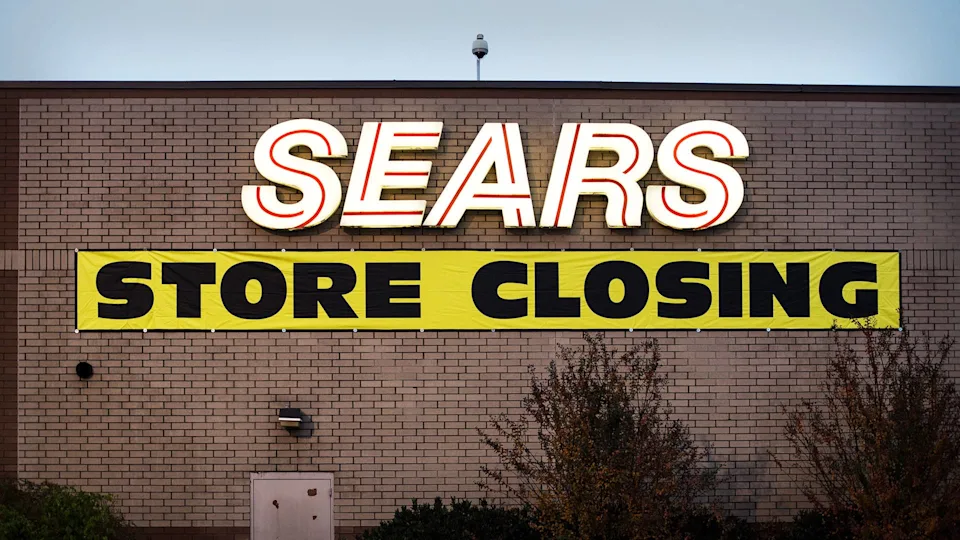

Sears, once America’s largest retailer, has reportedly been reduced to five full-line department stores in 2026. The remaining locations are spread across California, Florida, Massachusetts and Texas, marking a dramatic decline for the company founded 140 years ago.
The five-store count does not represent a new bankruptcy or confirmed nationwide liquidation. Sears has not announced a final closing date, but recent closures, property listings and the absence of a public expansion plan have placed the remaining stores under scrutiny.
How many Sears stores are left in 2026?
Five full-line Sears stores are reported to remain open:
- Concord, California: Sunvalley Shopping Center
- Braintree, Massachusetts: South Shore Plaza
- El Paso, Texas: Cielo Vista Mall
- Miami, Florida: Searstown
- Orlando, Florida: The Florida Mall
Concord is the last reported Sears department store on the West Coast, while Florida has two of the five locations.
Store counts can differ because locations may remain open during lengthy closing sales, while online listings may not be updated immediately. Customers should check the official Sears store locator and call before travelling.
Is Sears going out of business?
Sears has not confirmed that all five stores will close. Predictions that the retailer is nearing its end are based on its shrinking footprint and expert assessments, not an official companywide shutdown notice.
Some Sears properties have been offered for sale, lease or redevelopment. That creates uncertainty, but a real-estate listing does not automatically mean a store has closed. A location may continue operating while its owner considers other uses for the property.
Which Sears stores closed recently?
The total fell following several closures in 2025. Sears shut its Whittier, California, store in July, followed by the reopened Burbank location in August. Those departures left Concord as the company’s last reported California store.
The final Sears in Puerto Rico, located at Plaza Las Américas in San Juan, also closed after more than five decades. Its inclusion in older store lists helps explain conflicting totals published during 2025.
Who owns Sears now?
Sears’ remaining operations are controlled by Transformco, a private company associated with former Sears chief executive Eddie Lampert and ESL Investments.
Lampert gained control of Kmart after its bankruptcy. Kmart announced its acquisition of Sears in 2004, and the deal was completed in 2005 to create Sears Holdings.
Sears Holdings filed for Chapter 11 bankruptcy protection in October 2018. ESL Investments won the bankruptcy auction for many surviving assets in early 2019, after which Transformco continued operating a much smaller Sears business.
Why did Sears decline?
Sears’ decline resulted from decades of underinvestment, changing shopping habits, stronger competitors and repeated asset sales. Walmart overtook Sears as America’s largest retailer by sales in 1990, while Amazon later increased online pressure. Specialist chains also challenged Sears in appliances, electronics, tools and home improvement.
A widely cited 2017 analysis estimated that Sears spent only 91 cents per square foot on store and online improvements. JCPenney reportedly spent $4.13, Kohl’s $8.12 and Best Buy $15.36.
The Kmart merger increased the combined company’s size without repairing ageing stores, inventory problems or weak digital development. Store closures lowered costs but also made Sears less accessible to customers.
Similar pressures continue across US retail. Albertsons’ job cuts and store closures show how major operators are reassessing costs, while the closure of a long-running Tennessee hardware store illustrates the challenges affecting smaller retailers.
How large was Sears at its peak?
Sears operated more than 2,700 locations at its height as a standalone retailer. Larger figures sometimes reported include both Sears and Kmart, which had roughly 3,500 stores after their combination.
Founded in 1886, Sears initially transformed shopping through its mail-order catalogue. It later built a nationwide department-store network selling appliances, tools, clothing, furniture and automotive products.
What happened to Sears’ major brands?
- Craftsman: Sold to Stanley Black & Decker in 2017.
- DieHard: Sold to Advance Auto Parts in 2019.
- Lands’ End: Spun off as an independent company in 2014.
- Kenmore: Remains associated with Sears, although outside companies manufacture its appliances.
The sales raised money but left Sears with fewer distinctive assets capable of supporting a turnaround.
Why does Sears real estate matter?
Sears sold a large property portfolio to Seritage Growth Properties in 2015 and leased space back at many locations. The deal generated cash but added lease obligations.
Seritage later adopted a plan to sell its properties. By March 2026, it reported interests in only 10 properties and approximately $50 million in corporate debt. The often-mentioned $1.6 billion Berkshire Hathaway loan was the facility’s original size, not the amount remaining in 2026.
Read More:
What happened in the Lampert lawsuit?
Creditors sued Lampert and other defendants over transactions completed before the bankruptcy, alleging asset stripping and self-dealing. The case ended with a $175 million settlement approved in 2022. Because it was settled, the allegations were not established through a completed trial.
What should Sears customers check?
Sears.com remains active, but shoppers should verify the seller, delivery terms and return policy because products may come from third-party marketplace sellers.
Gift cards, protection agreements, warranties and repair eligibility can depend on their individual terms. Sears Home Services and Sears PartsDirect continue to operate separately from the department stores, so customers should contact the relevant service directly and retain purchase and warranty records.
Until Transformco or an individual shopping centre confirms a closure, the five remaining stores should be considered open but facing an uncertain future.

Make Swikblog your go-to source on Google for reliable updates, smart insights, and daily trends.