
U.S. stock futures moved lower Thursday as investors assessed the economic and geopolitical fallout from escalating tensions in the Middle East. Rising crude oil prices, triggered by the ongoing conflict involving the United States, Israel, and Iran, weighed on equity sentiment even as several major technology stocks posted strong earnings-driven gains.
The pullback in futures comes after a strong rebound session on Wall Street a day earlier, when technology and semiconductor stocks helped push the major indexes higher.
Futures Slip as Oil Prices Spike
Before the opening bell, futures tied to the major U.S. indexes were under pressure.
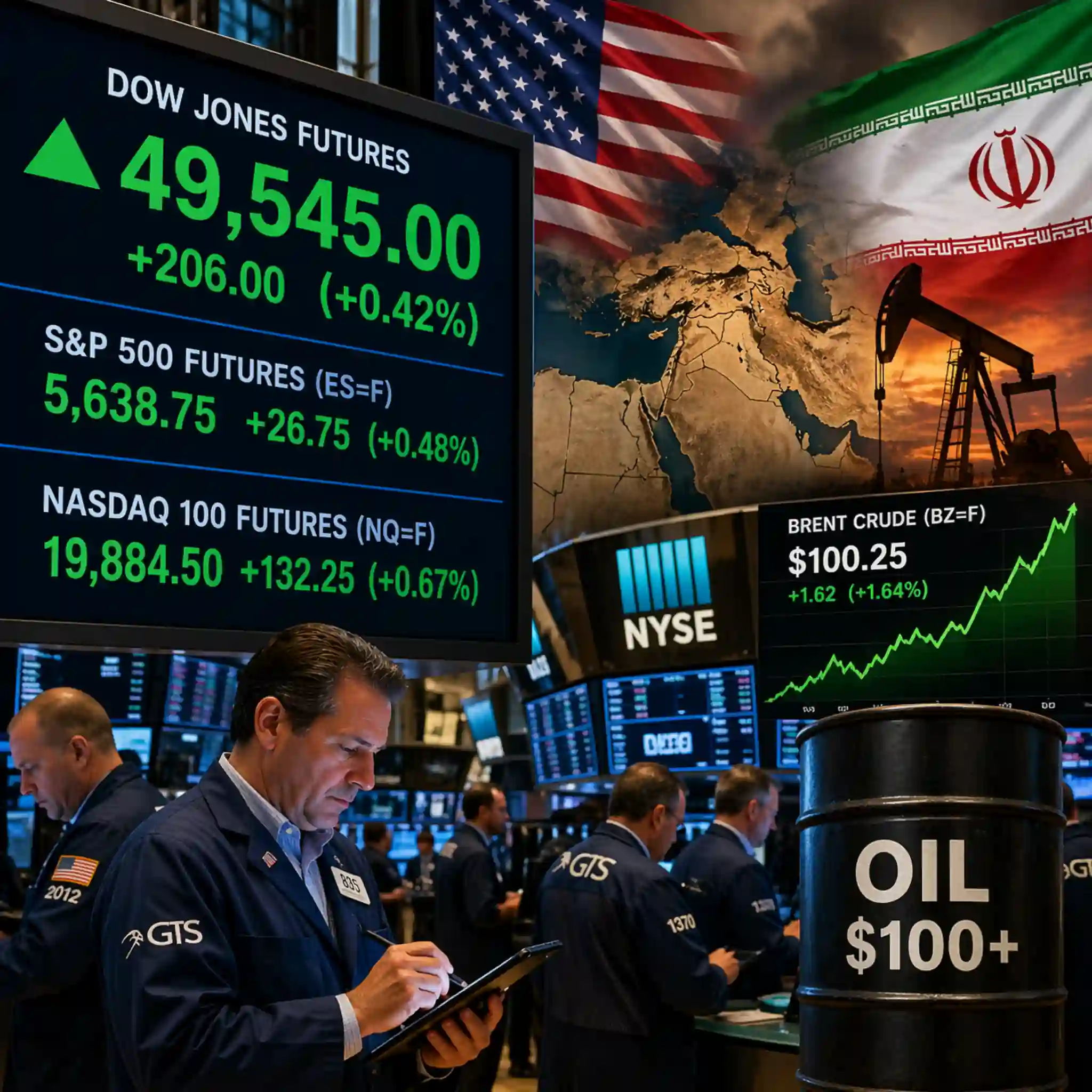
- S&P 500 futures: down about 0.4%
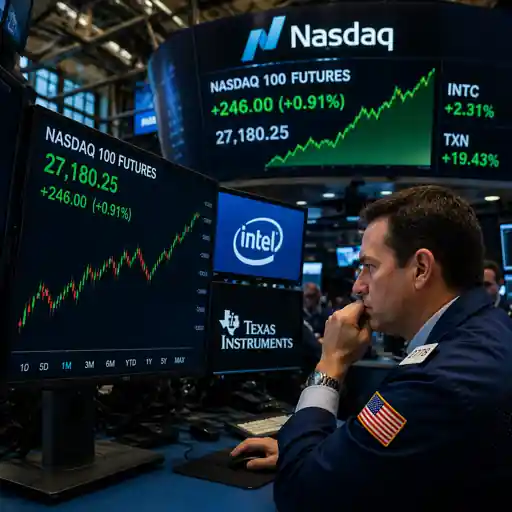
- Nasdaq-100 futures: lower by roughly 0.5%
- Dow Jones Industrial Average futures: down about 351 points (around 0.7%)
The decline came as energy markets surged. West Texas Intermediate crude climbed above $76 per barrel, while Brent crude rose above $83, reflecting fears that the war could disrupt global oil supplies.
The conflict has raised serious concerns about shipping routes in the Strait of Hormuz, a critical energy chokepoint through which nearly 20% of global oil supply normally flows. Any disruption to tanker traffic in the region could rapidly tighten global energy markets and push oil prices significantly higher.
Geopolitical Risk Driving Market Volatility
Markets are entering the sixth day of the Middle East conflict, with investors increasingly focused on the risk of supply disruptions and higher inflation. Rising oil prices can feed directly into consumer prices and potentially complicate central bank plans to ease monetary policy.
Analysts note that geopolitical shocks often push up the equity risk premium, meaning investors demand greater returns to compensate for uncertainty. The current situation has revived fears that a prolonged conflict could slow economic growth while reigniting inflation pressures.
Still, some strategists believe such oil spikes tend to be temporary if the conflict remains contained.
Trade Desk Surges on OpenAI Advertising Talks
Despite the broader market uncertainty, several individual stocks were sharply higher in premarket trading.
The Trade Desk (TTD) jumped about 21%, becoming one of the biggest movers in the S&P 500. The rally followed reports that OpenAI has held early discussions with the company about selling digital advertising, a potential partnership that could significantly expand its advertising ecosystem.
The Trade Desk is one of the largest independent ad-tech platforms globally, helping brands buy targeted digital advertising across connected TV, mobile apps, and the open internet. News of potential collaboration with a major AI company fueled speculation about new growth opportunities in the rapidly evolving AI-driven advertising market.
Broadcom Rallies After Strong AI Revenue
Semiconductor giant Broadcom (AVGO) also attracted strong investor interest after delivering better-than-expected quarterly results.
The company reported AI-related revenue of $8.4 billion, more than doubling year-over-year thanks to strong demand for custom AI chips used in data centers and large-scale artificial-intelligence infrastructure.
Overall, Broadcom’s fiscal first-quarter revenue rose about 29% year-over-year, highlighting the explosive growth in AI computing and cloud infrastructure spending.
Major technology companies—including Alphabet, Microsoft, Amazon, and Meta—are investing heavily in AI infrastructure, driving demand for chips, networking equipment, and specialized processors.
Other Premarket Stock Movers
Several additional companies made notable moves in premarket trading:
- Veeva Systems (VEEV): gained around 10–12% after reporting strong quarterly results and optimistic revenue guidance.
- Burlington Stores: rose about 6% after beating earnings and revenue expectations for the fourth quarter.
- BJ’s Wholesale Club: fell about 4% after issuing full-year guidance that came in below analyst expectations.
These company-specific moves highlighted the continued importance of earnings results even as geopolitical risks dominate market headlines.
Berkshire Hathaway Restarts Share Buybacks
Another notable development came from Berkshire Hathaway, which disclosed it has resumed repurchasing its own shares for the first time since 2024.
The conglomerate’s new CEO Greg Abel also personally purchased about $15 million worth of stock, signaling confidence in the company’s long-term valuation.
Share buybacks are often interpreted as a bullish signal by investors because they indicate that management believes the company’s stock is undervalued.
Economic Data Shows Resilient Labor Market
Fresh economic data released Thursday painted a mixed but largely stable picture of the U.S. economy.
- Productivity: rose 2.8% in the fourth quarter, stronger than the 1.8% forecast.
- Unit labor costs: also increased 2.8%, slightly above expectations.
- Initial jobless claims: came in at 213,000, slightly below economists’ estimates.
The numbers suggest the labor market remains resilient despite slowing hiring momentum.
Oil Shock Looms Over Markets
Energy markets remain the biggest wildcard for investors.
Analysts warn that if shipping through the Strait of Hormuz were significantly disrupted, global oil prices could spike sharply and even approach $100 per barrel, a scenario that could push inflation higher and slow economic growth.
For now, investors are balancing two competing forces:
- strong corporate earnings and AI-driven growth in technology
- geopolitical risk and rising energy prices
Market Outlook
As trading unfolds, markets are likely to remain sensitive to developments in the Middle East as well as fresh economic data and corporate earnings.
If oil prices stabilize, equities could regain momentum following Wednesday’s rally. However, any escalation in the conflict or disruption to global energy flows could quickly increase volatility across financial markets.
For investors, the coming days may hinge less on corporate performance and more on geopolitics—a reminder that in global markets, events far beyond Wall Street can rapidly reshape the outlook for stocks, commodities, and the broader economy.

Make Swikblog your go-to source on Google for reliable updates, smart insights, and daily trends.