
Tesla’s Cybertruck problem has taken another turn, this time with a recall covering every rear-wheel-drive Cybertruck ever sold. The number is small — just 173 vehicles — but the issue is large enough to draw fresh attention to Tesla’s most controversial electric pickup.
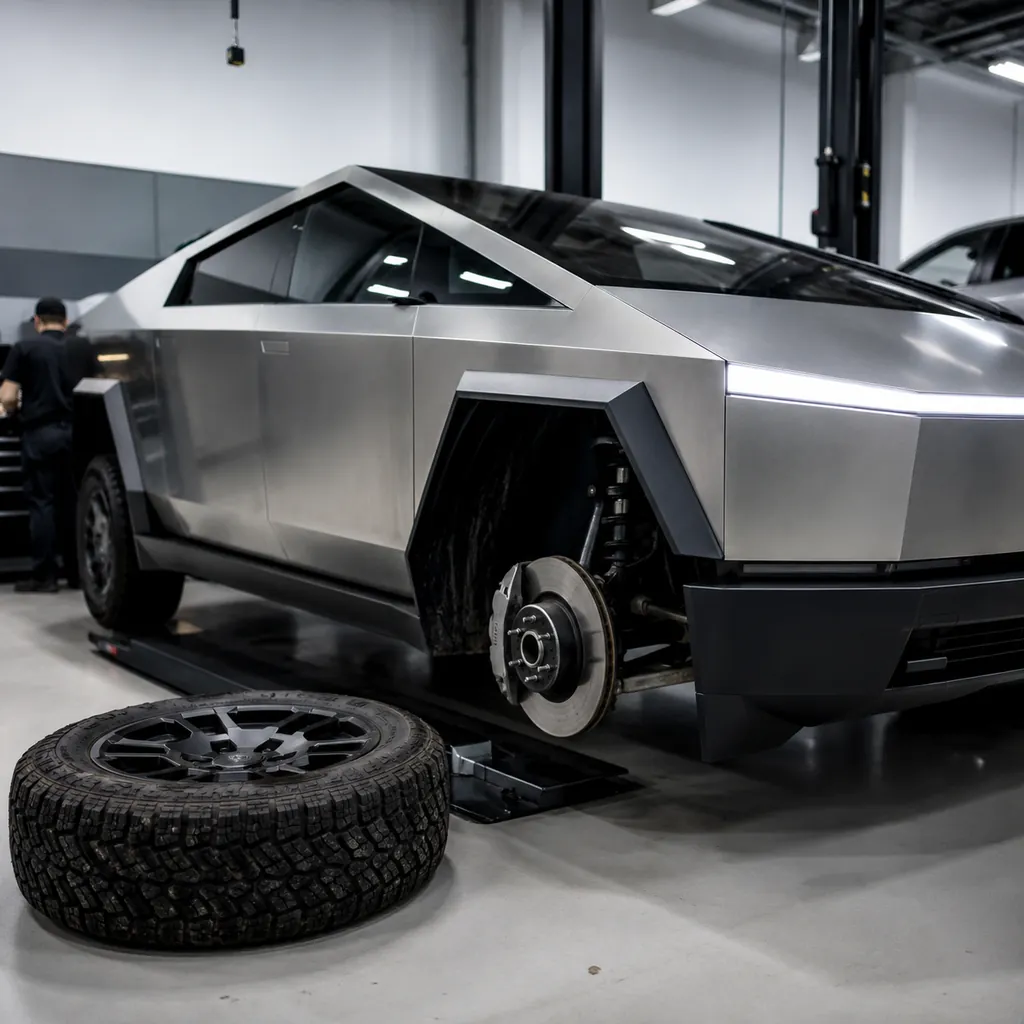
The recall affects Cybertruck RWD models after a wheel-related safety defect raised concerns that wheel studs could separate from the hub. In the worst case, that could make the vehicle harder to control and potentially allow a wheel to detach while driving.
For Tesla, the recall lands at an awkward moment. The Cybertruck was once pitched as a bold reset for the electric pickup market, but the lower-cost rear-wheel-drive version struggled to find buyers and was discontinued after a short run. Now, the entire production run of that model is being called back for repairs.
Small Recall Count, Big Safety Concern
The affected Cybertruck RWD population is limited to 173 vehicles, making it one of the more unusual recalls in Tesla’s recent history. Most major automotive recalls involve thousands, tens of thousands or even hundreds of thousands of vehicles. This one stands out because it covers an entire model variant that barely reached the market before being pulled.
According to the recall details, the issue is linked to the brake rotor area. Cracks may form around the brake rotor stud holes when the vehicle is exposed to road stress, cornering forces or rough driving conditions. If those cracks worsen, the wheel studs could separate from the hub.
The safety concern is straightforward: if wheel attachment hardware fails while the vehicle is moving, the driver may experience vibration, noise or reduced vehicle control. Tesla has said it is not aware of any crashes, injuries or fatalities tied to the defect, but the risk was serious enough to trigger a full recall of the affected RWD trucks.
Owners can review official recall information through the National Highway Traffic Safety Administration recall filing, which outlines the defect, the affected vehicles and the planned remedy.
Tesla Will Replace the Affected Parts Free of Charge
Tesla’s remedy is not a software patch. Unlike many Tesla recalls that are fixed through over-the-air updates, this one requires physical repair. The company plans to replace the affected wheel hubs and brake rotors at no cost to owners.
That difference matters. Tesla has built a reputation for resolving many vehicle issues remotely, especially software-related problems involving displays, alerts or driver-assistance systems. But hardware recalls are more disruptive. Owners need service attention, replacement parts and confirmation that the vehicle is safe to drive.
The recall also comes alongside a separate Tesla action involving more than 200,000 vehicles over delayed rearview camera images. That broader recall affects certain Model 3, Model Y, Model S and Model X vehicles. While the camera issue can be addressed through a software update, the Cybertruck RWD wheel issue is more mechanical and more visible from a safety perspective.
The timing creates an uncomfortable contrast for Tesla. One recall affects a huge number of vehicles but can be fixed digitally. The other affects only 173 trucks but involves one of the most basic expectations of any vehicle: that the wheels remain securely attached.
Cybertruck RWD Sales Showed Weak Demand
The recall also reveals how little demand there was for the Cybertruck RWD version. A total of 173 units is tiny for a vehicle from one of the world’s most-watched automakers. Tesla introduced the rear-wheel-drive Cybertruck as a lower-priced alternative, but the model lacked several features that many buyers associated with the Cybertruck’s appeal.
The RWD version came in below higher-priced Cybertruck variants, but buyers appeared to see the trade-off as too large. Features such as air suspension and power outlets in the bed were among the omissions that made the model less attractive to shoppers who wanted the full Cybertruck package.
The weak response added to a broader debate around Cybertruck demand. The pickup generated enormous attention before launch, but turning that attention into sustained sales has proven more difficult. Reports cited in the uploaded source showed Cybertruck sales falling sharply, with annual sales dropping from 38,965 units to 20,237 units, a decline of roughly 48%.
That sales slide matters for investors because Cybertruck was never meant to be just another niche model. It was presented as a statement vehicle — a high-profile product that could expand Tesla’s reach in the profitable truck market. Instead, the model has faced pricing changes, production challenges, quality questions and repeated recalls.
For more context on earlier Tesla pressure tied to Cybertruck pricing and demand concerns, Swikblog previously covered Tesla’s stock weakness in Tesla Stock Falls Below $400 as 17% Cybertruck Price Jump and Europe Sales Slump Weigh on TSLA.
Investor Focus Stays on Tesla’s Bigger Growth Story
Tesla shares were up around 4% in the referenced market move, showing that investors were not treating the 173-vehicle Cybertruck recall as a major financial event by itself. The direct cost of repairing such a small group of vehicles is unlikely to move Tesla’s earnings in a meaningful way.
But the larger concern is reputational. Tesla’s valuation depends heavily on investor confidence in its ability to scale new products, maintain strong brand loyalty and protect margins while competing in an increasingly crowded EV market. A small recall can still carry weight when it reinforces existing concerns about execution.
The Cybertruck is especially sensitive because it sits at the center of Tesla’s image as a risk-taking innovator. Its stainless-steel body, angular design and unusual positioning made it one of the most talked-about vehicles in years. But that attention also means every quality issue receives outsized scrutiny.
For long-term Tesla investors, the key question is not whether a recall of 173 vehicles hurts quarterly numbers. It is whether Cybertruck continues to look like a growth driver or becomes a distraction from Tesla’s more important businesses, including the Model Y, Model 3, energy storage, artificial intelligence and autonomous driving ambitions.
The recall does not change Tesla’s core investment case overnight. It does, however, add another complication to a vehicle program already facing questions over demand, pricing and execution. With Cybertruck sales under pressure and the RWD model already discontinued, the latest recall gives critics another reason to question whether Tesla’s boldest pickup has delivered on its original promise.
Read More
- Visit Swikblog Homepage
- M5 Crash: Somerset Taunton Motorway Closed, Person Airlifted to Hospital
- Bush Toileting Fines in Australia National Parks
- Woolworths Worker’s Unfair Dismissal Claim: Fair Work Says He Was Never Fired
- KeyBank Increases Meta Platforms Holdings as AI Spending Stays in Focus
- PS Store Has No Active Sale Until May 13 Return

Make Swikblog your go-to source on Google for reliable updates, smart insights, and daily trends.