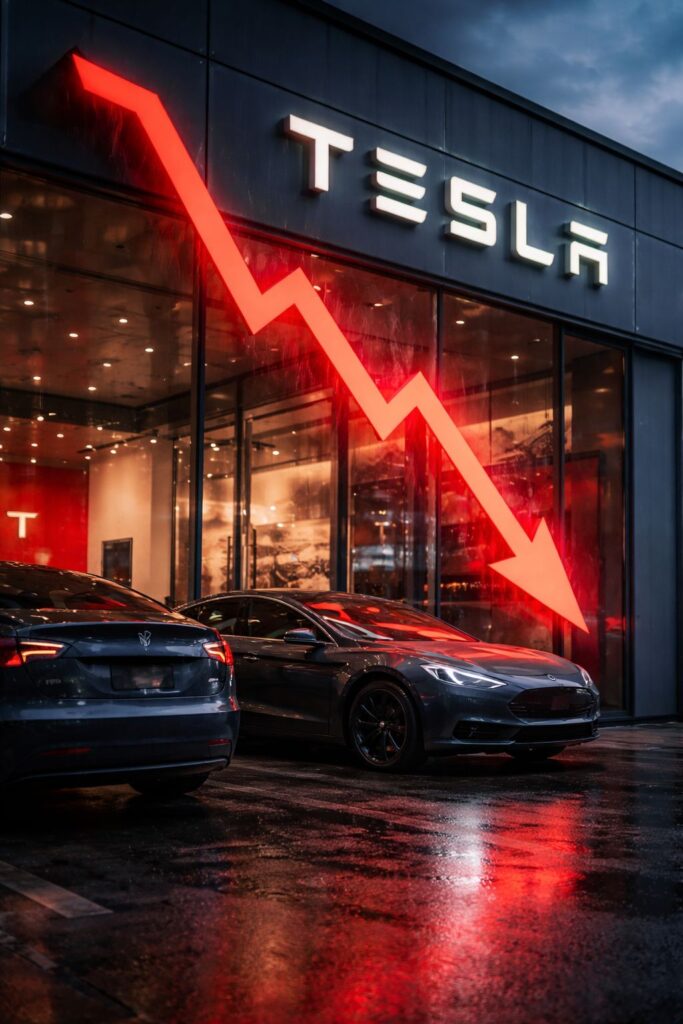

Tesla stock fell 1.73% to $400.78 today even as Elon Musk’s company secured a significant regulatory approval in Britain that could expand its ambitions far beyond electric vehicles. The US-based EV giant received permission to supply electricity directly to homes and businesses across the United Kingdom, marking a major step in Tesla’s push deeper into the global energy market.
The approval was granted to Tesla Energy Ventures, a subsidiary of Tesla, by the UK energy regulator Ofgem. The licence allows the company to supply electricity to domestic and commercial customers across England, Scotland, and Wales. The decision followed a seven-month regulatory review process designed to assess whether Tesla could safely and reliably operate as a power supplier.
Despite the strategic win, Tesla shares slipped during trading as investors remained focused on slowing vehicle sales, rising competition in the EV sector, and the company’s premium valuation.
Tesla wins approval to supply electricity across Britain
The licence issued by Ofgem means Tesla can now enter Britain’s competitive electricity supply market and sell power directly to consumers. This move expands Tesla’s role in the energy ecosystem, complementing its existing businesses in solar energy, battery storage, and grid services.
Tesla has already been active in the UK energy sector for several years. In 2020, Tesla Motors Limited received an electricity generation licence that allowed the company to produce electricity within the country. However, the newly granted licence is different because it enables Tesla to act as a retail electricity supplier.
In practical terms, this means Tesla could sell electricity to households and businesses nationwide, potentially integrating services such as solar installations, Powerwall battery systems, and smart energy management technology.
According to the UK regulator, Tesla must now comply with the same strict rules that apply to all licensed electricity suppliers, including consumer protection standards, fair pricing practices, and financial accountability.
More information about the UK’s electricity licensing framework can be found on the Ofgem website.
Regulatory review and public backlash
The decision to grant Tesla a supply licence did not come without controversy. During the review period, campaign group Best for Britain organized opposition to the application, arguing that Elon Musk’s political activities should raise concerns about allowing his company to operate in Britain’s energy sector.
The group said more than 18,000 people used an online tool to submit objections to Ofgem during the review process.
Criticism largely centered on Musk’s political statements and his support for controversial figures, as well as changes made to social media platform X, formerly known as Twitter, since Musk acquired it.
UK Energy Secretary Ed Miliband also criticized Musk publicly, calling him a “dangerous person” and accusing the billionaire entrepreneur of rhetoric that could incite unrest.
Despite these concerns, Ofgem emphasized that its licensing process focuses on companies rather than individuals. The regulator said it evaluates whether the applying business meets operational, technical, and financial requirements to safely supply electricity.
The UK government also clarified that Ofgem is an independent regulator with sole responsibility for approving energy supply licences. While ministers have veto powers over certain types of energy licences, they do not apply to the specific category Tesla requested.
Tesla’s growing energy business
Tesla’s expansion into the electricity supply market reflects a broader strategy to become a major player in global energy infrastructure. Alongside its electric vehicles, the company produces solar panels, residential Powerwall batteries, and large-scale Megapack energy storage systems used by utilities and grid operators.
By combining these technologies, Tesla has been building what Musk often describes as a fully integrated clean energy ecosystem.
Under this model, households could generate electricity with solar panels, store excess power in batteries, charge electric vehicles, and potentially sell electricity back to the grid. Tesla’s software platform could then manage how energy flows across homes, vehicles, and power networks.
The UK licence gives Tesla another opportunity to expand that vision by potentially creating integrated energy services for consumers.
Details about Tesla’s broader energy products and services are available on the company’s Tesla Energy page.
Stock pressure from EV competition
Even with the new electricity licence, Tesla’s share price remained under pressure as investors continued to focus on developments in the company’s core EV business.
Tesla recently lost its position as the world’s largest electric vehicle manufacturer after Chinese rival BYD overtook it in annual sales. Tesla delivered approximately 1.64 million vehicles in 2025, representing a 9% decline from the previous year.
By comparison, BYD reported global sales of about 2.26 million vehicles, highlighting the increasing strength of Chinese automakers in the EV market.
The rising competition has raised concerns among investors about Tesla’s growth trajectory, particularly in key markets such as China where price competition has intensified.
Meanwhile, Tesla’s valuation continues to attract scrutiny from analysts because the company trades at significantly higher earnings multiples than most traditional automakers.
What investors may watch next
For investors, the key question is whether Tesla’s energy business can grow large enough to materially impact the company’s financial performance.
The approval to sell electricity in Britain could eventually lead to new revenue streams if Tesla succeeds in bundling electricity supply with its solar panels, battery storage products, and EV charging infrastructure.
However, building a large-scale energy supply business will take time and will require Tesla to compete with established energy providers already operating in the UK market.
In the short term, Tesla’s stock performance is still likely to be driven primarily by vehicle deliveries, profit margins, and developments in the global EV industry.
Still, the UK electricity approval highlights Musk’s broader ambition to transform Tesla into something larger than an electric car manufacturer — potentially a global energy and technology platform.

Make Swikblog your go-to source on Google for reliable updates, smart insights, and daily trends.