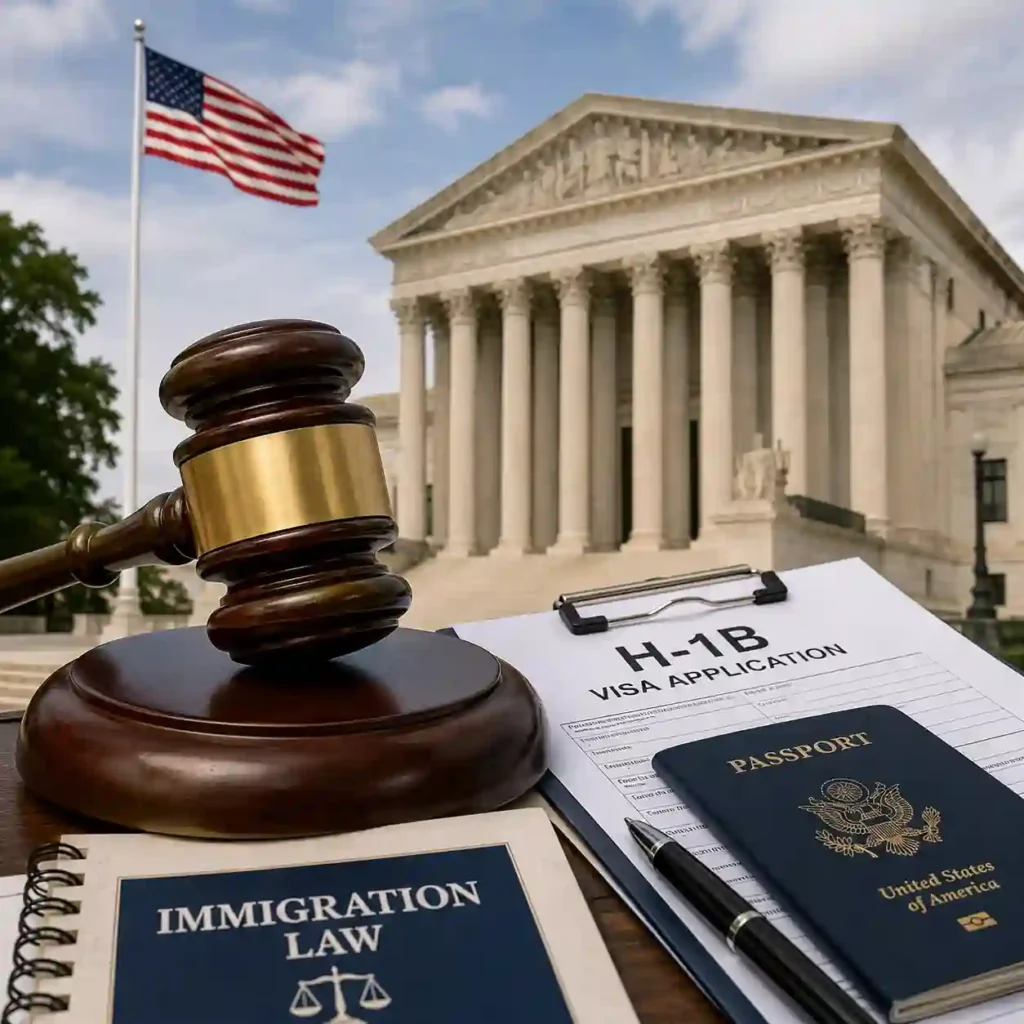

A federal judge has blocked President Donald Trump’s controversial policy requiring employers to pay a $100,000 fee for H-1B visa applications, delivering a significant setback to one of the administration’s most aggressive immigration measures.
In a ruling issued by the U.S. District Court in Massachusetts, Judge Leo Sorokin found that the policy violated both the Administrative Procedure Act and the U.S. Constitution. The decision immediately removes a measure that many businesses warned would dramatically increase hiring costs and restrict access to highly skilled international workers.
The case is particularly important because the H-1B visa program remains a key pathway for U.S. employers to hire foreign professionals in specialized fields such as technology, engineering, healthcare and research. The program, established in 1990, allows companies to sponsor qualified workers for employment in occupations that require advanced knowledge and expertise.
Why the Court Struck Down the $100,000 Fee
Trump introduced the fee through a presidential proclamation in September 2025 as part of a broader effort to tighten legal immigration rules. At the time, the administration argued that the H-1B program had been misused and contributed to the large-scale replacement of American workers, creating economic and national security concerns.
However, Judge Sorokin agreed with the plaintiffs that the $100,000 payment functioned as a tax rather than a standard administrative fee. Under the Constitution, Congress has the authority to impose taxes unless it explicitly delegates that power elsewhere. The court found no evidence that Congress had granted the executive branch authority to impose a six-figure H-1B charge.
The scale of the increase was also unprecedented. Prior to Trump’s policy, H-1B-related filing fees generally ranged between approximately $2,000 and $5,000 depending on the employer and filing category. The proposed $100,000 fee would have represented a massive increase in the cost of sponsoring foreign talent.
The lawsuit challenging the policy was filed in December by 20 states against the Trump administration and several senior officials. The U.S. Chamber of Commerce also launched a separate legal challenge, arguing that the measure would hurt American businesses and reduce competitiveness.
Read More
What the Ruling Means for Workers and Employers
For skilled foreign workers, especially Indian professionals who account for the majority of H-1B approvals each year, the ruling removes a significant obstacle that could have reduced sponsorship opportunities. Many employers had warned that a six-figure government fee would force them to scale back hiring plans or reconsider whether sponsoring foreign workers remained financially viable.
Small businesses, startups, universities and healthcare organizations are among those expected to benefit from the ruling. Without the additional fee burden, employers can continue using the H-1B program under the existing cost structure while planning future recruitment efforts.
The decision also provides greater certainty for employers preparing applications for upcoming H-1B filing cycles. However, the legal battle may not be over. The White House did not immediately respond to requests for comment following the ruling, and the administration could still appeal the decision.
The case comes amid broader debates over employment-based immigration and legal pathways into the United States. Swikblog recently examined another immigration-related policy development in USCIS Green Card Rule Sparks Panic as Trump Memo Tightens Approval Path, which raised concerns among applicants pursuing permanent residency.
Employers and prospective applicants should continue monitoring official government guidance while the case develops. The latest eligibility requirements, filing procedures and program updates are available through the U.S. Citizenship and Immigration Services (USCIS), the federal agency responsible for administering the H-1B visa program.

Make Swikblog your go-to source on Google for reliable updates, smart insights, and daily trends.