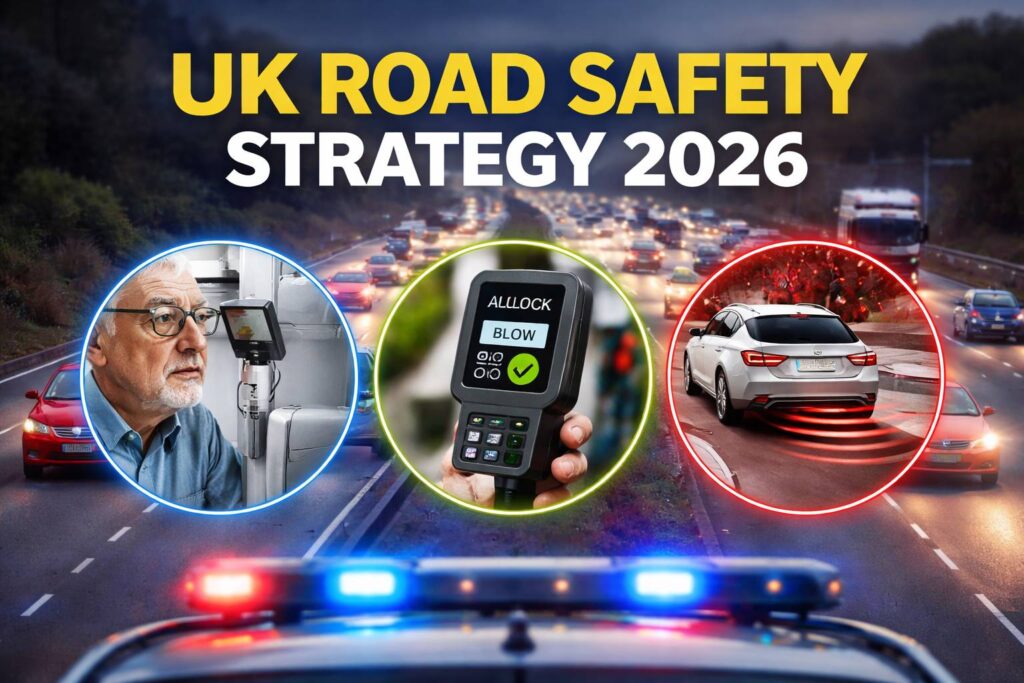

The UK government has signalled a tougher new push on road safety, setting out proposals designed to reduce deaths and serious injuries on Britain’s roads by 65% by 2035. The plan marks the first full road safety strategy in more than a decade and comes amid concerns that progress slowed after around 2010.
Source coverage includes reporting by The Guardian and the government’s official announcement on GOV.UK.
What the proposals would change
- Drink-driving crackdown: A consultation is expected on lowering the drink-drive limit in England and Wales (currently higher than most of Europe), with the possibility of aligning more closely with Scotland’s stricter limit.
- “Alcolocks” for offenders: Convicted drink-drivers could be required to use an alcohol interlock device that only lets a vehicle start after a passed breath test.
- Faster roadside action: Police powers could be strengthened so suspected drink- or drug-driving offenders can be stopped from continuing to drive while confirmatory tests are completed. (Related reporting also highlights a broader push on roadside drug testing.)
- Stronger penalties: Fines would rise for uninsured driving, and penalty points could be introduced for seatbelt non-compliance (on top of existing fines).
New driver training and older driver checks
The strategy also targets higher-risk periods for road users. For younger and new drivers, proposals include a minimum learning period of roughly three to six months to broaden experience across conditions such as night driving, heavy traffic and adverse weather. For older drivers, the government is looking at mandatory eyesight exams for over-70s every three years, alongside options for cognitive testing.
Mandatory safety tech in new cars (“Dev’s law”)
A major shift would require new vehicles sold in Britain to include autonomous emergency braking (AEB), among other safety technologies that are widely available and already mandated in parts of Europe. AEB uses sensors to detect an imminent collision and can automatically slow the vehicle. The move has been linked to campaigning following the death of eight-year-old Dev in 2018, referenced publicly as “Dev’s law”. You can read more background in this Guardian profile.
Crash testing that reflects real passengers
Ministers also want international crash-testing rules to better account for how different body types are affected, rather than relying heavily on a single “average” crash-test dummy profile.
What happens next
Motoring and road safety groups broadly welcomed the direction of travel, while stressing that targets must turn quickly into enforceable, measurable actions. For additional context on the policy focus and enforcement elements, see coverage by the Financial Times.
You May Also Like
Catch up on more UK highlights, explainers, and breaking updates in our UK hub.
Explore UK Highlights →
Make Swikblog your go-to source on Google for reliable updates, smart insights, and daily trends.