U.S. stock futures moved lower Sunday evening after President Donald Trump said he would raise the baseline global tariff rate to 15%, up from 10%, following a ruling by the U.S. Supreme Court that struck down a broad portion of his earlier trade agenda.
The announcement injected renewed uncertainty into markets already weighing inflation risks, global growth concerns and geopolitical tensions.
Futures Slide After Tariff Increase
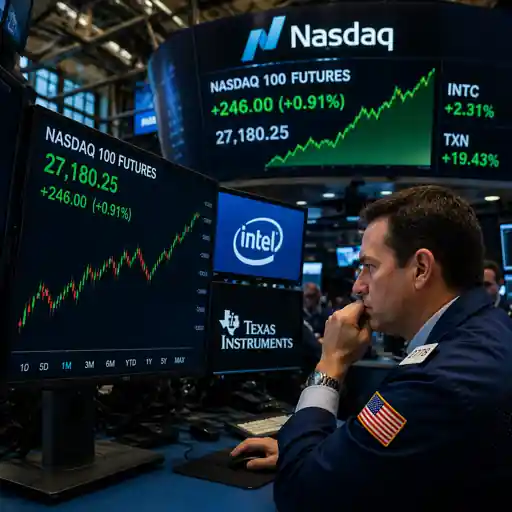
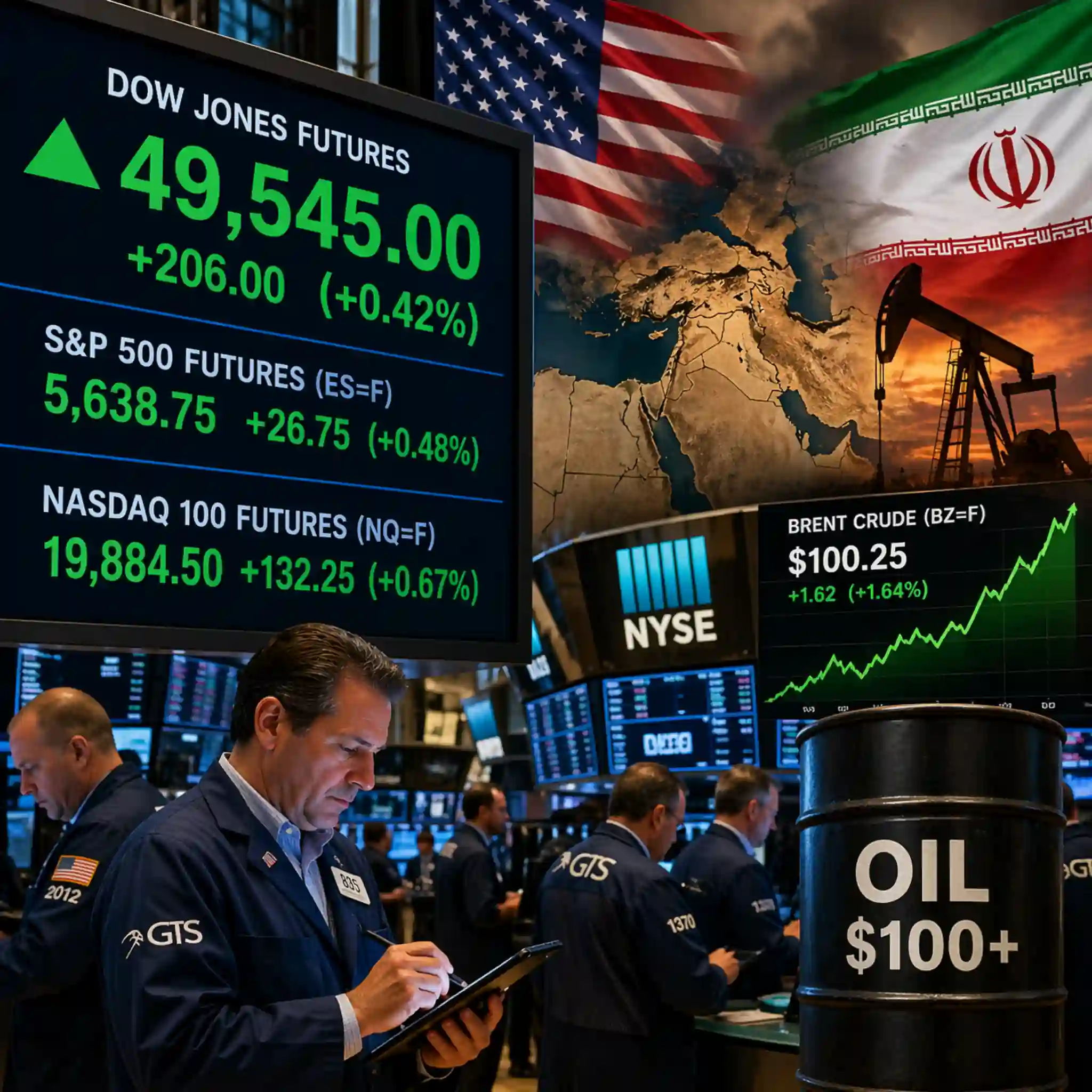
Dow Jones Industrial Average futures fell roughly 300 points, or 0.6%, while S&P 500 futures dropped 0.7%. Nasdaq 100 futures declined nearly 1%, reflecting heavier pressure on technology and growth stocks.
Earlier in the session, contracts had opened nearly flat before momentum turned negative following the tariff announcement.
Markets are coming off a volatile Friday. Stocks initially rallied after the U.S. Supreme Court invalidated a broad swath of Trump’s “reciprocal” tariff framework, fueling hopes that trade tensions could ease. However, gains faded and rebounded throughout the session.
By Friday’s close:
• Dow Jones Industrial Average: +0.5%, up more than 230 points
• S&P 500: +0.7%
• Nasdaq Composite: +0.9%
The renewed tariff escalation quickly reversed some of that optimism heading into the new week.
Oil and Bitcoin Retreat
Commodity and digital asset markets also reflected risk-off sentiment.
Brent crude futures slipped 0.7% to $71.26 per barrel, while U.S. crude declined 0.8% to $65.95. Traders are weighing whether higher tariffs could dampen global demand and manufacturing activity.
Bitcoin fell about 5% to below $65,000, extending a sharp pullback in the cryptocurrency market as investors reduced exposure to riskier assets.
Immediate Implementation Adds Uncertainty
Trump stated the higher tariff level would take effect “immediately,” though it remained unclear whether official documentation had been completed. He also warned that additional levies could follow in the coming months.
The Supreme Court ruling had briefly raised expectations that tariff pressure might ease and potentially lead to refunds for affected businesses. Instead, the administration appears prepared to pursue alternative pathways to maintain trade enforcement.
For corporations, the implications include:
• Higher import costs
• Potential retaliation from trading partners
• Margin compression risks
• Delays in capital investment decisions
Geopolitical Risks in Focus
Trade policy is not the only concern. Iran remains a central geopolitical variable. Recent remarks from the White House urging Tehran to reach a nuclear agreement have added another layer of uncertainty to energy markets.
Energy volatility could complicate the inflation outlook if crude prices rebound on geopolitical escalation.
Nvidia Earnings Under the Spotlight
Investors are also preparing for earnings from Nvidia later this week. The chipmaker has been one of the few mega-cap names posting gains this year, supported by strong artificial intelligence infrastructure demand.
Markets will be watching for commentary on data center growth, AI capital expenditure trends and margin durability.
Related coverage: Nvidia Earnings, SCOTUS Tariff Fallout and Geopolitical Tensions: What Investors Are Watching
Key Economic Data Ahead
On the economic front, durable goods orders and factory orders data are scheduled for release Monday morning. These reports may provide insight into whether business activity is already reacting to rising trade friction.
Stronger-than-expected data could stabilize sentiment. Weak readings would reinforce concerns that policy uncertainty is beginning to weigh on growth.
Markets Enter a Policy-Driven Week
With tariffs potentially rising to 15% immediately — and more levies possible in coming months — financial markets are likely to remain headline-sensitive.
Between shifting trade policy, geopolitical developments and high-profile corporate earnings, investor confidence will be tested once again as the new week unfolds.

Make Swikblog your go-to source on Google for reliable updates, smart insights, and daily trends.