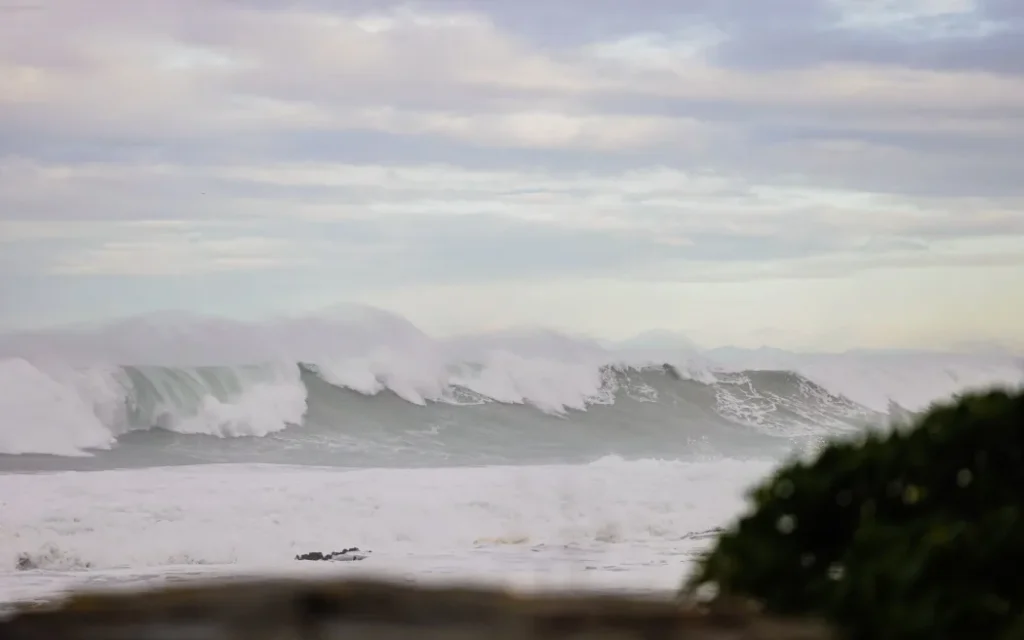

Wellington has moved into emergency mode as authorities race to protect coastal communities from forecast swells of up to 10.5 metres, prompting a mandatory evacuation order for hundreds of waterfront homes along the capital’s exposed southern coastline.
Mayor Andrew Little declared a state of emergency covering Wellington’s southern and eastern wards after forecasters warned that a powerful southerly system moving up New Zealand could generate dangerous sea conditions across Cook Strait. The emergency declaration gives local authorities additional powers to coordinate road closures, public safety measures and emergency response operations as conditions deteriorate.
Residents living in waterfront properties between Ōwhiro Bay and Breaker Bay have been ordered to leave their homes before 9am on Tuesday. Around 350 homes fall within the evacuation zone, although Lyall Bay has been excluded from the order. Officials have also warned residents to prepare for extensive road closures as the swell event develops.
The warning follows a Heavy Swell Warning issued by MetService for coastal areas stretching from Cape Terawhiti to Turakirae Head in Wellington and from Turakirae Head to Mataikona in Wairarapa. Forecasts indicate the largest waves could arrive from Monday night and continue affecting the coastline through Wednesday morning.
Why Authorities Are Taking The Threat Seriously
Emergency officials say the decision to evacuate was influenced by lessons learned from a major swell event that struck Wellington in 2021. During that event, seawater surged onto coastal roads, waves reached the fronts of homes and large rocks, driftwood and debris were thrown inland.
Wellington City Civil Defence controller Phil Becker warned that the incoming swell could exceed the severity of the 2021 event. Authorities are particularly concerned about the combination of wave energy, coastal flooding, flying debris and erosion, all of which can pose significant risks to people living close to the shoreline.
Unlike storms that primarily bring heavy rain or strong winds, large swell events can create highly localized dangers. A single powerful wave can carry rocks and timber onto roads and private property, while repeated wave impacts can weaken sections of coastline and infrastructure over a relatively short period.
Residents have responded to the evacuation order with a mixture of caution and concern. Some waterfront homeowners have indicated they will leave despite never experiencing major damage in previous storms. Others have questioned whether the disruption caused by mandatory evacuations is justified.
Residents Weigh Risks Against Disruption
Breaker Bay resident Raymond Morgan said evacuation orders can have a significant impact on daily life, especially for families with children and pet owners who must quickly find alternative accommodation. While Morgan planned to leave his property, he said he believed coastal erosion posed a greater threat than direct damage to his home.
Meanwhile, at least one resident in Ōwhiro Bay indicated he intended to remain in his two-storey house while monitoring offshore buoy data. He said swell measurements recorded near Christchurch often provide an indication of what may later reach Wellington’s coastline.
The differing reactions highlight the challenge facing emergency managers. While some properties may avoid serious damage, authorities must plan for worst-case scenarios when forecasts suggest dangerous conditions are possible across a large stretch of coastline.
Read More
For the latest official forecasts and marine warnings, residents are being encouraged to monitor updates from MetService New Zealand. The warning comes as weather experts continue to examine the influence of broader climate patterns, including the possibility of an El Niño-driven surge in global heat and extreme weather that could increase pressure on vulnerable coastal regions around the world.
For Wellington, however, the focus remains on the next 48 hours. With giant swells forecast to batter parts of the coast and emergency measures already in place, authorities are urging residents to follow evacuation instructions, avoid shoreline areas and wait for official clearance before returning home.

Make Swikblog your go-to source on Google for reliable updates, smart insights, and daily trends.