
Published: August 24, 2026 | By Swikblog Finance Team
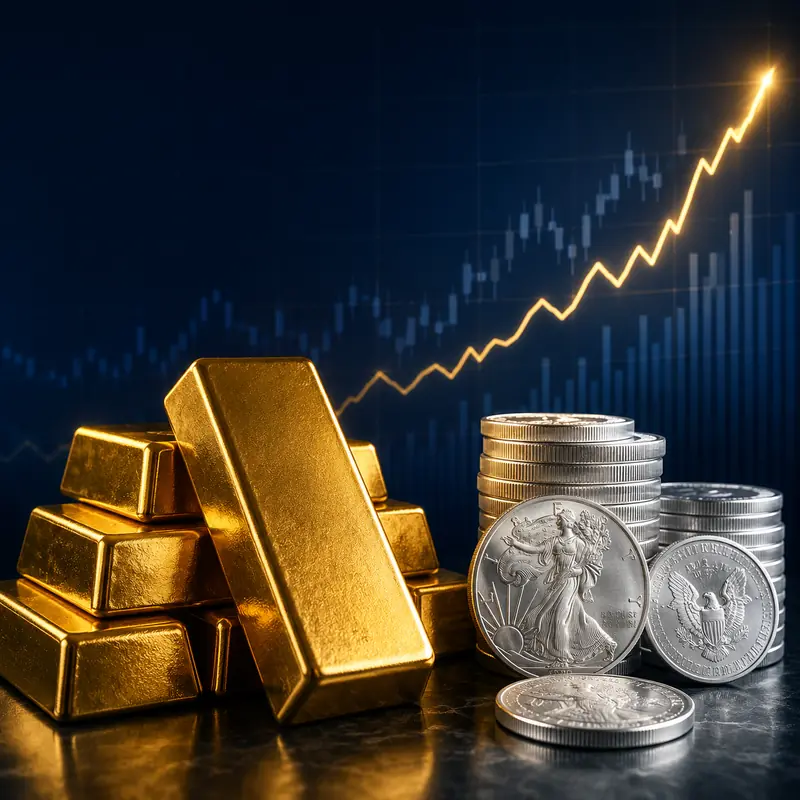
Gold and silver prices have staged a powerful comeback in August 2026, adding an estimated nearly $5 trillion to their combined market value as investors respond to falling bond yields, a weaker US dollar, geopolitical uncertainty and persistent inflation concerns.
Gold has gained approximately 15% so far this month, while silver has climbed around 19%. Despite the sharp rally, both precious metals remain below the record highs reached earlier in 2026. The move follows an earlier period when gold and silver prices were supported by US fiscal uncertainty and defensive investor demand.
- Gold has risen approximately 15% in August.
- Silver has gained around 19% this month.
- The combined value increase is estimated at nearly $5 trillion.
- Gold remains below its January record near $5,318 an ounce.
- Treasury intervention, lower yields and a softer dollar have supported prices.
The nearly $5 trillion figure comes from an analysis cited by market commentator Bull Theory. It should be treated as an estimate rather than a directly reported exchange value because gold and silver do not have one universally measured market capitalization.
Such calculations generally apply the percentage increase in prices to estimates of the total above-ground supply of both metals. The figure highlights the scale of the rally, but it does not mean that $5 trillion in cash was invested in gold and silver during August.
Why are gold and silver prices rising?
The latest move is not being driven by one event. Several monetary, economic and geopolitical forces have aligned in favour of precious metals.
1. US Treasury bond buybacks
A major catalyst arrived after the US Treasury moved to increase planned purchases of longer-dated government securities. The Treasury’s original August 2026 buyback schedule listed maximum purchase amounts across different maturity ranges.
Subsequent market reports said certain long-term buyback operations would be increased from $2 billion to at least $4 billion. The announcement attracted attention because long-term Treasury yields had recently climbed sharply amid concerns about government debt and borrowing costs.
Buybacks can support bond prices and put downward pressure on yields. When inflation-adjusted bond returns become less attractive, investors may increase their exposure to assets such as gold that do not pay interest.
The Treasury move does not amount to a new Federal Reserve quantitative-easing programme. However, some traders interpreted it as a sign that officials were prepared to intervene when stress appeared in the long-term government-bond market.
The direction of precious metals will also depend on the Federal Reserve’s interest-rate outlook, which directly influences Treasury yields and the US dollar.
2. A softer US dollar
Gold and silver are primarily priced in US dollars. When the dollar weakens, the metals become less expensive for buyers using other currencies, potentially increasing international demand.
The dollar came under pressure as Treasury yields eased and investors reassessed the outlook for US interest rates, inflation and government borrowing. A softer currency can make gold more attractive to investors looking for an alternative store of value.
However, the relationship is not automatic. Gold can sometimes rise alongside the dollar during periods of severe uncertainty, while a sudden dollar rebound can create pressure on precious-metal prices.
Currency movements can also significantly affect what international buyers pay for precious metals. For example, gold and silver prices in New Zealand dollars are influenced by both global spot prices and changes in the NZD–USD exchange rate.
3. Geopolitical and inflation risks
Continuing tensions involving Iran and the wider Middle East have kept energy and global supply-chain risks in focus. Investors often increase their exposure to gold when military conflict, financial instability or uncertainty about the world economy intensifies.
Higher energy costs can feed into transportation, manufacturing and consumer prices, reinforcing interest in assets commonly used as protection against declining purchasing power. The latest US PCE inflation data and its impact on interest-rate expectations therefore remain important for both gold and silver investors.
Gold is traditionally viewed as a defensive asset during periods of heightened uncertainty. However, it can still experience substantial short-term price swings and does not guarantee protection against every market decline.
4. Central-bank gold demand
Official-sector buying continues to provide longer-term support. According to the World Gold Council’s Q2 2026 Gold Demand Trends report, central banks remained important participants in the gold market even as quarterly purchases and investment flows fluctuated.
Central banks commonly hold gold to diversify their reserves and reduce reliance on any single currency or financial system. Their purchases can create an underlying source of demand, but they do not prevent market corrections when prices rise too quickly.
5. Silver’s industrial-demand advantage
Silver is benefiting from many of the same monetary and geopolitical forces as gold, but it also has extensive industrial uses. The metal is used in solar technology, electrical equipment, electronics, vehicles and data-centre infrastructure.
The Silver Institute expects a sixth consecutive annual silver-market deficit in 2026. This means total demand is projected to exceed newly available supply, with existing inventories helping to cover the shortfall.
That tight supply backdrop can magnify price movements when investment demand rises. It also makes silver more volatile than gold because weaker manufacturing activity could quickly reduce part of its industrial demand.
| Market factor | Possible impact on precious metals |
|---|---|
| Lower Treasury yields | Reduces the opportunity cost of holding gold |
| Weaker US dollar | Makes metals less expensive for overseas buyers |
| Geopolitical tension | May increase defensive demand for gold |
| Central-bank purchases | Provides longer-term support for gold demand |
| Silver supply deficit | Can amplify price gains when demand increases |
| Industrial slowdown | Could weaken silver demand and increase volatility |
Should investors buy gold or silver after the rally?
The outlook remains constructive, but the speed of the August advance calls for caution. A monthly increase of 15% in gold or 19% in silver can attract momentum traders while also increasing the risk of profit-taking.
Gold has moved back above important technical levels, including its 200-day moving average, suggesting that the previous downward momentum has weakened. However, returning to the record area around $5,300 an ounce would require another substantial increase.
Silver may offer greater upside if investment demand and industrial consumption remain strong. Its smaller market and dual role as an industrial and precious metal, however, mean it can fall faster than gold when sentiment changes.
Investors should now monitor US inflation data, Federal Reserve signals, movements in real Treasury yields, the dollar, central-bank purchases and developments in the Middle East.
A stronger dollar or renewed rise in inflation-adjusted yields could slow the rally. Falling yields, additional currency weakness or escalating geopolitical risks could extend it.
The bottom line: Gold and silver have benefited from an unusually supportive combination of monetary, fiscal and geopolitical conditions. The longer-term arguments for both metals remain intact, but their rapid August appreciation means buyers should account for volatility and avoid assuming that recent gains will continue at the same pace.
Precious-metal prices and market conditions can change quickly. This report reflects information available on August 24, 2026.

Make Swikblog your go-to source on Google for reliable updates, smart insights, and daily trends.