
A 26-year-old woman died after being struck by a train in Montreal’s Mile End neighbourhood on the morning of March 31, 2026, renewing concerns about pedestrian safety along a railway corridor where residents have repeatedly called for safer access.
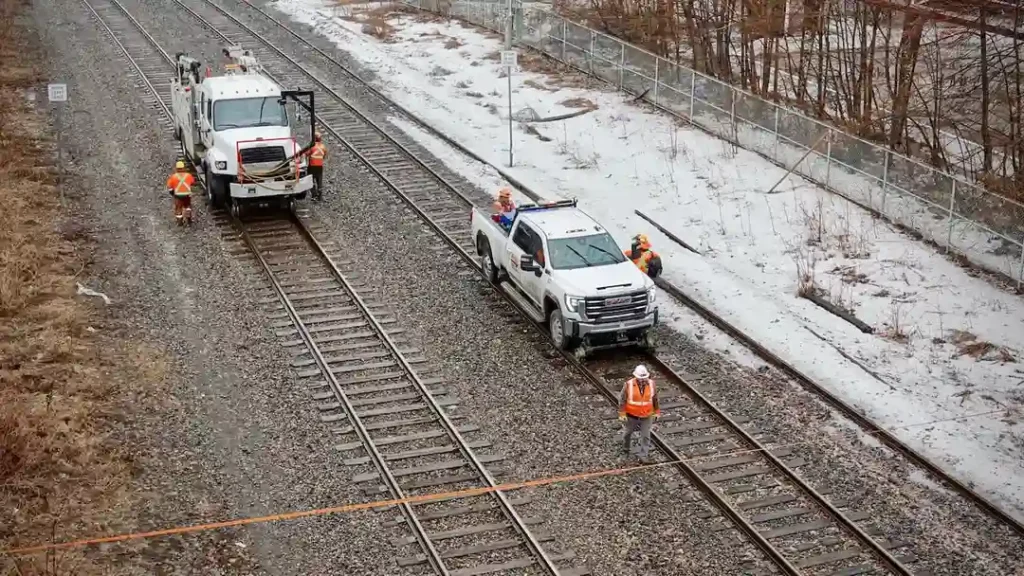
The collision happened shortly after 9 a.m. beneath the Van Horne Avenue overpass, near St-Dominique Street. Emergency crews responded to the scene and attempted life-saving measures, but the woman was pronounced dead.
Montreal police said preliminary information suggested the collision was accidental. Investigators have not publicly explained why the woman was on the tracks, and the circumstances surrounding the incident remain under investigation.
Police secured the railway corridor
A security perimeter was established around the scene while officers, firefighters and railway personnel examined the area. Access to the tracks was restricted for much of the morning as investigators documented evidence and worked to determine how the collision occurred.
Authorities did not immediately release the woman’s name. Police also did not confirm whether surveillance footage, witness accounts or railway records would form part of the investigation.
Official information about ongoing investigations and public safety notices can be found through the Service de police de la Ville de Montréal.
Safety concerns have existed for years
The location has long been a concern for people living and working in Mile End. Although there is no official pedestrian level crossing at this section of the railway, informal paths have developed as people move between nearby residential streets, businesses and public transport routes.
The nearest legal crossing can require a longer walk, which has led some pedestrians to use gaps in fencing or worn pathways across the railway. Those shortcuts place people directly in the path of trains that may be difficult to hear or judge from track level.
The March 31 collision was not the first fatal incident reported in the area. In 2022, a 31-year-old woman was killed while crossing tracks near Van Horne Avenue and Saint-Laurent Boulevard.
That earlier death prompted renewed community demands for a formal pedestrian crossing or another protected route. Residents argued that repeatedly used informal paths showed a mismatch between the neighbourhood’s layout and the way people actually travelled through it.
Why unofficial crossings remain dangerous
Railway tracks are private transportation corridors designed for trains, not pedestrian movement. Trains require a long distance to stop, even when emergency brakes are applied, and their speed can be difficult to estimate from the ground.
Noise from traffic, construction, headphones or nearby buildings can also prevent pedestrians from hearing an approaching train. Curves, bridges and other structures may limit visibility, leaving very little time to move away from the tracks.
Fencing and warning signs are intended to prevent access, but damaged barriers or existing openings can make enforcement difficult. Once a shortcut becomes familiar, people may underestimate the danger because they have crossed safely on previous occasions.
National rail safety guidance from Operation Lifesaver Canada advises pedestrians to cross railway lines only at designated locations and never walk along or between active tracks.
Community pressure could grow again
The latest death is likely to bring renewed attention to possible infrastructure changes in Mile End. Potential options discussed after earlier incidents have included a pedestrian bridge, an underpass or a protected level crossing.
Any permanent project would require coordination between Montreal officials, railway operators, landowners and transportation regulators. Cost, accessibility, property boundaries and rail operations would all need to be considered before construction could begin.
Similar railway emergencies have raised wider questions about infrastructure and public safety, including the CN Railway derailment in Ontario, where emergency crews assessed risks after freight cars left the tracks.
Rail incidents can also place significant pressure on emergency services and transport networks. The Wellington train derailment that injured six people highlighted how quickly a railway emergency can affect passengers, local roads and surrounding communities.
For now, Montreal police are continuing to investigate what led to the woman’s death. The incident has left Mile End residents confronting a familiar concern: whether existing barriers and warnings are enough in an area where people have continued to cross the railway despite the risks.
You may also like: Canada Alcohol Tax Cap at 2% Extended to 2028, Offering Relief to Brewers

Make Swikblog your go-to source on Google for reliable updates, smart insights, and daily trends.