
Australia · Supermarkets · Cost of Living
The competition regulator says it’s ready to take legal action under new “excessive pricing” rules starting 1 July 2026 — while both supermarket giants reject claims they’re gouging shoppers.
By Swikriti · Updated 13 January 2026
Australia’s competition watchdog has put Woolworths and Coles on notice, warning it is likely to bring court action against the supermarket giants once new anti-price gouging laws take effect on 1 July 2026. The incoming rules will prohibit “excessive pricing” by very large grocery retailers — a major regulatory shift that places Coles and Woolworths squarely in the enforcement spotlight.
ACCC chair Gina Cass-Gottlieb has indicated the regulator will monitor pricing closely once the reforms commence and could pursue legal proceedings “in the first year” or later if the watchdog believes the new threshold has been crossed. An ACCC spokesperson has also reiterated that the rules “will be enforced” using a range of compliance and enforcement tools.
What the new “price gouging” ban actually changes
The new regime is built around a simple test: supermarkets covered by the rules will be prohibited from charging prices deemed excessive when compared with the cost of supply plus a reasonable margin. The federal government says the ban is designed to close a gap in Australia’s competition and consumer protection framework and provide an added safeguard for households facing higher grocery bills.
The reforms sit within changes to the Food and Grocery Code and have been framed as a targeted measure aimed at the biggest supermarket players. Under the legislation, the ban applies to retailers with annual revenue above $30 billion — meaning only Coles and Woolworths are currently captured, excluding rivals such as Aldi and Costco. (You can read the government’s announcement explaining the new ban and start date via the Treasury ministers’ release: Banning supermarket price gouging to protect Australian consumers.)
Penalties: up to $10m per breach — or 10% of turnover
The penalties are designed to bite. Supermarkets found to be in breach could face fines of $10 million per contravention, three times the value of the benefit derived, or 10% of the company’s turnover in the preceding 12 months — whichever is greater. The ACCC is expected to publish guidance ahead of the July start date outlining how it will approach compliance and enforcement.
Coles and Woolworths reject “gouging” claims
Both supermarket chains have pushed back hard on the narrative that they are price gouging. Woolworths says it works to deliver value to customers and takes pricing accuracy seriously. Coles has pointed to the ACCC’s previous supermarket inquiry, noting it did not find evidence of excessive pricing and that grocery inflation has been driven by cost pressures across the supply chain — including energy, fuel, insurance, production, freight and distribution.
Coles has also highlighted its reported profit margin of around 2.4%, arguing this equates to roughly $2.40 profit for every $100 spent. However, the broader competition debate remains: the ACCC has previously noted the near-duopoly structure of the sector can weaken incentives for Coles and Woolworths to compete aggressively on price.
A separate ACCC court case is already underway
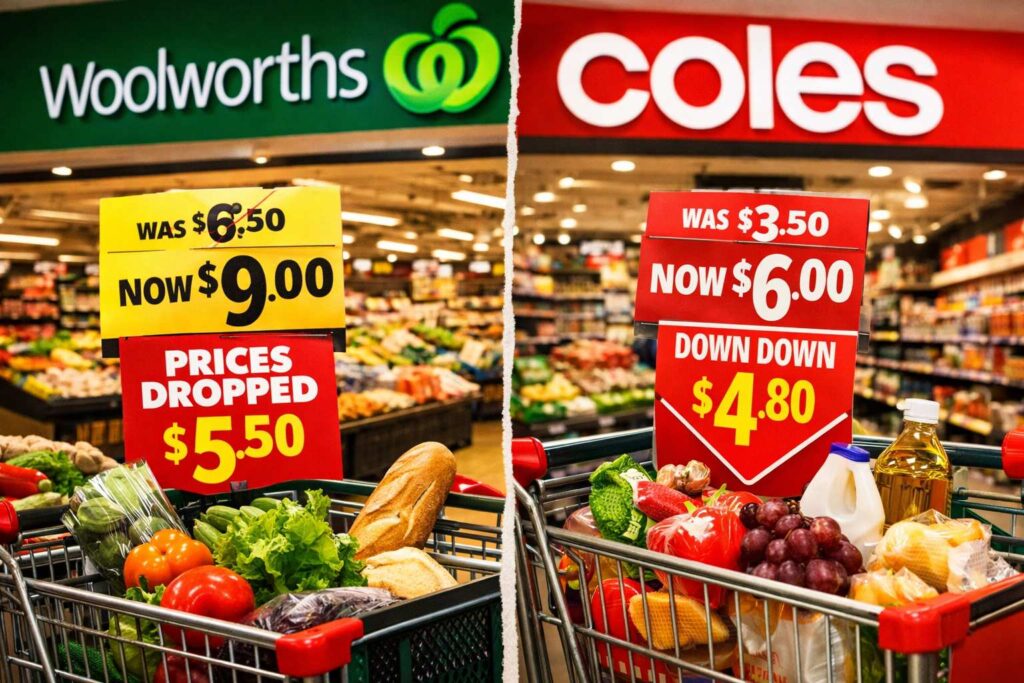
The looming price gouging crackdown arrives while the ACCC is already pursuing Woolworths and Coles in the Federal Court in a separate matter: alleged misleading discounting claims tied to promotional campaigns such as “Prices Dropped” and “Down Down”. The regulator alleges prices for certain products were briefly raised before being promoted as discounted — claims both supermarkets deny. (ACCC’s media release on that court action is here: ACCC takes Woolworths and Coles to court over alleged misleading discount claims.)
What shoppers should watch between now and July
With the enforcement start date locked in, the next six months will be closely watched. The ACCC has suggested supermarkets may change pricing practices ahead of July — but the regulator has also signalled it won’t hesitate to act if it believes pricing moves cross the new “excessive” threshold once the ban is live. For consumers, the biggest practical question remains whether the new laws will translate into lower shelf prices — or whether supermarkets will argue higher supply-chain costs justify their pricing decisions under the “reasonable margin” test.
Related on Swikblog: SXSW Sydney Is Over — Organisers Confirm Festival Will Not Return in 2026
Note: This article summarises publicly reported statements and announced policy settings as of 13 January 2026. Regulatory guidance may evolve before commencement on 1 July 2026.

Make Swikblog your go-to source on Google for reliable updates, smart insights, and daily trends.