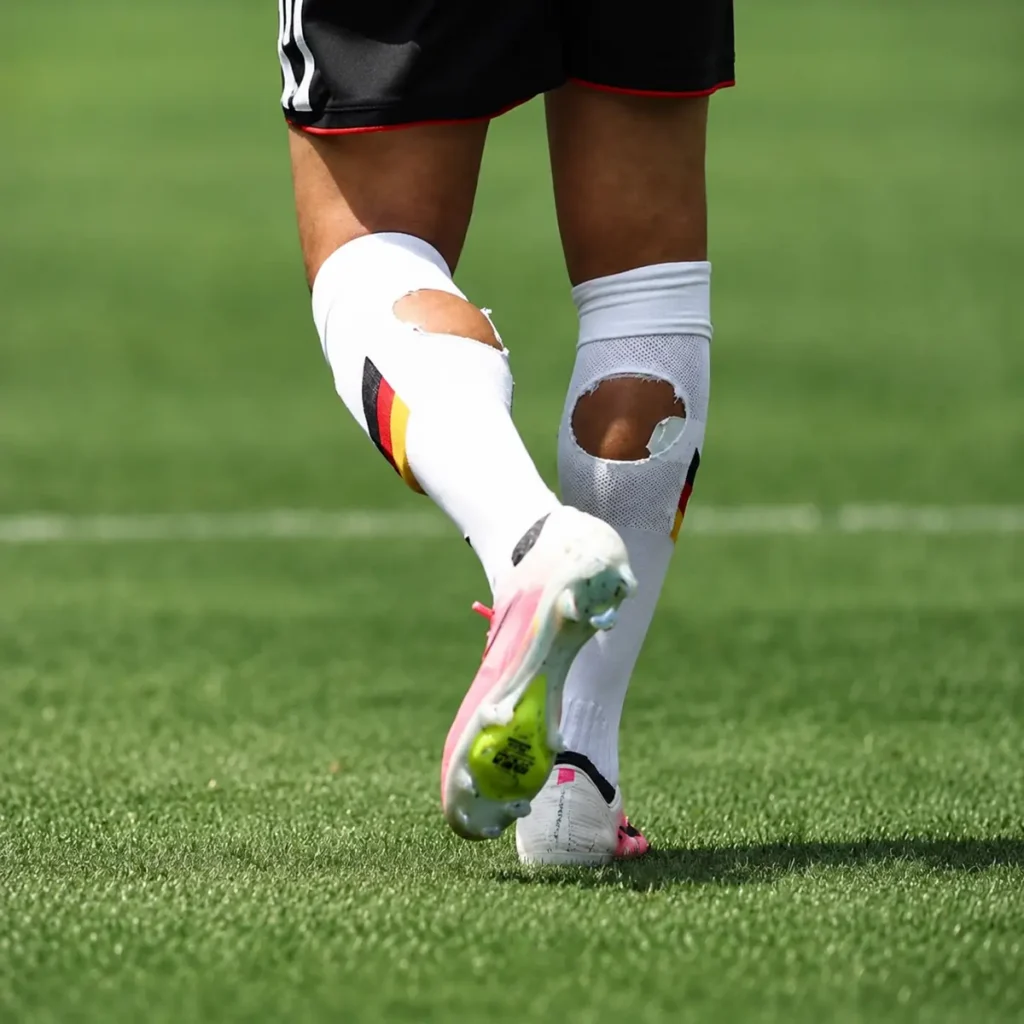

One of the strangest sights of the 2026 World Cup has nothing to do with tactics, refereeing or goal celebrations. It is appearing on the back of players’ legs: carefully cut holes in match socks, exposing parts of the calf during the biggest football tournament in the world.
The look may appear accidental at first glance, but for several elite footballers it is deliberate. Players including Jude Bellingham, Bukayo Saka, Mathew Leckie and Leroy Sané have all been linked with the sock-cutting habit, while former England defender Kyle Walker has previously explained that he used the method to ease pressure around his calves.
The practice has become one of those small World Cup details that fans notice once, then cannot stop seeing. In close-ups, replays and post-match images, the holes are often placed in a line down the back of the lower leg, usually where the sock grips the calf most tightly.
World Cup sock trend comes down to comfort and calf pressure
Modern football socks are not loose pieces of kit. They are usually made from tight synthetic material, often polyester-based, and are designed to stay in place through sprints, tackles, slides and nearly two hours of matchday use. That snug fit helps with appearance and stability, but it can also create pressure around the lower leg.
For players whose calves swell or tighten during high-intensity football, that pressure can become uncomfortable. Cutting small holes into the back of the sock gives the muscle more room to expand and can reduce the feeling of restriction.
That is why the trend is less about fashion and more about function. A player running repeated sprints in warm conditions, under tournament pressure, may look for any small adjustment that helps them feel freer. The margins at a World Cup are tiny, and even a minor comfort fix can become part of a player’s routine.
Walker has previously said his socks felt too tight and were putting pressure on his calves. After cutting holes to release tension, he kept the habit because he felt comfortable and continued playing well. That kind of routine matters in football, where players often stick with small details if they believe they help performance.
According to USA TODAY, the holey sock trend has been visible in top-level football since at least 2018 and has now become more noticeable on the World Cup stage as fans focus on every detail of players’ kits.
Related Swikblog read: The wider World Cup fashion conversation has also included bold boots and kit choices, including the tournament’s visible pink cleats trend at the 2026 FIFA World Cup.
Bellingham, Saka and other stars make the detail impossible to miss
Bellingham is one of the most high-profile players associated with the cut-sock look. The England and Real Madrid midfielder has often been seen with holes down the back of his socks, making the detail stand out during major matches.
Saka has also been among the England players connected with the trend, while Leckie and Sané have added to the list of international names seen with similar kit adjustments. The habit is not restricted to one team, league or brand. It has spread across elite football because players face similar physical demands and often copy methods they see working for others.
There is also a practical reason the trend has become easier to spot. Television coverage now captures players from every angle, from tunnel walks to slow-motion replays. A detail that might once have gone unnoticed is now magnified for millions of viewers.
Still, the holes are not random tears from rough play. In many cases, they are evenly spaced and clearly made before kick-off. That gives players some control over where the sock loosens without causing the whole garment to fall apart.
The science is simple, but the benefit is personal
The main idea behind cutting socks is pressure relief. Tight socks can press against the calf muscle, especially as blood flow increases during exercise. Some players believe loosening that area helps reduce tightness, cramping risk or fatigue late in matches.
That does not mean cutting socks is a guaranteed performance boost. There is no universal rule that every player benefits from it, and many footballers play full matches without changing their socks at all. For some athletes, the benefit may be physical. For others, it may be part comfort and part confidence.
Footballers are known for detailed routines. Some tape their wrists the same way every match. Some wear the same shin pads for years. Others adjust boots, socks or undershirts until the kit feels right. Cut socks fit into that world of personal preference, where a small change can become a trusted matchday habit.
The trend also highlights a tension in modern sportswear. Manufacturers design kits to be sleek, fitted and durable, but professional athletes do not all have identical bodies. A sock that works perfectly for one player may feel restrictive for another. Cutting holes is a simple, low-tech solution to a very specific problem.
For fans, the look may seem unusual. For players, it is just another adjustment in a sport where comfort, movement and routine all matter. At a World Cup filled with tactical debates and superstar moments, the humble football sock has unexpectedly become one of the tournament’s most talked-about details.

Make Swikblog your go-to source on Google for reliable updates, smart insights, and daily trends.