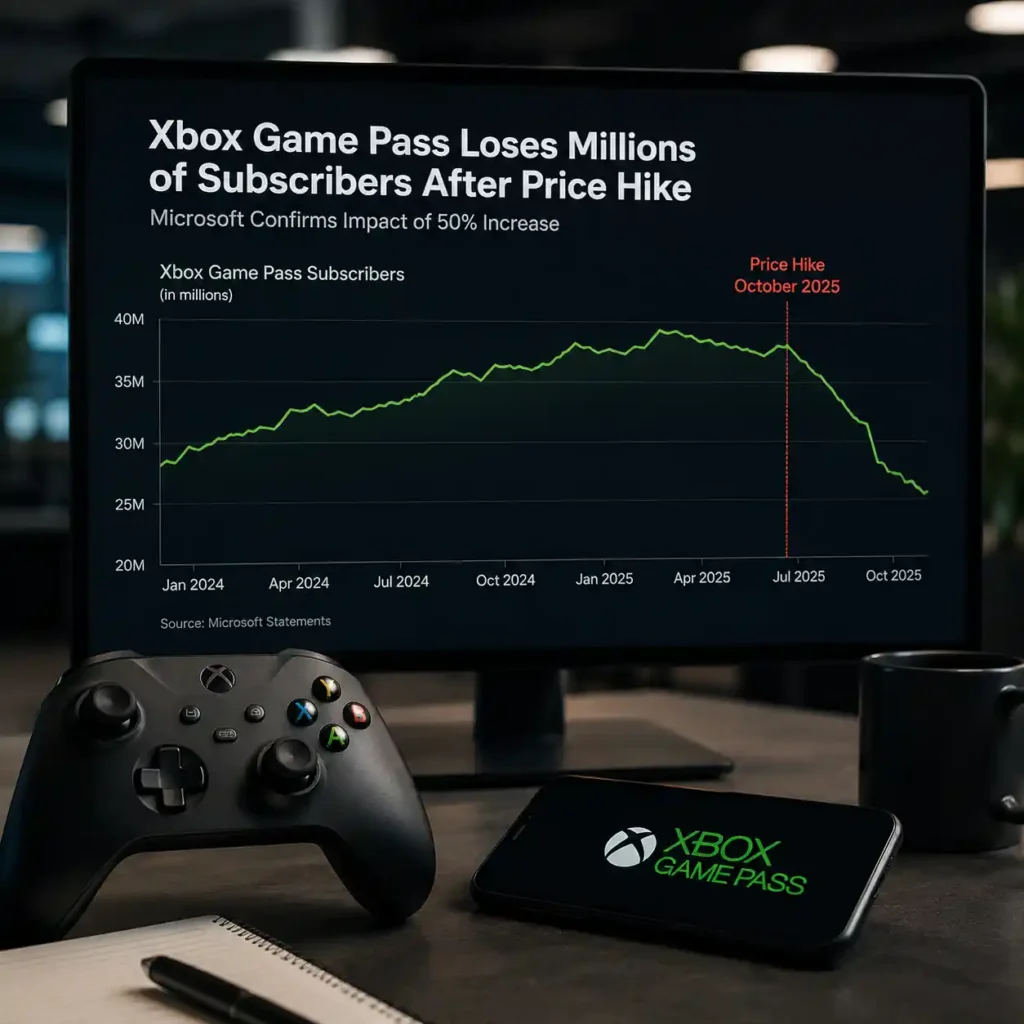

Microsoft’s attempt to extract more value from Xbox Game Pass appears to have backfired in a way few major gaming companies would want to experience. After raising the price of Xbox Game Pass Ultimate by 50% in late 2025, the company lost millions of subscribers within months, according to comments made by Xbox Chief Strategy Officer Matthew Ball.
The disclosure offers a rare glimpse into the risks facing subscription businesses as companies try to balance revenue growth with customer retention. While Game Pass remains one of the most successful gaming subscriptions in the world, Microsoft’s experience suggests there is a limit to how much players are willing to pay, regardless of how strong the content lineup may be.
In October 2025, Microsoft increased the monthly cost of Xbox Game Pass Ultimate from $19.99 to $29.99. The move effectively added around $120 a year to the cost of maintaining the service, making it one of the sharpest price jumps seen across major gaming subscriptions.
Microsoft argued at the time that Game Pass was becoming more valuable through an expanding game library and added benefits. However, many subscribers viewed the increase differently. Gaming forums, social media platforms, and Xbox communities were quickly filled with complaints from users who said they planned to cancel rather than absorb the higher monthly cost.
According to Ball, those threats became reality.
“We shed millions of subscribers over the span of a few months,” he said during a live appearance at The Game Business event, where the impact of the pricing decision was discussed publicly.
The loss is particularly significant because Game Pass had become one of Microsoft’s most important gaming businesses. The company previously reported more than 34 million subscribers in 2024, while industry reports suggested Game Pass revenue approached $5 billion annually by July 2025. Despite that scale, the service proved vulnerable when customers felt the price increase had moved faster than the value being offered.
Microsoft Changed Strategy After Subscriber Decline
Facing subscriber losses and growing criticism, Microsoft eventually reversed part of the increase by lowering Xbox Game Pass Ultimate to $22.99 per month. The adjustment came after the company reduced Xbox Game Pass pricing by as much as 23% in an effort to improve subscriber retention and restore confidence in the service.
Although the revised price remains above the original $19.99 level, it represents a major retreat from the short-lived $29.99 monthly fee that triggered the backlash.
Microsoft also altered the structure of the service by removing day-one Call of Duty releases from the Game Pass model. The change reduced one of the platform’s most expensive commitments while helping the company create a different value proposition for subscribers.
Ball said Microsoft had effectively “corrected” the offering, indicating that company leadership recognized the original pricing strategy had not resonated with players.
The reset comes under new Xbox CEO Asha Sharma, who has said the company has been able to reset Game Pass after an eight-month decline. She also said the service has returned to growth and is seeing stronger retention, suggesting the lower price and revised content strategy may be helping Microsoft repair some of the damage.
Read More
The broader Xbox business is also going through a transition. Microsoft used its Xbox Games Showcase 2026 to highlight upcoming titles including Spyro: A Realm Beyond, Persona 6, and Gears of War: E-Day. The company is also expected to continue investing in future Xbox hardware and a more reliable pipeline of console exclusives.
For players, the message is simple: Game Pass still has value, but not at any price. For Microsoft, the lesson may be even more important. A subscription service can generate billions in revenue and still lose momentum quickly if loyal users feel the company is asking too much too soon.
According to GameSpot, Microsoft has not revealed the exact number of subscribers lost, but Ball’s comments confirm that the October 2025 price hike created a real business impact rather than just online backlash.

Make Swikblog your go-to source on Google for reliable updates, smart insights, and daily trends.