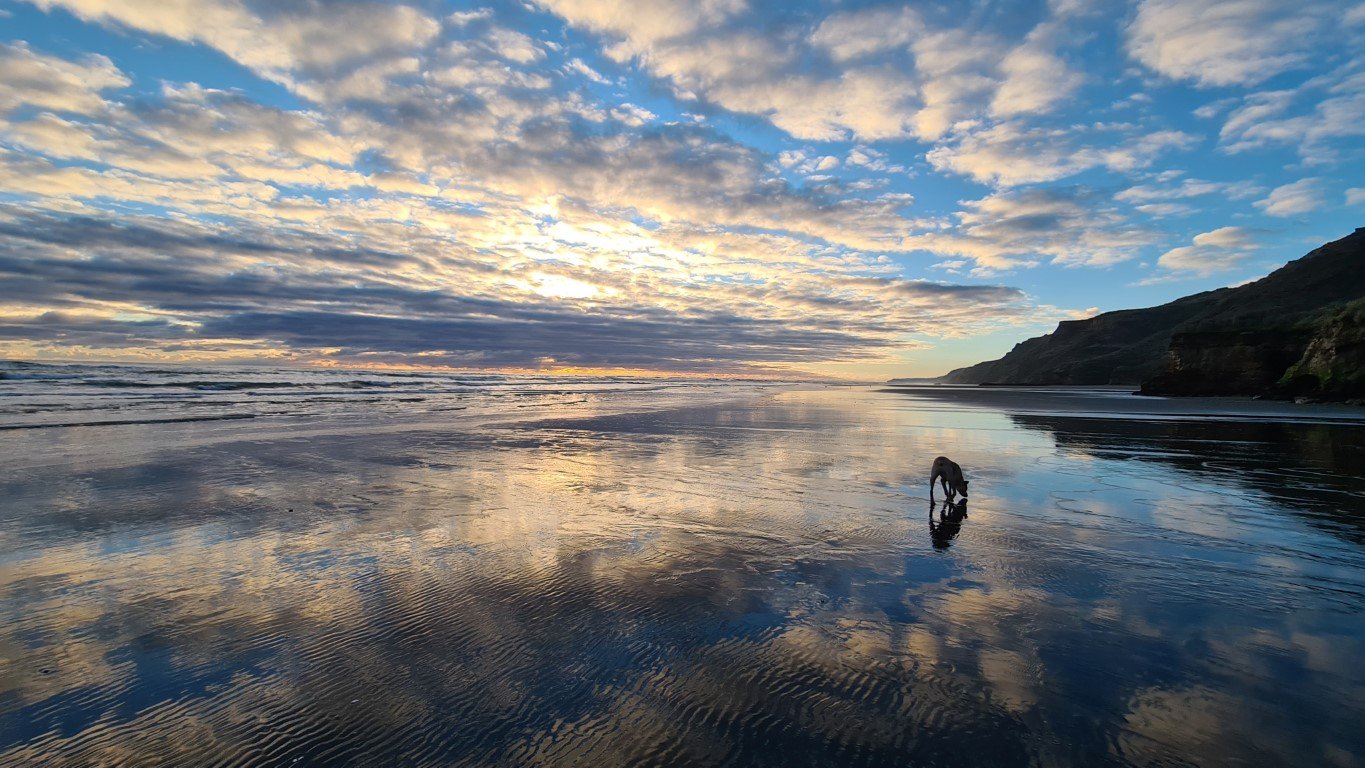
In barely an hour and a half on Auckland’s wild west coast, a warm early-summer evening turned into a chain of emergencies: four separate rescues, two men dead, and an exhausted network of lifeguards and first responders left pleading with the public to take beach dangers seriously.
The cluster of incidents on Monday night has shaken surf lifesaving clubs from Piha to Karioitahi and reignited a grim question as the holiday season begins: how can so many people still be caught out by rips, holes and fading light on beaches that are repeatedly labelled among the most dangerous in New Zealand?
A frantic 90 minutes on Auckland’s west coast
According to reporting by the New Zealand Herald, the first callout came just after 6pm at Bethells Beach, when lifesavers were diverted inland to Lake Wainamu after a swimmer disappeared beneath the surface. Over the next 90 minutes, emergency calls would keep coming: a rescue at Muriwai, a double emergency at Karioitahi, and a four-person mass rescue at Piha.
Surf Life Saving Northern Region operations manager James Lea described the evening as a rare but deadly combination of ingredients – very warm weather drawing people into the water after patrol hours, deceptively clean surf around a metre to 1.5 metres, and a low tide that supercharged rip currents and deep holes close to shore.
On Auckland’s exposed west coast, those conditions mean one thing: rips that look harmless from the sand but can rip even confident swimmers off their feet in seconds.
Two young men, two different locations, the same outcome
Behind the statistics are two families now facing the unthinkable just days before Christmas.
At Lake Wainamu, near Bethells Beach, a 23-year-old man was in waist-deep water with friends when he stepped into a sudden underwater hole and failed to resurface. Police later confirmed his body was recovered by the National Dive Squad with the support of Bethells Beach lifeguards, and his death has been referred to the coroner, as reported by RNZ.
Further south at Karioitahi Beach, a 26-year-old man died after getting into difficulty while trying to return to shore with another swimmer. Lifeguards managed to bring one man back safely, but the second was located by the police Eagle helicopter and could not be revived despite efforts on the sand, according to RNZ’s coverage of the tragedy.
At Muriwai, another swimmer required CPR and an airlift to hospital, while off-duty lifeguards at Piha pulled four people from a rip with the help of a rescue boat. By the end of the evening, volunteers and paid staff had been stretched across multiple beaches and a lake, dealing with the kind of workload usually associated with peak holiday weekends.
‘Perfect storm’ conditions that don’t look dangerous from the sand
The pattern is painfully familiar to surf lifesavers. Moderate surf that looks “fun” from the beach, low tide exposing sandbars and channels, and swimmers entering the water long after the red-and-yellow flags have been pulled in for the day.
Surf Life Saving New Zealand stresses that rips are the single biggest killer on our beaches and are often invisible to the untrained eye. On its rip safety page, the organisation explains that if you’re caught in a rip the key is to relax and float, conserve energy and signal for help, rather than sprinting straight back towards shore against the current – a mistake that quickly leads to exhaustion and panic (Surf Life Saving NZ – Rip safety advice).
Scientists at NIWA, who are working with Surf Life Saving NZ on an AI-driven rip current identification tool, describe rip currents as narrow, fast-moving streams that can race seaward at speeds faster than an Olympic swimmer. That means that even strong, fit people are quickly overwhelmed if they try to fight the water rather than work with it.
These currents form part of a constantly moving coastal system driven by tides, wind and waves. Visualisations from NASA’s ECCO ocean model show how surface currents swirl and surge along coastlines, reminding us that the sea is never truly still (NASA – Visualising ocean currents).
Why Auckland’s west coast is so unforgiving
Long, open beaches like Piha, Muriwai, Bethells and Karioitahi face straight into the Tasman Sea, where powerful swell interacts with shifting sandbars and steep drop-offs. NIWA has previously warned that these beaches can develop deep channels that act like conveyor belts, dragging water — and anyone in it — offshore in a matter of seconds (NIWA – Deadly hazards of the beach).
What looks like a calm, glassy lane between breaking waves is often exactly where a rip is running. Add hot evenings, after-work swims, tired children and no patrolled area, and the risk multiplies.
‘Please, don’t swim after the flags come down’
Monday’s tragedies have prompted yet another plea from lifeguards: if you’re heading for the beach, plan your swim around patrol hours and swim between the flags — or don’t go in.
In interviews with outlets including the New Zealand Herald and RNZ, Surf Life Saving leaders have repeatedly stressed that they are seeing more people in the water later in the day, often just as visibility deteriorates and patrols close.
Drowning Prevention and safety advocates also urge people who spot someone in trouble to resist the instinct to rush into the water themselves. The first step should always be to call 111 and ask for police, provide an exact location, and look for something that can be thrown or extended from shore.
New Zealand’s beaches are a huge part of summer life — a place of whānau gatherings, long walks and salt-spray sunsets. But as this awful 90-minute window on Auckland’s west coast has shown, the ocean is indifferent to our plans. The difference between a perfect evening and a permanent loss can come down to simple decisions: where you swim, when you go in, and whether someone in red and yellow is watching.
You May Also Like

Make Swikblog your go-to source on Google for reliable updates, smart insights, and daily trends.