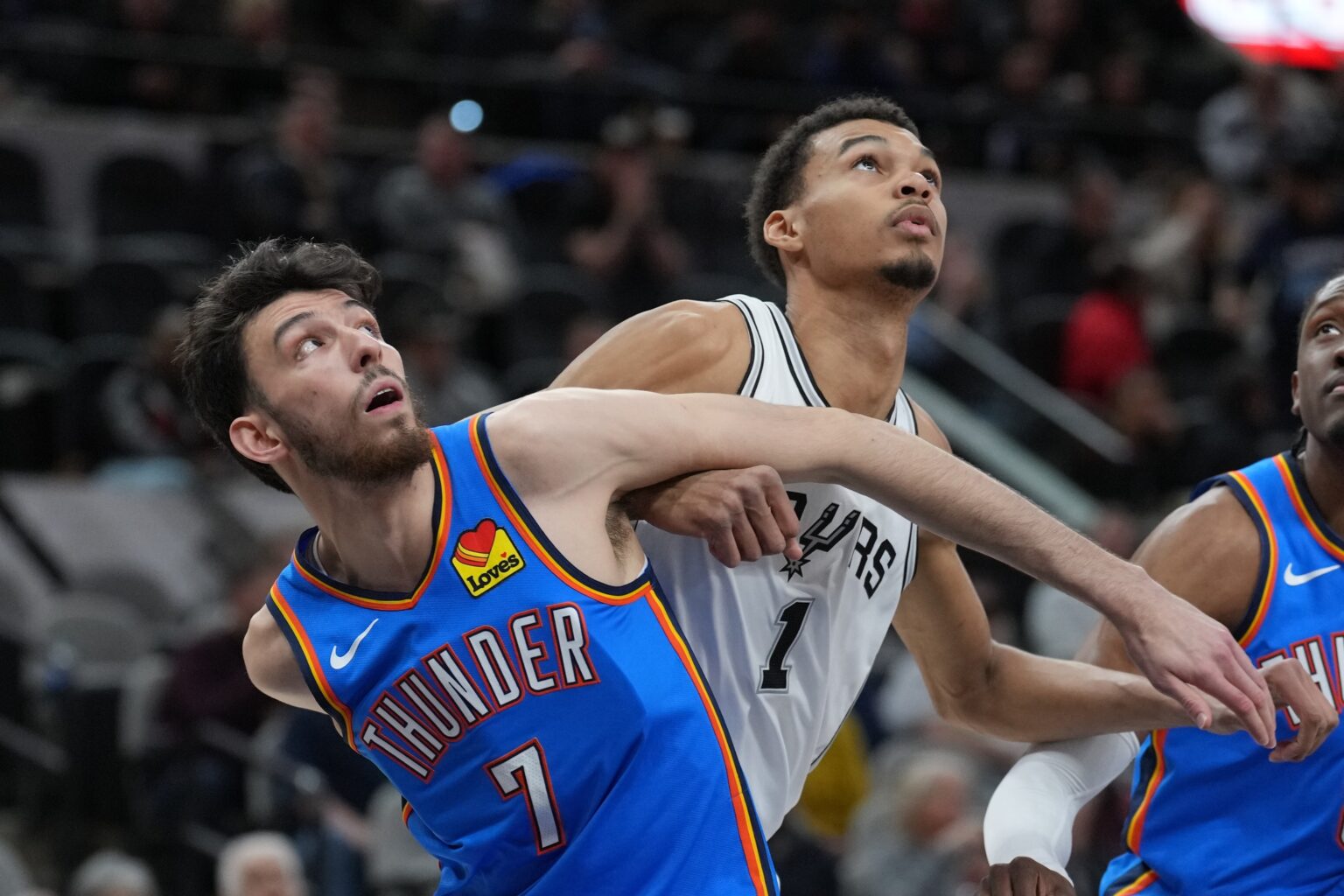
Victor Wembanyama and Chet Holmgren were already the headliner matchup in the paint, but the NBA Cup semi-final stakes made it even louder. In pregame coverage on NBA.com’s Thunder–Spurs NBA Cup preview, the Spurs star was asked directly about facing Holmgren — and his answer made clear he sees the challenge as bigger than a simple one-on-one battle.
Speaking with Taylor Rooks on the ‘NBA on Prime’ broadcast, Wembanyama pointed to the pressure created by Oklahoma City’s reigning MVP, Shai Gilgeous-Alexander. “The reigning MVP is on that court, so he’s our main focus. Anybody is hard to guard when you have to help with the MVP,” Wembanyama said, suggesting Holmgren becomes even tougher to contain when defenses are forced into constant help rotations toward SGA.
That framing instantly became a talking point because it can be read two ways: either as a smart breakdown of OKC’s spacing and gravity — or as a subtle discounting of Holmgren’s individual skill. In a rivalry where every quote gets replayed, even a small shift in emphasis (crediting the MVP first, the matchup second) can feel like a statement.
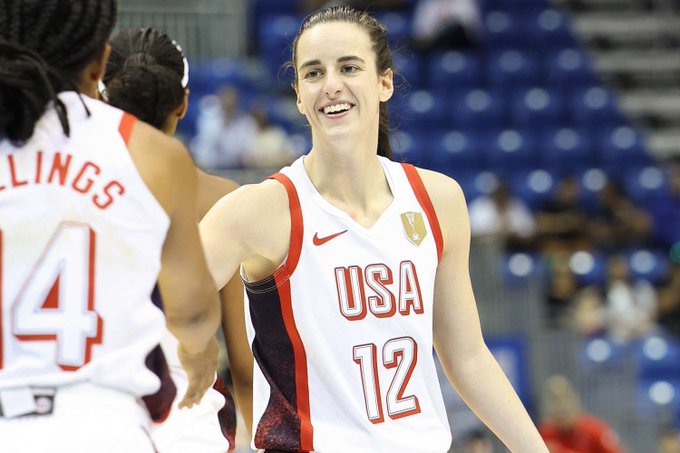
Holmgren has previously tried to cool the temperature around the comparisons, saying the “rivalry” is mostly outside noise and that the edge comes from competitive drive rather than personal animosity. Still, the Wembanyama–Holmgren debate has followed both players for years, dating back to international matchups and continuing into the NBA as their teams and roles have diverged.
The night also carried a major storyline for San Antonio beyond the rivalry itself: Wembanyama’s return. He entered the semi-final coming off a 12-game absence and was expected to be on a minutes restriction. That limitation mattered because it reduced the amount of direct, extended “Wemby vs. Chet” action fans were hoping to see, even if the matchup remained the emotional center of the game whenever both were on the floor.
Even in limited minutes, the incentive to suit up was obvious. The NBA Cup isn’t just bragging rights — it’s real money. Players on the championship-winning team earn $530,933 each, while runners-up earn $212,373 per player, according to the tournament payout breakdown. Hoops Rumors’ NBA Cup prize money explainer detailed how the per-player payouts scale depending on how far teams advance.
Ultimately, Wembanyama’s quote was less about one defender vs. one scorer and more about how elite stars bend a defense. If you have to load up on the MVP, you’re constantly making choices — help or stay home, switch or recover, protect the rim or cover the pop. In that kind of game, a skilled big like Holmgren can feel “hard to guard” not because of one move, but because the floor is tilted before the possession even starts.
Read also: Villanova Football Earns Four Academic All-Area Honors Ahead of FCS Quarterfinal

Make Swikblog your go-to source on Google for reliable updates, smart insights, and daily trends.