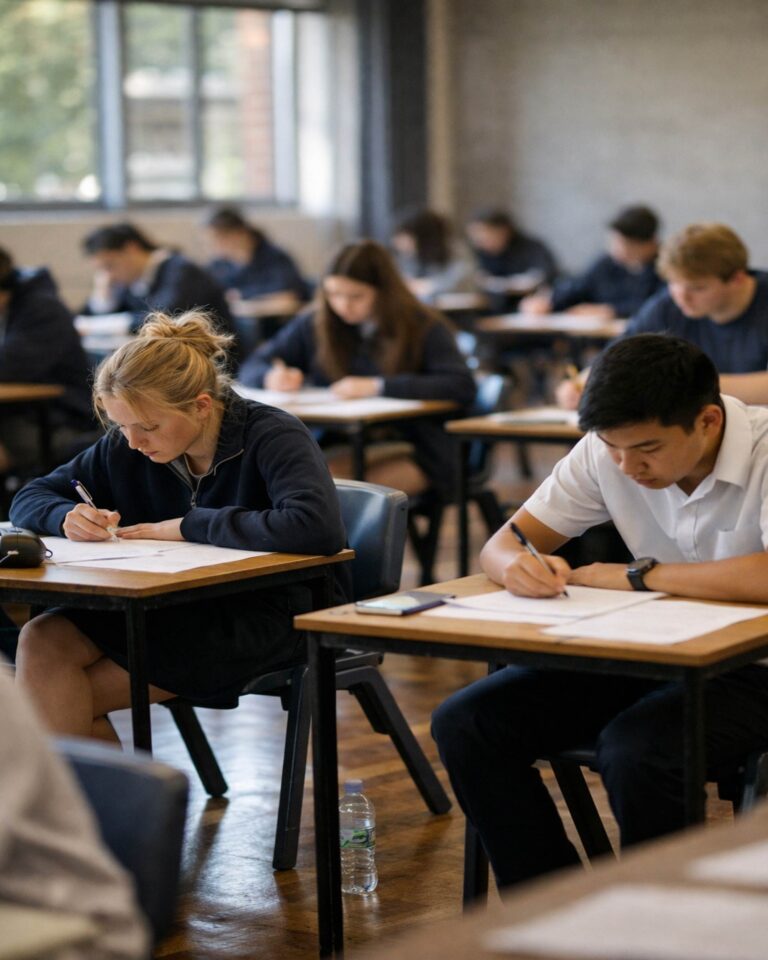

Each year, HSC results trigger intense discussion across New South Wales — among families, teachers and students alike. Questions around subject choice often surface as soon as results are released, especially as media analysis highlights which courses appear to deliver the strongest outcomes across hundreds of schools.
According to recent reporting by The Sydney Morning Herald, subject-level performance data from hundreds of NSW schools reveals clear trends in where high achievement is most concentrated. While success is never guaranteed by subject choice alone, patterns do emerge when results are viewed at scale.
What “high-scoring” really means in the HSC
High-scoring HSC subjects are not defined simply by easy marks. Instead, they tend to combine academically strong cohorts, demanding assessments, and a higher proportion of students reaching the top performance bands recognised by the NSW Education Standards Authority.
These subjects often feature prominently among students receiving top ATARs, but the underlying reason is usually the academic profile of the students enrolled rather than any inherent advantage built into the course.
Mathematics extensions continue to dominate
Mathematics Extension 1 and Extension 2 remain central to high achievement across NSW schools. These courses are rigorous and abstract, demanding advanced reasoning and sustained problem-solving. As a result, they are typically chosen by students already performing at an advanced level.
Schools with strong mathematics programs often see these extension courses underpinning their overall results, with a large proportion of students achieving top bands year after year.
Physics and chemistry reward precision
In the sciences, Physics and Chemistry consistently stand out for producing strong outcomes. Both subjects emphasise accuracy, logical thinking and application under exam conditions.
Students who develop a deep conceptual understanding tend to perform exceptionally well, contributing to the strong statewide results seen in these courses.
English performance depends on course level
English remains compulsory, but outcomes differ markedly depending on the level studied. English Advanced and the English Extension courses generally record stronger results than English Standard.
Extension English subjects, in particular, involve independent research and sustained critical analysis, which often suits students with strong writing and interpretive skills.
Languages and economics show consistent strength
Several language courses and subjects such as Economics continue to perform strongly across NSW schools. These courses reward structured thinking, analytical writing and conceptual clarity.
Although cohort sizes are often smaller, students taking these subjects frequently achieve high results, reinforcing their reputation as quietly strong academic performers.
Why certain subjects appear stronger
The recurring presence of these subjects in top results reflects who studies them and how they are taught, rather than any shortcut to success. Strong teaching programs, motivated cohorts and consistent study habits play a decisive role.
Education experts consistently caution against choosing subjects purely for perceived advantage. Performance over two years matters far more than reputation alone.
What this means for families planning ahead
For families navigating subject selection, the lesson is straightforward: use the data as guidance, not a rulebook. Students perform best in subjects that align with their strengths and interests.
For more education and student-focused coverage, visit the Swikblog education section, where we break down academic trends in a clear, reader-first format.
Ultimately, the highest HSC scores are most often produced where ability, motivation and sustained effort intersect — regardless of the subject title.

Make Swikblog your go-to source on Google for reliable updates, smart insights, and daily trends.